61 text units · Original verse markers remain within the text.
Meaning and contemplation
English and Bengali meaning notes follow the text above. The small references identify the numbered text units in this reader; the contemplation lines offer a devotional application.
The sacred armour
The opening dedicates the Kavacha to Jagadamba. Markandeya asks Brahma to explain the secret that protects people; Brahma introduces the Goddess’s sacred armour as beneficial to beings.
প্রারম্ভে জগদম্বার উদ্দেশে কবচ নিবেদন। মার্কণ্ডেয় ব্রহ্মার কাছে রক্ষাকারী গুপ্ত তত্ত্ব জানতে চান; ব্রহ্মা দেবীকবচকে সর্বভূতের উপকারী বলে পরিচয় দেন।
Contemplation: Receive the kavacha as an invocation of the Mother’s presence throughout the whole person.
Navadurga and refuge
The nine names are Shailaputri, Brahmacharini, Chandraghanta, Kushmanda, Skandamata, Katyayani, Kalaratri, Mahagauri and Siddhidatri. The following lines praise refuge in the Goddess amid fire, conflict and danger.
নবদুর্গা: শৈলপুত্রী, ব্রহ্মচারিণী, চন্দ্রঘণ্টা, কূষ্মাণ্ডা, স্কন্দমাতা, কাত্যায়নী, কালরাত্রি, মহাগৌরী ও সিদ্ধিদাত্রী। পরবর্তী পংক্তিতে বিপদের মধ্যে দেবীশরণ স্মরণ করা হয়েছে।
Contemplation: Remember the nine names one by one, allowing each to become a point of devotion.
The Mothers and their emblems
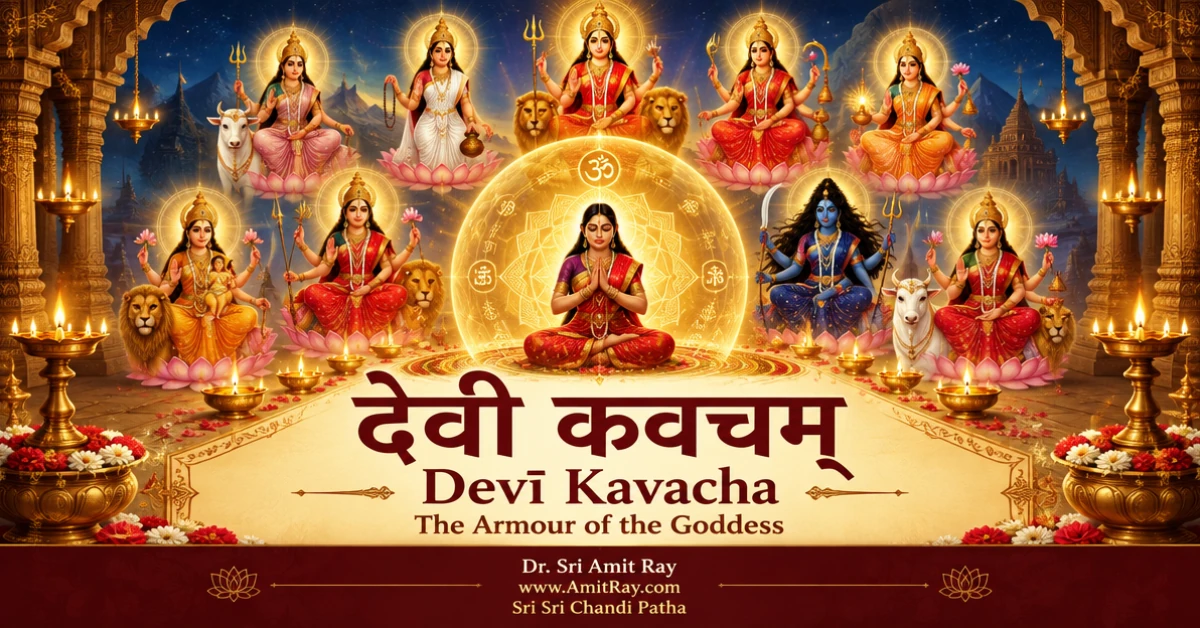
The hymn describes Chamunda, Varahi, Aindri, Vaishnavi, Narasimhi, Shivaduti, Maheshvari, Kaumari, Lakshmi and Brahmi, their vehicles, ornaments and weapons, and their fierce power to protect devotees.
চামুণ্ডা, বারাহী, ঐন্দ্রী, বৈষ্ণবী, নারসিংহী, শিবদূতী, মাহেশ্বরী, কৌমারী, লক্ষ্মী ও ব্রাহ্মীর বাহন, অলংকার, অস্ত্র এবং ভক্তরক্ষাকারী রূপ বর্ণিত হয়েছে।
Contemplation: Contemplate the different divine forms as coordinated expressions of Shakti.
Protection in every direction
The Goddess is invoked in the ten directions, above and below, before and behind, and on either side. Jaya, Vijaya, Ajita and Aparajita are named as guardians.
দশ দিক, ঊর্ধ্ব-অধঃ, সম্মুখ-পশ্চাৎ এবং দুই পার্শ্বে দেবীর রক্ষা প্রার্থনা করা হয়েছে। জয়া, বিজয়া, অজিতা ও অপরাজিতা রক্ষারূপে আহূতা।
Contemplation: Extend awareness from the body into the surrounding directions while reciting the names.
Head, senses, voice and arms
Successive forms of the Goddess are invoked for the hair, head, forehead, eyes, ears, nose, lips, tongue, teeth, throat, neck, shoulders, arms, hands and fingers. Sarasvati is named at the tongue and Chandika at the throat.
শির, কেশ, ললাট, চোখ, কান, নাসিকা, ওষ্ঠ, জিহ্বা, দাঁত, কণ্ঠ, গ্রীবা, কাঁধ, বাহু, হাত ও আঙুলে দেবীর বিভিন্ন রূপ আহ্বান করা হয়েছে। জিহ্বায় সরস্বতী ও কণ্ঠে চণ্ডিকা উল্লিখিত।
Contemplation: Follow the places named in the text gently, keeping the recitation as a prayer.
Heart and the embodied life
The hymn invokes Lalita at the heart and other divine forms for the abdomen, navel, lower body, legs, feet, skin, tissues, organs and joints.
হৃদয়ে ললিতা এবং উদর, নাভি, নিম্নাঙ্গ, পা, ত্বক, দেহধাতু, অন্ত্র ও সন্ধিতে অন্যান্য দেবীরূপ আহ্বান করা হয়েছে।
Contemplation: Contemplate the entire body as held within the Mother’s presence.
Mind, prana, senses and the gunas
The prayer includes ego, mind and intellect; prana, apana, vyana, udana and samana; taste, sight, smell, hearing and touch; and sattva, rajas and tamas. Narayani is invoked for the three gunas.
অহংকার, মন, বুদ্ধি; প্রাণ, অপান, ব্যান, উদান, সমান; রস, রূপ, গন্ধ, শব্দ, স্পর্শ; এবং সত্ত্ব, রজঃ, তমঃ—সবই প্রার্থনার অন্তর্গত। ত্রিগুণের রক্ষায় নারায়ণী আহূতা।
Contemplation: Bring attention to inner life as well as outward form: thought, breath, perception and disposition.
Life, family, livelihood and the unremembered places
The hymn asks for protection of life, dharma, reputation, prosperity, family, children, resources, journeys and public affairs. It then entrusts any place omitted from the recitation to the Goddess.
আয়ু, ধর্ম, যশ, সমৃদ্ধি, পরিবার, সন্তান, সম্পদ, যাত্রাপথ ও রাজদ্বারে রক্ষা প্রার্থনা করা হয়েছে। কবচে অনুল্লিখিত স্থানও দেবীর কাছে সমর্পিত।
Contemplation: Let the final inclusive prayer gather what individual attention has left out.
The hymn’s concluding praises
These lines praise devoted recitation of the Kavacha and describe its traditional fruits: confidence, protection, well-being, honour and accomplishment. The final verse here places Kavacha before the Saptashati.
এই অংশে ভক্তিপূর্ণ কবচপাঠের মাহাত্ম্য ও প্রচলিত ফলশ্রুতি—নির্ভয়তা, রক্ষা, মঙ্গল, যশ ও সিদ্ধি—বর্ণিত হয়েছে। অন্তিম শ্লোকে সপ্তশতীর আগে কবচপাঠের উল্লেখ।
Contemplation: Let the praise strengthen sincere remembrance and proceed to Kilaka Stava in the prescribed sequence.
Continuity and the supreme abode
The closing lines praise continuity of the devotee’s family, the grace of Mahamaya, and attainment of the supreme abode beyond return. The colophon completes Devi Kavacha.
অন্তিম পংক্তিতে বংশের ধারাবাহিকতা, মহামায়ার প্রসাদ এবং পুনরাগমনহীন পরম স্থান প্রাপ্তির প্রশংসা আছে। সমাপ্তিবাক্যে দেবীকবচ শেষ হয়েছে।
Contemplation: Gather the many protective invocations into a final offering to Mahamaya.
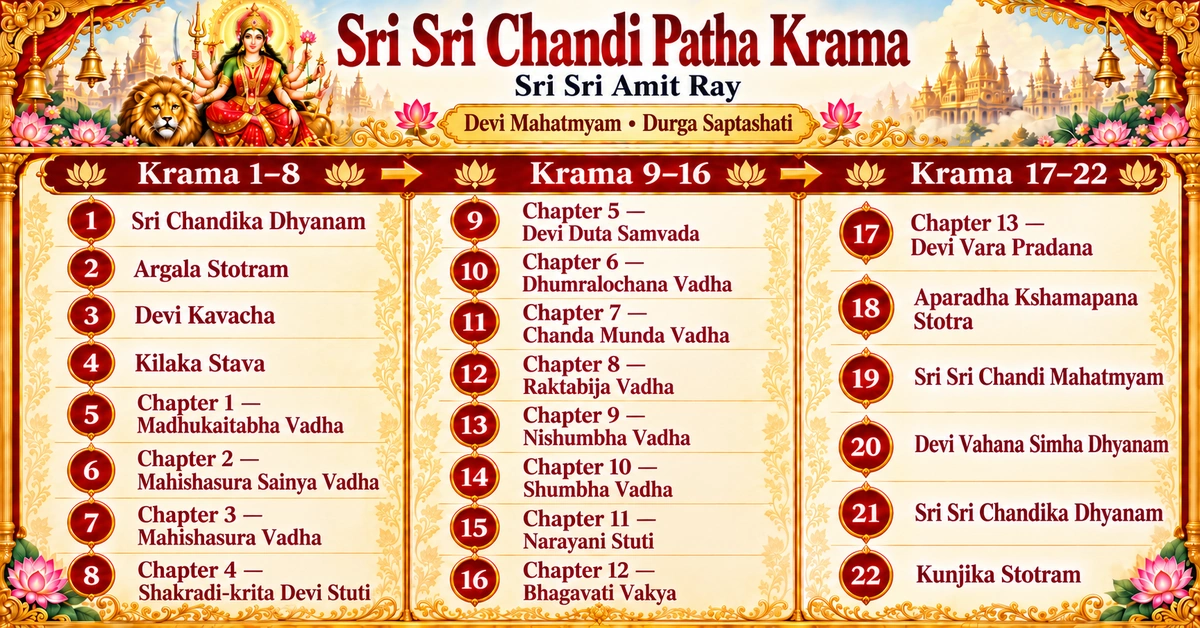
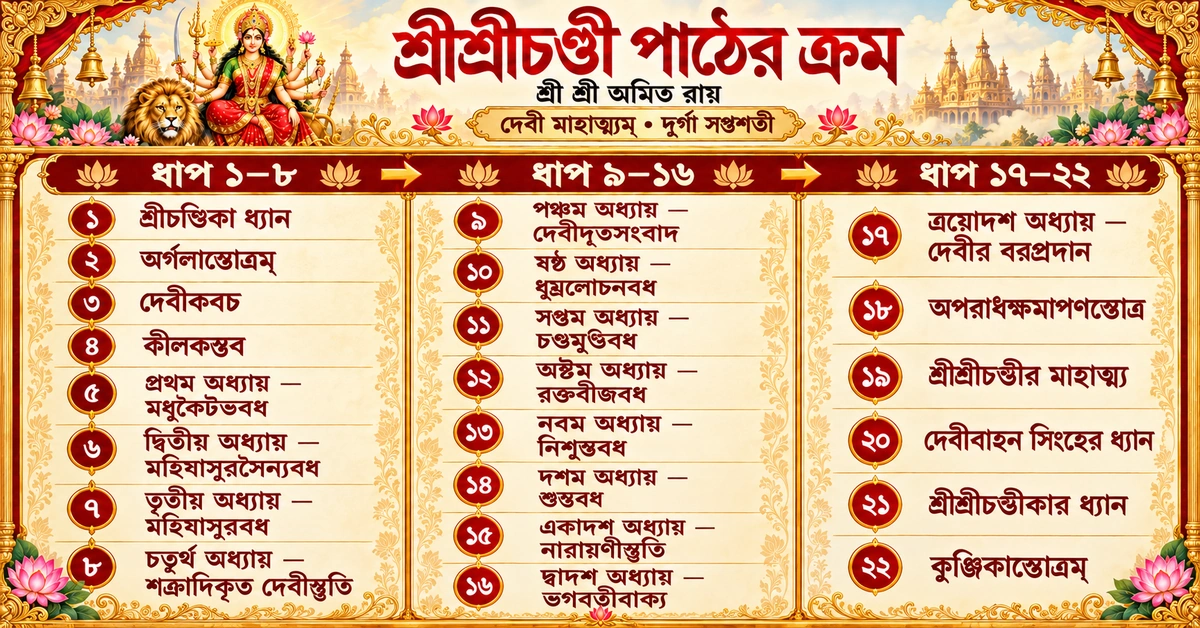
The 22-step reading sequence