11 text units · Original verse markers remain within the text.
Meaning and contemplation
English and Bengali meaning notes follow the text above. The small references identify the numbered text units in this reader; the contemplation lines offer a devotional application.
The refuge that overcame Madhu, Kaitabha and Mahisha
The hymn remembers Durga’s response to Brahma’s fear of Madhu and Kaitabha and her victory over Mahishasura. Its refrain is “I take refuge in Goddess Durga for the uprooting of every adversity.”
মধু-কৈটভে ভীত ব্রহ্মার স্তব এবং মহিষাসুরের বিরুদ্ধে দুর্গার বিজয় স্মরণ করা হয়েছে। ধুয়া: সকল বিপদ উন্মূলনের জন্য দেবী দুর্গার শরণ নিই।
Contemplation: Use the returning phrase Durgam devim prapadye sharanam as the thread of the hymn.
The many powers and the one Goddess
The gods ask the Goddess to appear again in times of danger. The hymn recalls Chamunda, the defeat of Raktabija, the divine Mothers, and the gathering of their powers into one before Shumbha’s defeat.
বিপদের সময় দেবীর পুনরাবির্ভাব প্রার্থনা; চামুণ্ডা, রক্তবীজবধ, মাতৃশক্তিসমূহ এবং শুম্ভবধের আগে এক দেবীরূপে তাঁদের একীভবন স্মরণ করা হয়েছে।
Contemplation: Contemplate multiplicity returning to the one Mother.
The Mother’s manifestations
The hymn recalls Nandaja, Bhramari, Bhima, Shakambhari and Raktadanta, and praises the Goddess whose manifestations move through the three gunas and who grants worldly aims and liberation.
নন্দজা, ভ্রামরী, ভীমা, শাকম্ভরী ও রক্তদন্তা রূপ স্মরণ করে ত্রিগুণে লীলাময়ী, জীবনের অভীষ্ট ও মুক্তিদায়িনী দেবীকে স্তব করা হয়েছে।
Contemplation: Let each manifestation disclose the Mother’s care within a different need.
The lion-riding Mother
Durga is praised as three-eyed, lion-riding, adorned with ornaments and a crescent crown, bearing conch, discus and sword. The hymn compares her care to a mother’s care for her children.
ত্রিনয়না, সিংহারূঢ়া, চন্দ্রমুকুট ও অলংকারধারিণী, শঙ্খ-চক্র-খড়্গধারিণী দুর্গাকে স্তব। তাঁর যত্নকে সন্তানের প্রতি মায়ের যত্নের সঙ্গে তুলনা করা হয়েছে।
Contemplation: Allow the martial form and maternal tenderness to be held together.
The closing praise
The concluding praise likens the hymn to fire consuming adversity and sunlight dispelling the darkness of confusion. It returns to refuge in Durga and completes the stotra.
শেষ স্তবে এই স্তোত্রকে বিপদ দহনকারী অগ্নি ও মোহের অন্ধকার দূরকারী সূর্যালোকের সঙ্গে তুলনা করা হয়েছে। দুর্গাশরণে ফিরে স্তোত্র সমাপ্ত।
Contemplation: Rest in the refrain of refuge before proceeding to the next dhyana.
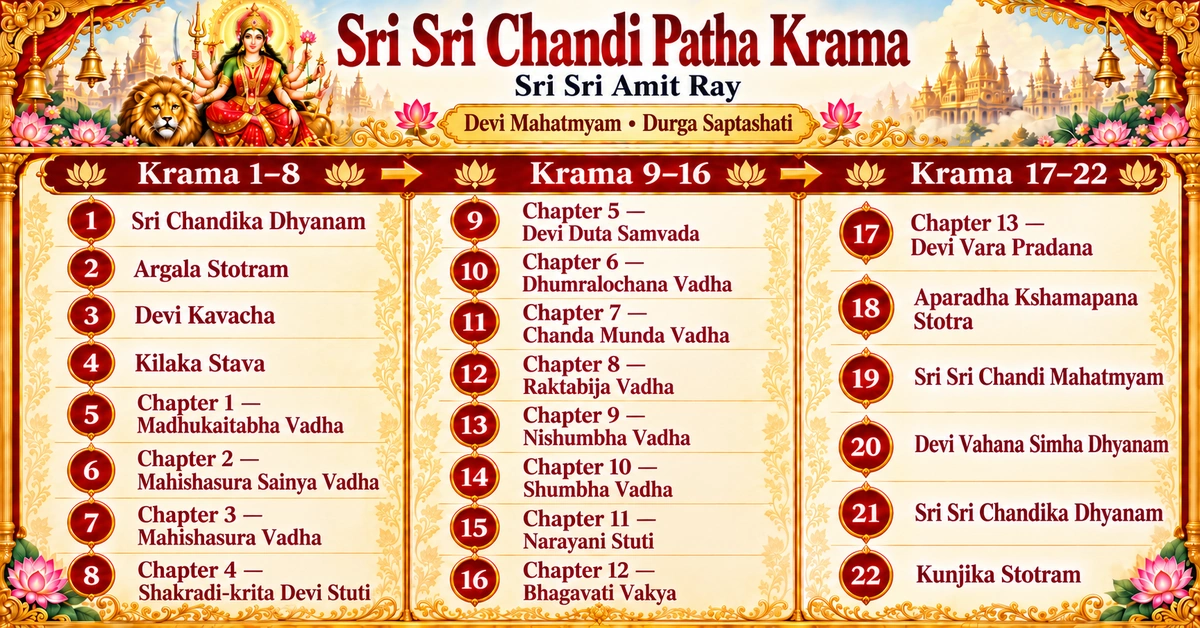
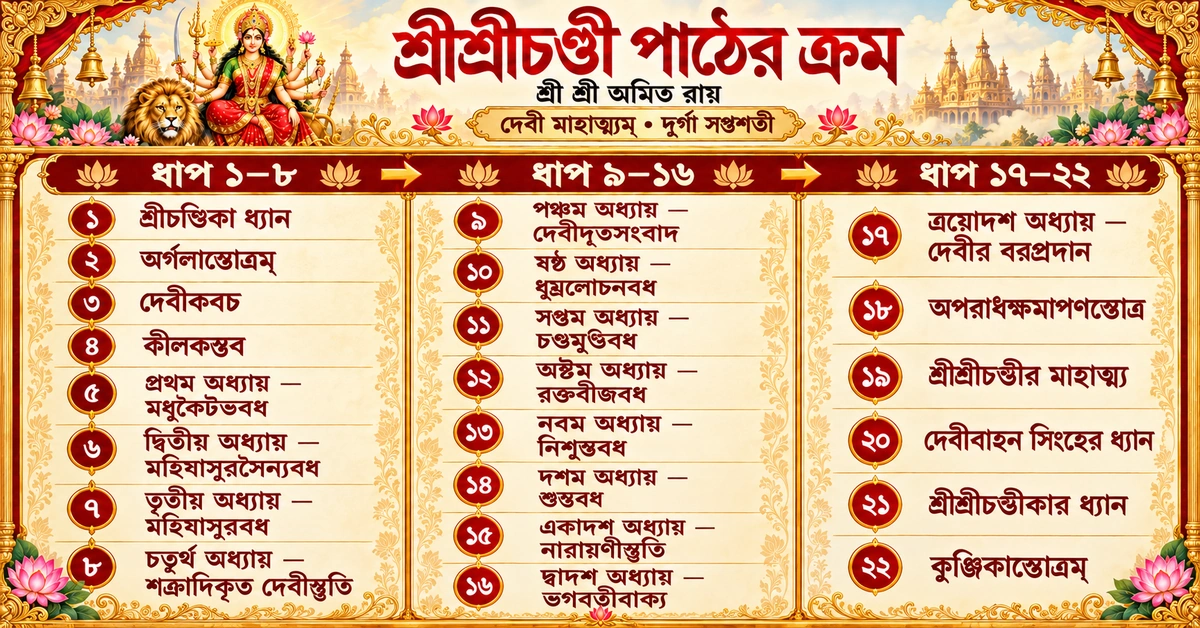
The 22-step reading sequence