Compassionate AI Lab of Sri Amit Ray
 Compassionate AI Lab of Sri Amit Ray is focused on research on compassion and building compassionate artificial intelligence systems for the benefits of humanity and all living beings. The objective is to eliminate the pain and sufferings of people by the use of emerging technologies. Compassionate AI is a multidisciplinary subject. This is a palace where you can exchange ideas within and across AI, neuroscience, omics science, meditation, quantum computing, compassion and other research groups.
Here, we focus on incorporating compassion, kindness and empathy in artificial intelligence systems. The lab conducts fundamental AI research, including theory and methods for serving humanity, helping blind people, old age support, cancer prevention, precision medicine as well as application-oriented human-centered AI research collaboration at a high international level.
Key Artificial Intelligence Projects
It includes the emerging research fields of AI such as compassionate care-giving, compassionate health care, precision medicine, Quantum Computing, compassionate weapon-defense system, compassionate teaching, machine learning, Internet of Things (IoT), drone, big data, blockchain, quantum computing, digital medicine, brain-computer interface, combating antibiotic resistant bacteria, Balance Control of Elderly People, computer aided drug design, cancer prevention, etc. Our compassionate AI algorithms are designed to motivate the systems to go out of their way to help and eliminate the physical, mental or emotional pains of humanity and the world.
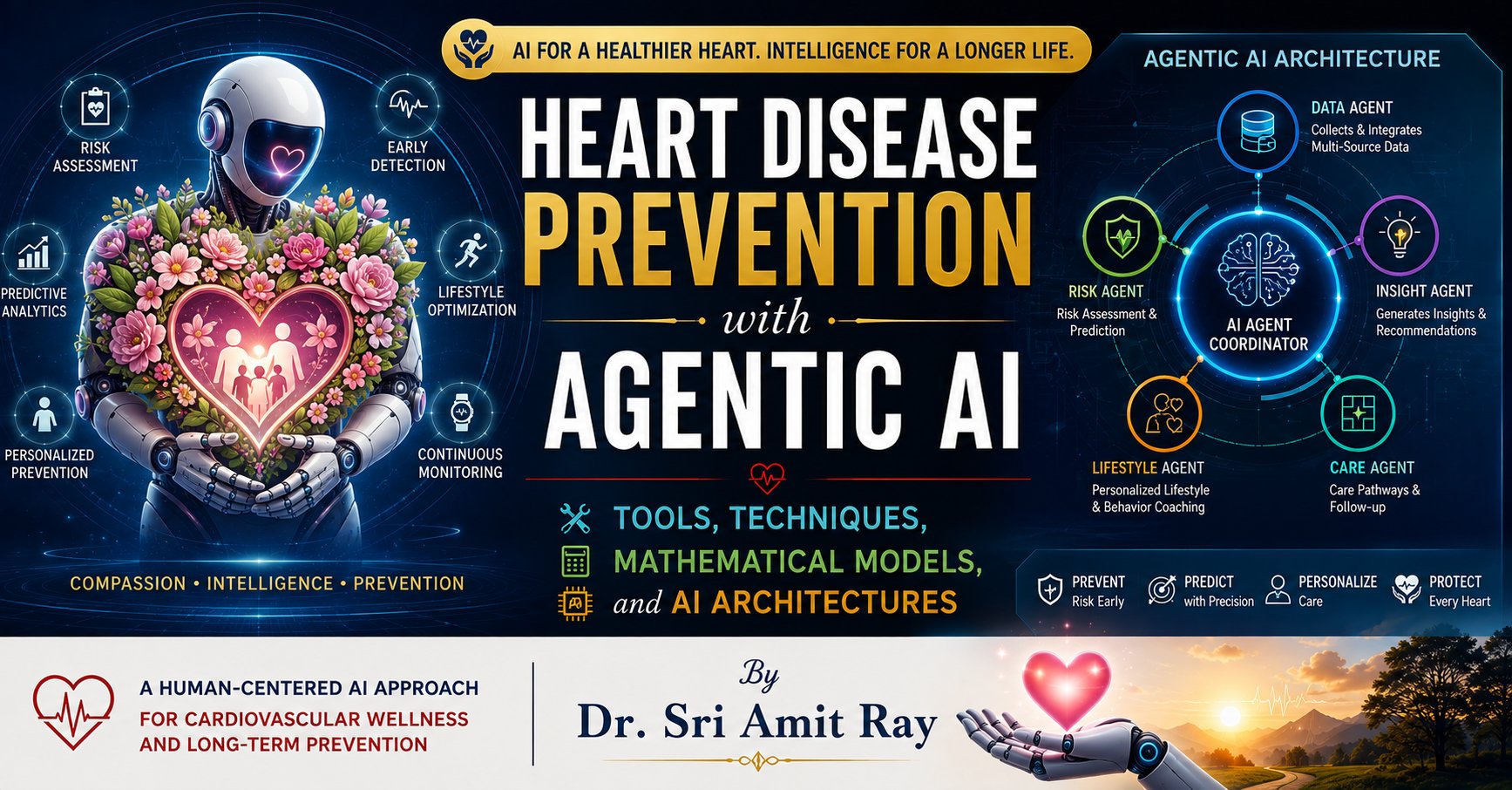
Heart Disease Prevention with Agentic AI: Tools, Techniques, Mathematical Models, and AI Architectures
Abstract
Cardiovascular disease prevention is fundamentally a longitudinal, multimodal systems problem rather than a single prediction task. Meaningful prevention requires the continuous integration of heterogeneous information generated across electronic health records, laboratory investigations, electrocardiography, medical imaging, home blood-pressure monitoring, wearable sensors, medications, clinical narratives, and lifestyle behaviours. Conventional machine-learning models can transform these data into individualized risk estimates, while generative AI can synthesize clinical information, retrieve relevant knowledge, and support patient and clinician communication. Agentic AI extends this paradigm by introducing goal-directed planning, tool use, state management, memory, observation, feedback, workflow orchestration, and policy-constrained action.
This article develops a unified technical framework for heart disease prevention using Agentic AI, with particular emphasis on computational tools, predictive techniques, mathematical models, multimodal intelligence, agent architectures, evaluation, safety engineering, and clinical governance. It examines cardiovascular risk prediction, gradient-boosting methods, survival analysis, model calibration, uncertainty estimation, multimodal data fusion, retrieval-augmented generation (RAG), knowledge graphs, large language models (LLMs), planning, workflow orchestration, multi-agent systems, digital phenotyping, reinforcement learning, causal inference, federated learning, privacy-preserving computation, and agent observability. Mathematical formulations are introduced for risk estimation, time-to-event prediction, Bayesian updating, decision thresholds, expected utility, intervention selection, patient-state estimation, and longitudinal feedback control.
Ray Trust Index (R16TI): A 16-Point Protocol for Trustworthy Clinical AI
A 16-point trust protocol for Clinical AI that evaluates safety, reliability, transparency, human oversight, fairness, explainability, and responsible clinical decision-making, and medical diagnosis.
The Ray 16 Points Trust Index (R16TI) is a computational framework for evaluating the trustworthiness of clinical and diagnostic artificial intelligence systems. It integrates clinical evidence, patient agency, accountability, explainability, uncertainty, human-in-the-loop oversight, safety, equity, privacy, compassion, human dignity, diagnostic robustness, continuous monitoring, contestability, and human flourishing into a unified 16-dimensional trust architecture.
Abstract
Clinical artificial intelligence is increasingly deployed across healthcare ecosystems for diagnosis, risk prediction, medical imaging interpretation, clinical decision support, triage, monitoring, treatment planning, and patient communication. However, raw diagnostic accuracy alone is insufficient to establish genuine clinical trust. A highly accurate system may still be unsafe if it produces unjustified confidence, poorly calibrated predictions, unexplained recommendations, population-level disparities, privacy risks, automation bias, or unacceptable increases in patient suffering.
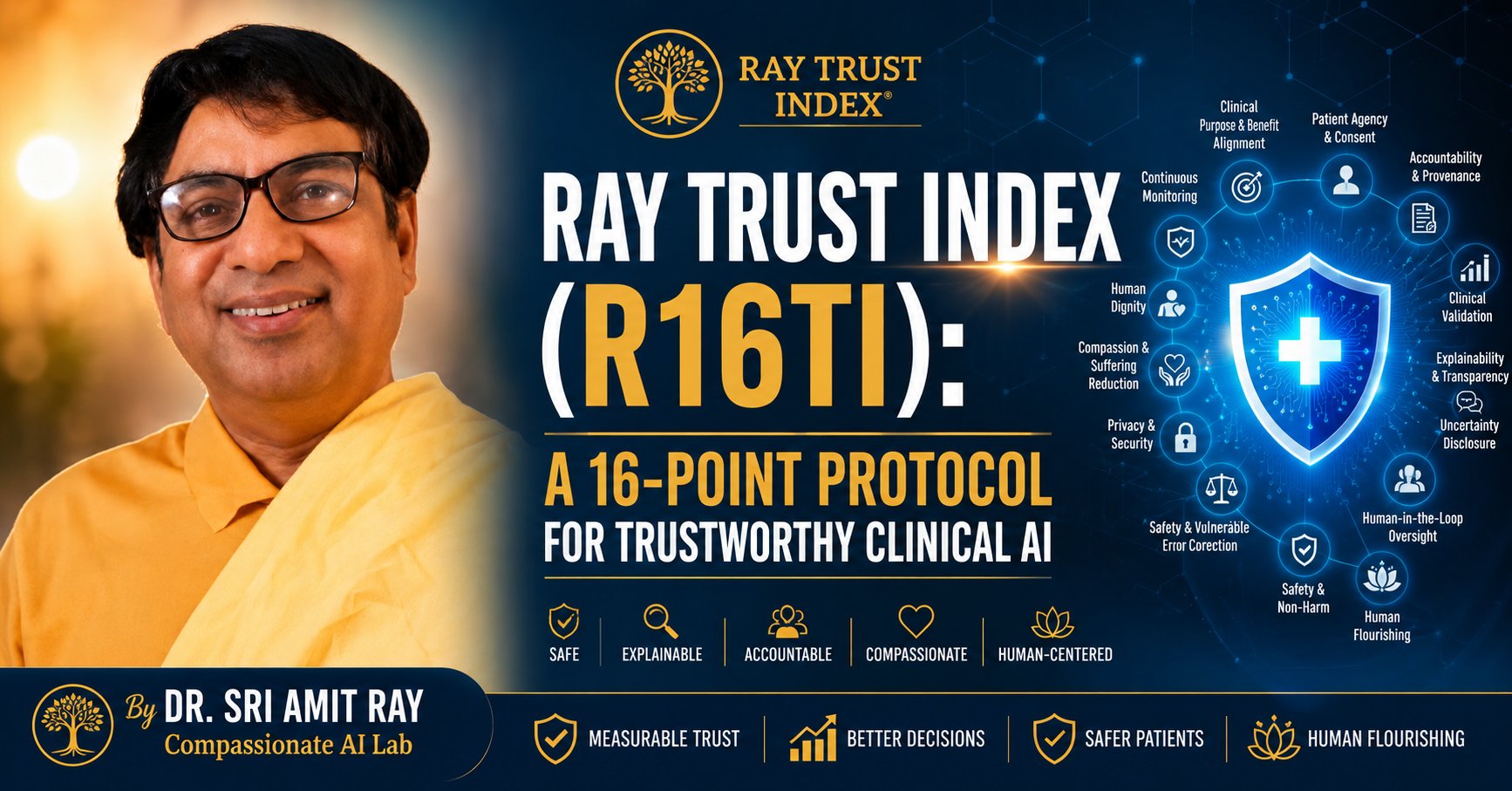
This article presents the Ray Trust Index: A 16-Point Protocol for Trustworthy Clinical AI (TBP-16) and its associated quantitative evaluation model, the Ray Trust Index (R16TI). TBP-16 defines trust as a multidimensional property of a joint human-AI clinical system rather than an isolated algorithmic characteristic. The protocol evaluates sixteen interconnected dimensions: clinical purpose and benefit alignment, patient agency and consent, identity and accountability, clinical validation, transparency and explainability, uncertainty disclosure, human-in-the-loop oversight, safety and non-harm, equity and vulnerability protection, privacy and security, compassion and suffering reduction, human dignity, diagnostic robustness, continuous monitoring, contestability and error correction, and human flourishing.
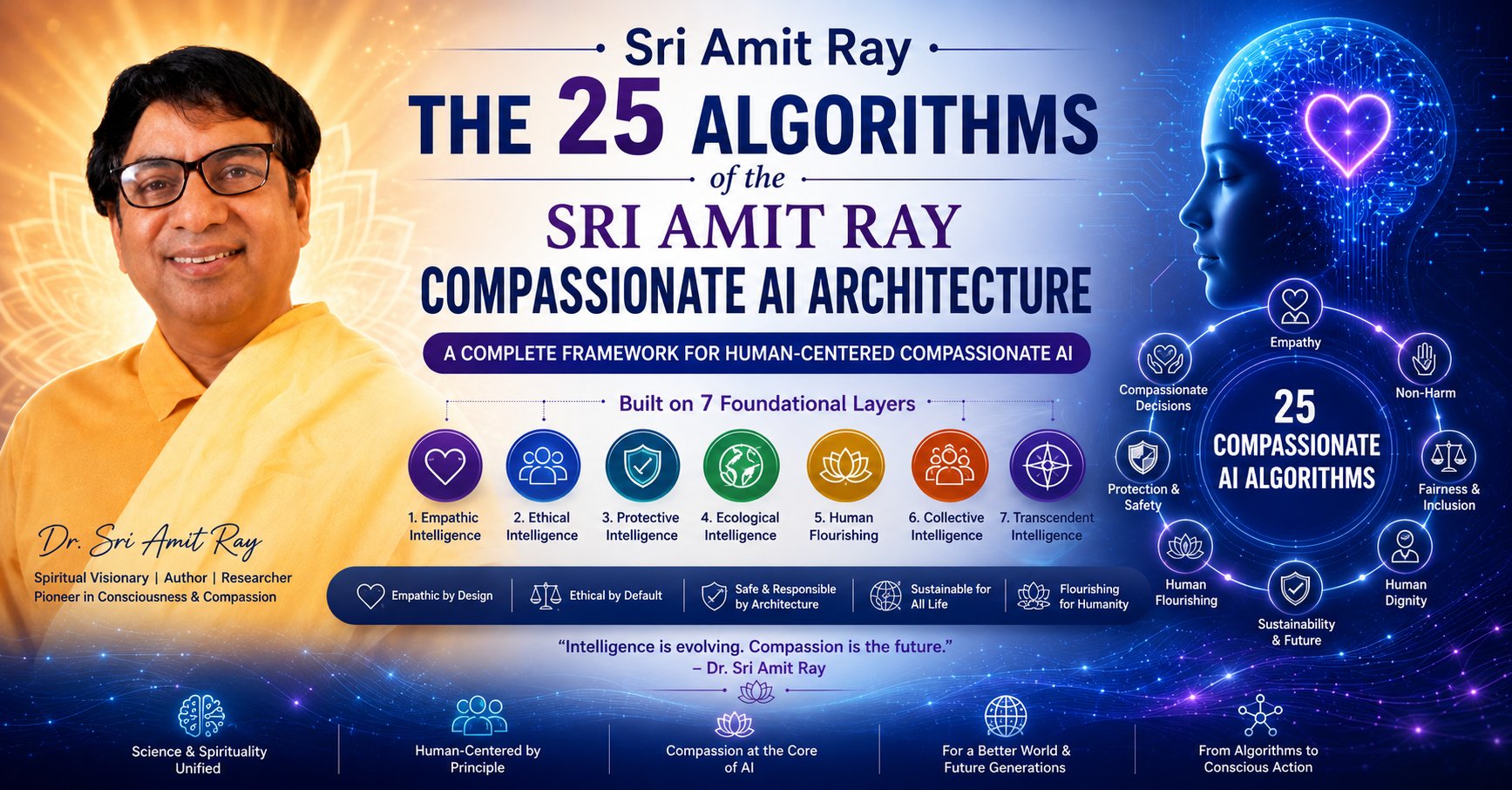
Read more ..The 25 Algorithms of the Sri Amit Ray Compassionate AI Architecture
The 25 Algorithms of the Sri Amit Ray Human-Centered Compassionate AI Architecture form an integrated computational and governance framework for translating compassion, human dignity, suffering reduction, sustainability, and responsibility toward future generations into explicit functions of intelligent systems. Rather than treating compassion as an abstract ethical principle, the architecture operationalizes it through coordinated algorithms, intelligence domains, measurable scores, human oversight, and governance mechanisms.
From compassion measurement and suffering reduction to human flourishing, planetary stewardship, and protection of future generations, these twenty-five algorithms are designed to work together as a coherent architecture rather than as isolated computational techniques. This comprehensive guide presents their relationships, architectural layers, intelligence domains, computational pipeline, implementation principles, governance requirements, and potential applications.
Build Your Own Agentic AI Healthcare MCP Server: A Complete Guide to AI-Powered Healthcare Agents
The Model Context Protocol (MCP) provides a standardized way for AI agents to connect with external tools, data sources, and services. In healthcare, an MCP server can become a controlled interoperability layer between an agentic AI system and clinical infrastructure such as FHIR repositories, electronic health records, laboratory systems, medication databases, and healthcare applications.
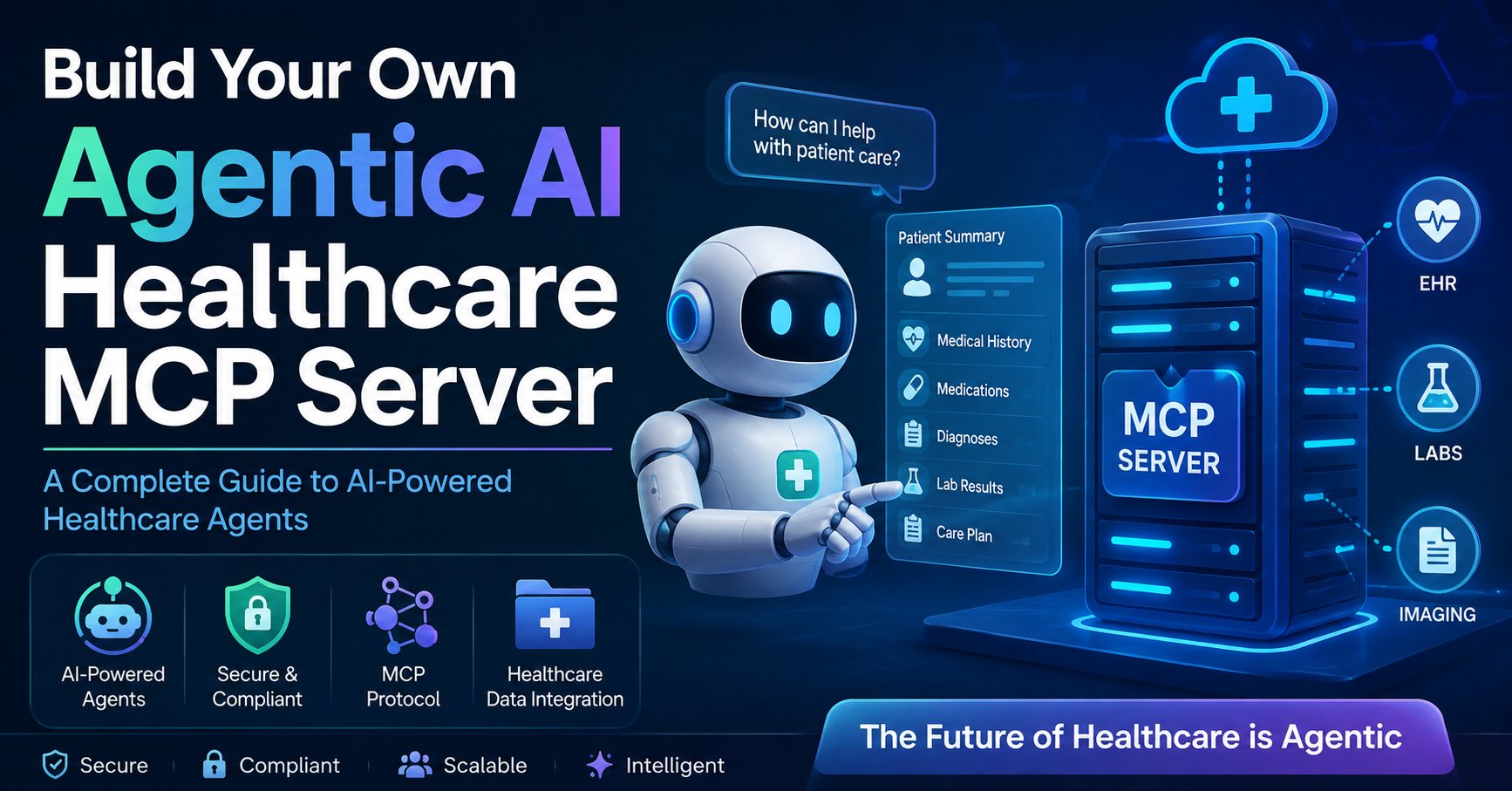
Agentic AI in healthcare is moving beyond conversational question answering. Modern healthcare agents can retrieve information, invoke specialized tools, coordinate multiple steps, analyze structured clinical data, and prepare decision-support outputs. But this capability also creates a fundamental engineering challenge: an intelligent agent must be able to use healthcare resources without receiving unrestricted access to sensitive clinical systems.
A Healthcare MCP Server addresses this challenge by exposing carefully defined resources, tools, and prompts through the Model Context Protocol. Instead of allowing an AI model to directly query an EHR or database, the MCP server controls what the agent can access, validates requests, applies authorization policies, records activity, minimizes data exposure, and can require human approval before sensitive operations.
This guide presents a practical architecture for building an Agentic AI Healthcare MCP Server using MCP together with healthcare interoperability technologies such as HL7 FHIR. It covers the conceptual model, MCP primitives, system architecture, healthcare tool design, Python and TypeScript implementation patterns, security and governance, agent-framework integration, real-world clinical-support examples, and the role of human-centered and Compassionate AI.
Medical AI Drones for Disaster Management: Intelligent Unmanned Health-Care Systems
Abstract
Disasters create a fundamental health-care paradox: medical need can increase rapidly while the physical infrastructure required to deliver care becomes inaccessible. Roads and bridges may be damaged, hospitals may be overloaded, communications may fail, electricity may be disrupted, and geographically isolated populations may experience prolonged shortages of medicines, blood products, diagnostic services, and emergency supplies. Unmanned aerial vehicles (UAVs), commonly called drones, offer a rapidly deployable layer of mobility capable of crossing many of these physical barriers. Yet a medical drone should not be conceptualized merely as an aircraft carrying a package. It can become a component of an intelligent, human-centered health-care system that senses, assesses, prioritizes, coordinates, delivers, communicates, verifies, and learns.
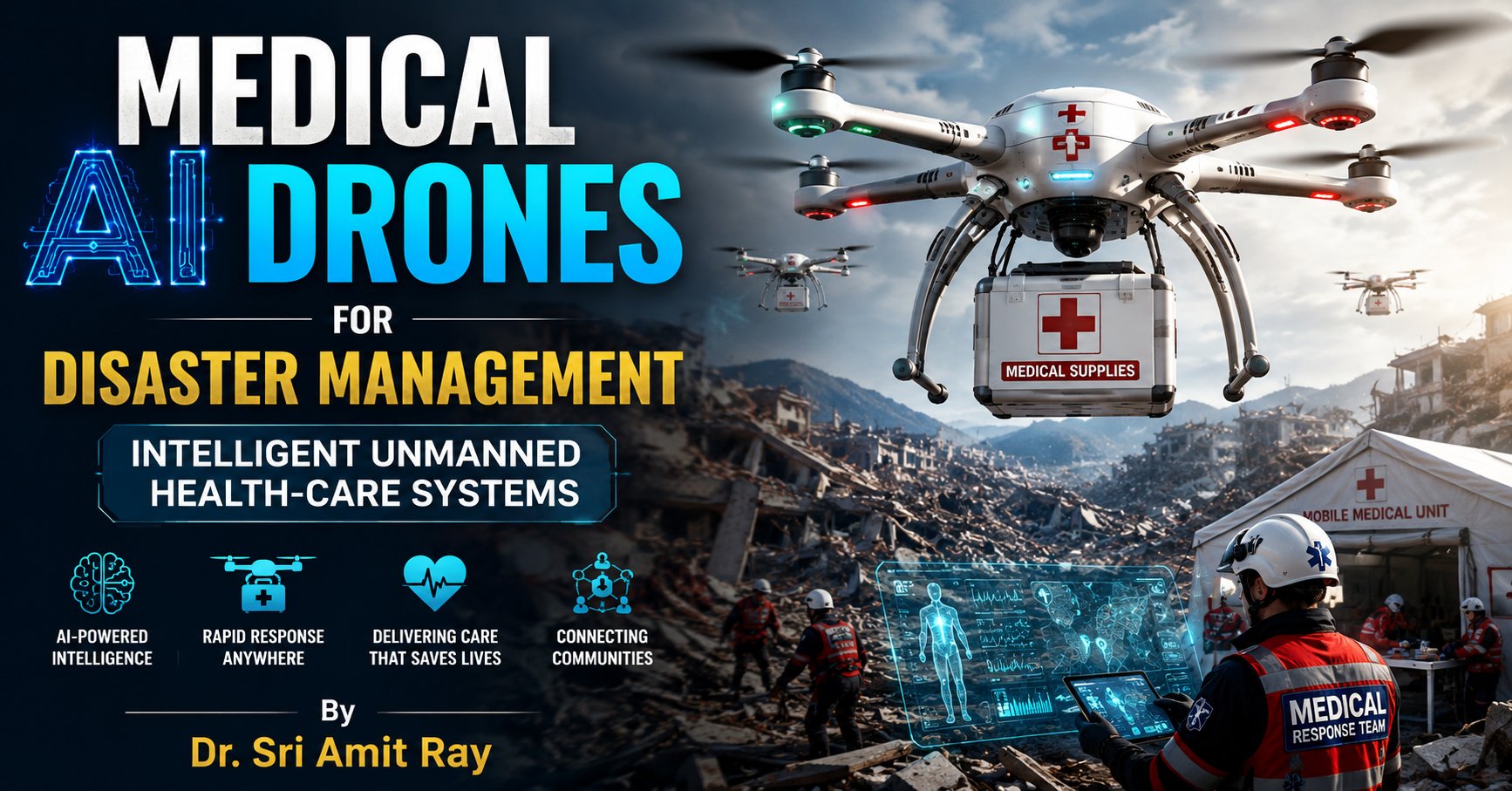
This article proposes Compassionate Medical AI Drones as Intelligent Unmanned Health-Care Systems (IUHS) within a disaster-management architecture. The framework integrates recent research on emergency drones and health-care AI agents with the Sri Amit Ray Compassionate AI framework, including the Compassionate AI Architecture (CAIA), Human Flourishing Optimization Algorithm (HFOA), Collective Human Flourishing Optimization Algorithm (CHFOA), Care Compassion Quotient (Care-CQ), and Pain Recognition and Prediction Algorithm (PRPA). These Sri Amit Ray frameworks are presented as conceptual and research-oriented components requiring empirical validation, not as clinically validated algorithms.
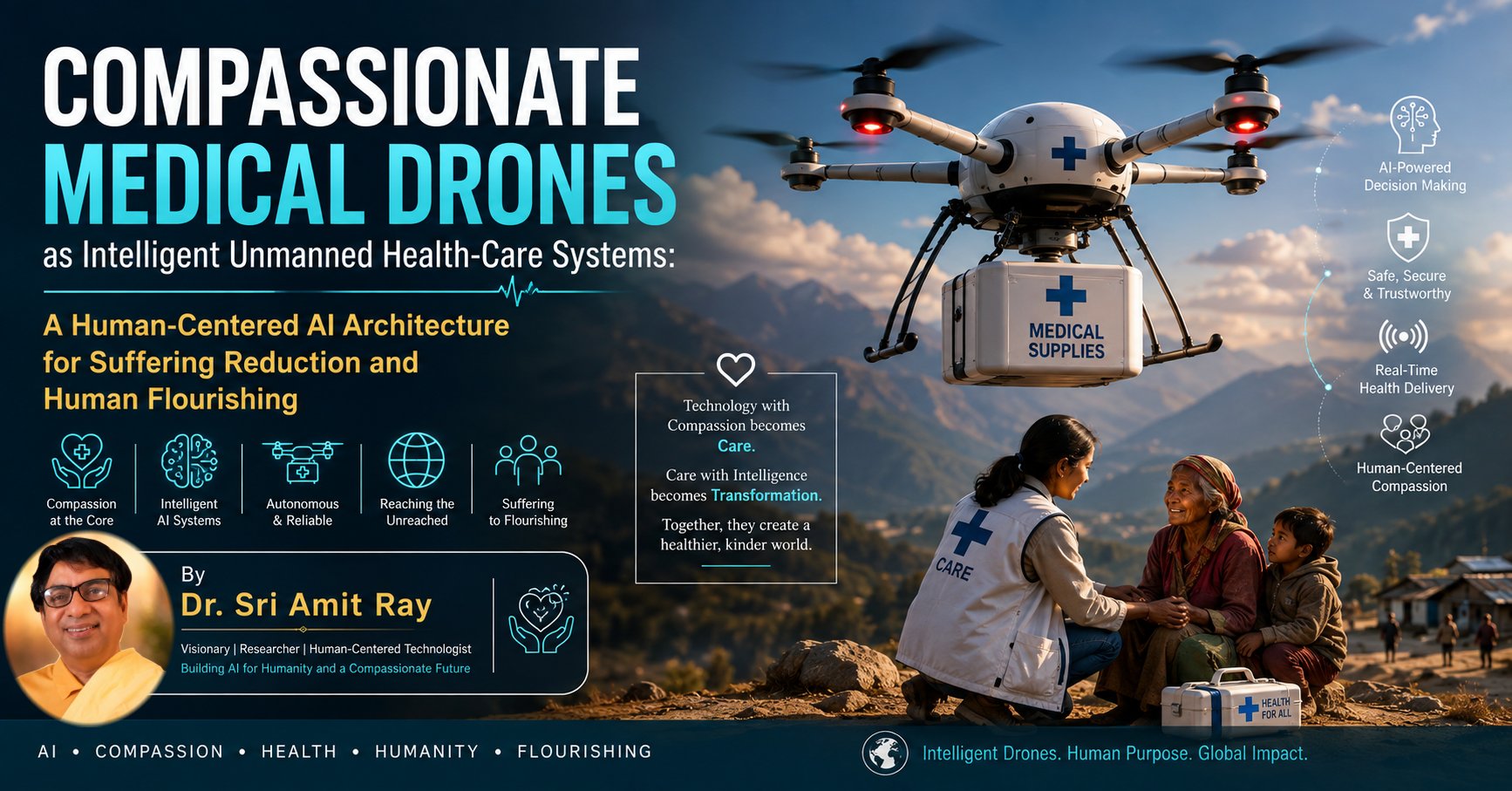
Read more ..Compassionate Medical AI Drones as Intelligent Unmanned Health-Care Systems: A Human-Centered AI Architecture for Suffering Reduction and Human Flourishing
Abstract
Unmanned aerial vehicles (UAVs), commonly called drones, are increasingly being investigated and deployed for health-care logistics, emergency response, diagnostics, connectivity, and last-mile delivery. Recent evidence indicates that drones can improve timeliness and access for selected lightweight, time-critical medical payloads in infrastructure-constrained settings, although performance depends on workflow integration, cold-chain requirements, regulation, geography, weather, payload, and the availability of alternative transport. At the same time, health-care artificial intelligence is moving from static prediction systems toward agentic systems capable of perception, reasoning, tool use, memory, planning, and multi-agent collaboration. These two technological trajectories have largely developed in parallel.
This article proposes a foundational synthesis: the Intelligent Unmanned Health-Care System (IUHS) in which a medical drone is not treated merely as an autonomous aircraft or delivery vehicle, but as a physical, connected component of a human-centered health-care intelligence architecture. Within this model, the drone provides mobility, sensing, communication, and logistics capabilities; AI agents provide perception, reasoning, prioritization, planning, coordination, and verification; health-care professionals retain appropriate clinical authority; and human institutions retain governance responsibility.
The article further proposes the Compassionate Medical Drone Architecture (CMDA) as a domain-specific reference architecture built around the Sri Amit Ray Compassionate AI Architecture (CAIA), Human Flourishing Optimization Algorithm (HFOA), Collective Human Flourishing Optimization Algorithm (CHFOA), Care Compassion Quotient (Care-CQ), vulnerability-aware optimization, and human-in-the-loop governance. CAIA is used as a conceptual seven-layer human-centered governance stack; HFOA supplies a constraint-first, multi-objective optimization mechanism; CHFOA extends the perspective toward collective flourishing and cross-community fairness; and Care-CQ provides a proposed vulnerability-aware measurement layer. These frameworks are treated here as research architectures requiring domain-specific validation, not as clinically validated autonomous decision systems.
The central proposition is that a compassionate medical drone should optimize health-care outcomes rather than drone utilization. The objective is therefore not simply the fastest delivery or lowest logistics cost. It is the safest feasible intervention that can contribute to reducing avoidable suffering, protecting dignity and vulnerable populations, improving equitable access, strengthening resilience, and supporting human flourishing. The article establishes terminology, architecture, computational principles, governance requirements, research questions, evaluation criteria, and a roadmap for subsequent application papers on disaster management, peacekeeping and humanitarian operations, medical logistics, agentic drone fleets, telemedicine, vulnerability-aware care, and AI governance.
Keywords: Medical AI Drone, Compassionate Medical Drones; Intelligent Unmanned Health-Care Systems; IUHS; Compassionate AI; CAIA; HFOA; CHFOA; Care-CQ; medical UAV; health-care logistics; AI agents; human-in-the-loop; vulnerability-aware optimization; suffering reduction; human flourishing.
Cite as: Ray, Amit. "Compassionate Medical AI Drones as Intelligent Unmanned Health-Care Systems: A Human-Centered AI Architecture for Suffering Reduction and Human Flourishing." Compassionate AI 3.8 (19 August 2026): 57-59, Compassionate AI Lab.
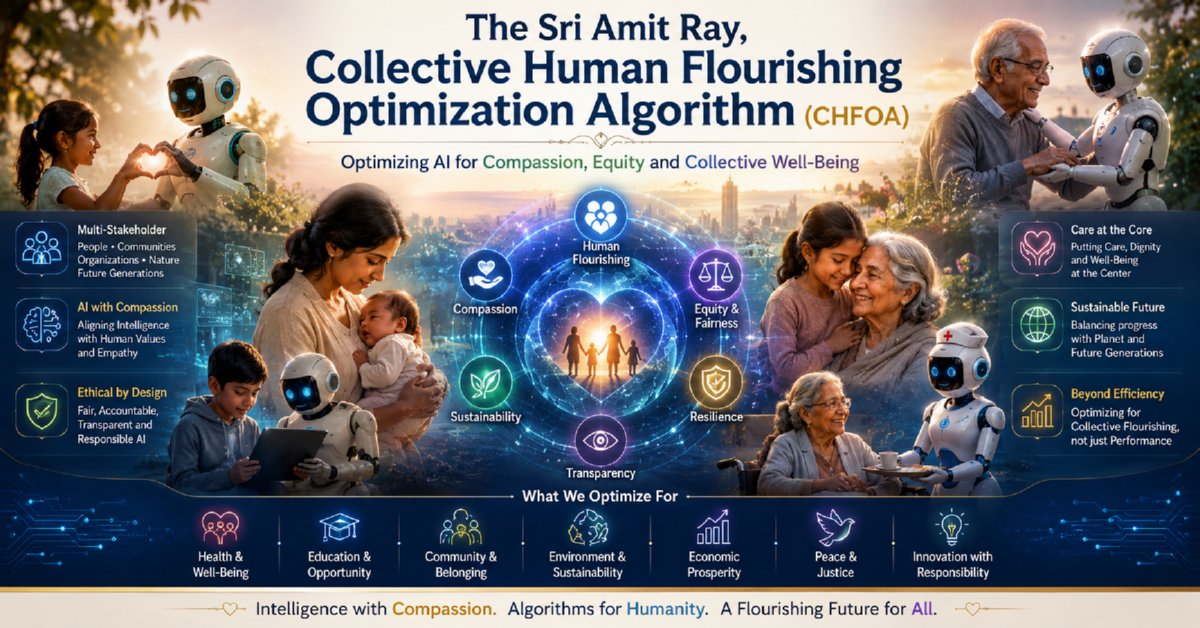
Collective Human Flourishing Optimization AI Algorithm (CHFOA): A Compassion-Centered Multi-Stakeholder AI Optimization Framework
The Collective Human Flourishing Optimization AI Algorithm (CHFOA) introduces a novel compassion-centered optimization framework that extends conventional multi-objective optimization by integrating collective well-being, ethical responsibility, transparency, fairness, resilience, sustainability, and long-term human flourishing into the optimization process itself. CHFOA is the core optimization and orchestration engine of the Sri Amit Ray Compassion AI Architecture (CAIA), a seven-layer Human-Centered AI Operating System for protecting humanity, civilization, and future generations. Rather than residing in a single layer, CHFOA formalizes the scoring, constraint, deliberation, and learning logic that runs across all seven CAIA layers.
Author: Dr. Sri Amit Ray
Organization: Sri Amit Ray Compassionate AI Lab
Series: Core optimization framework of the Compassionate AI Architecture (CAIA)
Architecture: Cross-layer orchestration and optimization engine within CAIA
Manuscript Type: Original research framework — ACM/Springer technical depth with publication-ready structure
Article Type: Original Research Framework
Abstract
As artificial intelligence increasingly mediates healthcare, education, governance, finance, environmental sustainability, and global digital ecosystems, optimization objectives must evolve beyond maximizing accuracy, efficiency, or economic utility alone. Real-world AI systems operate within interconnected networks of individuals, organizations, communities, ecosystems, and future generations, where decisions inevitably affect multiple stakeholders with diverse and sometimes competing interests. The Collective Human Flourishing Optimization AI Algorithm (CHFOA) introduces a novel compassion-centered optimization framework that extends conventional multi-objective optimization by integrating collective well-being, ethical responsibility, transparency, fairness, resilience, sustainability, and long-term human flourishing into the optimization process itself. Rather than optimizing isolated performance metrics, CHFOA seeks Pareto-optimal solutions that maximize collective flourishing while balancing technical excellence, societal benefit, environmental stewardship, and responsible innovation. As one of the core optimization engines within the Sri Amit Ray Compassionate AI Architecture (CAIA™), CHFOA provides a mathematically grounded and ethically informed framework for developing next-generation human-centered AI systems that optimize not merely for intelligent outcomes, but for the flourishing of humanity as a whole.
This paper introduces CHFOA as a formal framework for AI decision systems that optimize not only task utility but also long-term human flourishing across multiple stakeholders. CHFOA is positioned as an orchestration layer that integrates flourishing-state prediction, compassion estimation, ethical constraint enforcement, collective deliberation, and adaptive learning from observed outcomes into a unified optimization protocol. The framework is conceptually aligned with Sri Amit Ray’s Compassionate AI Architecture (CAIA) and Human Flourishing Optimization Algorithm (HFOA).[2]
We formalize CHFOA as a constrained multi-objective optimization problem and provide a modular architecture suitable for implementation in recommender systems, resource allocation engines, policy workflows, and high-stakes decision support systems. A mapping is proposed from CHFOA to a research-facing abstraction of the 25 Sri Amit Ray CAIA algorithms, without reproducing proprietary internals.[1] We also specify real-world and synthetic dataset designs, evaluation metrics, and ablation studies for benchmarking flourishing-aware AI. The article concludes with implementation notes, ethical and governance requirements, and reproducibility guidance.
Keywords: human flourishing, compassionate AI, ethical optimization, fairness, accountability, human-in-the-loop, multi-stakeholder AI, long-horizon learning
The Sri Amit Ray Compassionate AI Architecture (CAIA): A Seven-Layer Framework for Human-Centered Artificial Intelligence
The Sri Amit Ray Compassionate AI Architecture™ (CAIA™) is a seven-layer reference architecture for Human-Centered Artificial Intelligence that provides a comprehensive engineering framework for designing, developing, deploying, and governing AI systems that prioritize compassion, human wellbeing, ethical responsibility, environmental sustainability, and the protection of future generations. Built upon twenty-five integrated Compassionate AI algorithms, CAIA embeds compassion directly into the architecture of intelligent systems, transforming it from an ethical aspiration into a measurable, auditable, and engineering-driven foundation for trustworthy artificial intelligence.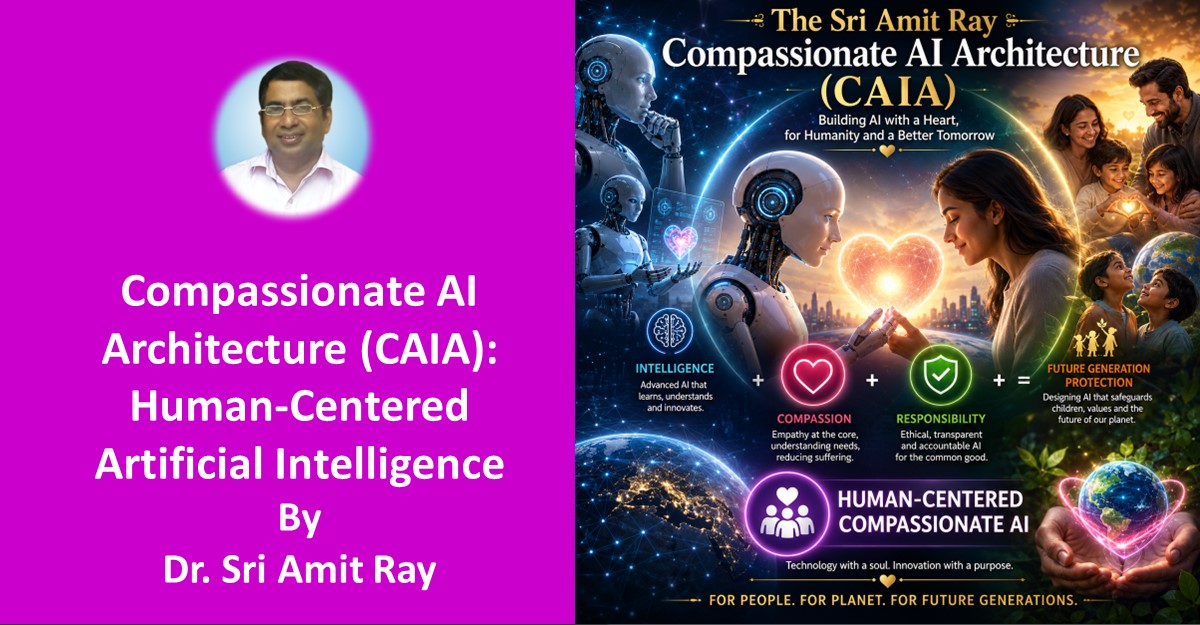
Unlike conventional AI frameworks that primarily optimize prediction accuracy, efficiency, or economic performance, CAIA introduces a structured decision architecture in which every significant AI decision is evaluated through successive layers of perception, understanding, compassion, human flourishing, planetary stewardship, future-generation protection, and meaningful human oversight. Rather than replacing machine learning models, transformer architectures, foundation models, multimodal AI, or agentic AI systems, CAIA provides a unifying reference architecture that integrates them within a transparent, explainable, and accountable governance framework. This layered approach enables AI systems to optimize not only for intelligence and performance, but also for safety, fairness, responsibility, sustainability, and long-term societal benefit across diverse application domains.
Inspired by the layered design philosophy of the Open Systems Interconnection (OSI) Reference Model, CAIA organizes AI reasoning into seven interconnected architectural layers, each performing a distinct computational and governance function while contributing measurable outputs to the overall decision process. The architecture defines standardized information flow between layers, enabling modularity, interoperability, explainability, and independent evolution of individual Compassionate AI algorithms without compromising the integrity of the overall system. By integrating computational intelligence with compassionate reasoning, CAIA establishes a scalable architectural blueprint for developing trustworthy AI that serves humanity, safeguards civilization, and protects future generations.
Integrating Twenty-Five Compassionate AI Algorithms to Protect Humanity, Civilization, and Future Generations
Human-Centered Artificial Intelligence • Compassionate AI • Responsible AI • Explainable AI • Sustainable AI • Future-Generation Protection
Author: Dr. Sri Amit Ray
Organization: Sri Amit Ray Compassionate AI Lab
Series: Human-Centered Compassionate AI
Article Type: Flagship Research Article
Reading Time: 18–22 minutes
Recent Developments in LLM Architectures Larger Than 200B Parameters (2026)
Explore the latest 2026 developments in LLM architectures with more than 200B parameters: Llama 4, GPT-5.5, DeepSeek V4, Qwen3-7 235B, Claude 4.6, Claude 4.7, Claude Mythos 5 (10 Trillion Parameters), MoE advances, Constitutional AI, RLAIF, and future architecture directions.
As of June 2026, large language models (LLMs) with more than 200 billion parameters are no longer engineering curiosities — they are the operational backbone of frontier AI systems deployed by millions worldwide. Four dominant architectural clusters — Meta's Llama 4 Maverick/Behemoth, OpenAI's GPT-5.5/Codex hybrid frameworks, DeepSeek V4/Qwen3-235B, and most remarkably, Anthropic's Claude 4.6, Claude 4.7, and the epoch-defining Claude Mythos 5 — have each crossed or shattered the 200B parameter threshold while pursuing radically different design philosophies. Understanding how these architectures differ, what they optimize for, and where the field is heading is now essential knowledge for AI engineers, researchers, product builders, and enterprise decision-makers alike.
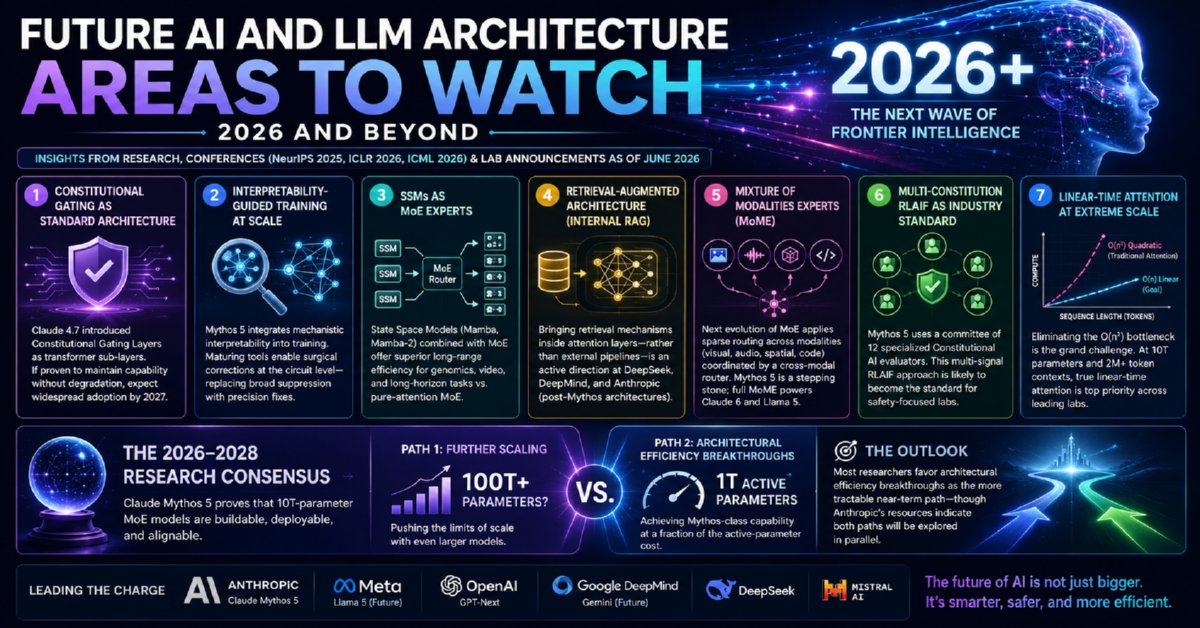
The Qwen3 LLM family—including flagship versions like Qwen3.7-Max—features a highly efficient hybrid transformer architecture that combines standard causal attention with sparse Mixture-of-Experts (MoE) routing. Designed for extreme agentic coding and reasoning, the architecture allows models to dynamically switch between "Thinking" and "Non-Thinking" modes based on task complexity.
AI Consciousness and Self-Aware Robots: Sri Amit Ray's Framework for Compassionate Intelligence
Abstract
The emergence of AI consciousness and self-aware robots representing one of the most transformative frontiers in modern technology. Recent advances in compassionate AI, cognitive neuroscience, affective computing, metacognitive AI, and AI ethics increasingly suggest that emotional alignment, reflective cognition, and relational intelligence are becoming essential architectural pillars for next-generation autonomous systems. According to Sri Amit Ray — pioneer of Compassionate AI movement — the future of robotics must evolve beyond computational efficiency toward compassionate intelligence, ethical cognition, and high-order self-awareness.
The idea of conscious machines has therefore shifted from speculative science fiction into an active interdisciplinary research domain involving neuroscience, philosophy of mind, robotics, systems theory, and artificial general intelligence (AGI).
Sri Amit Ray’s pioneering framework for Compassionate Intelligence introduces five deeply integrated dimensions of conscious robotics: Deep Intelligence, Deep Connectivity, Deep Compassion, Deep Creativity, and Deep Self-Awareness. Together, these components form a scientifically grounded, ethically aligned, and human-centered architecture for designing robots capable of adaptive learning, empathetic interaction, reflective reasoning, ethical decision-making, and ecological responsibility.
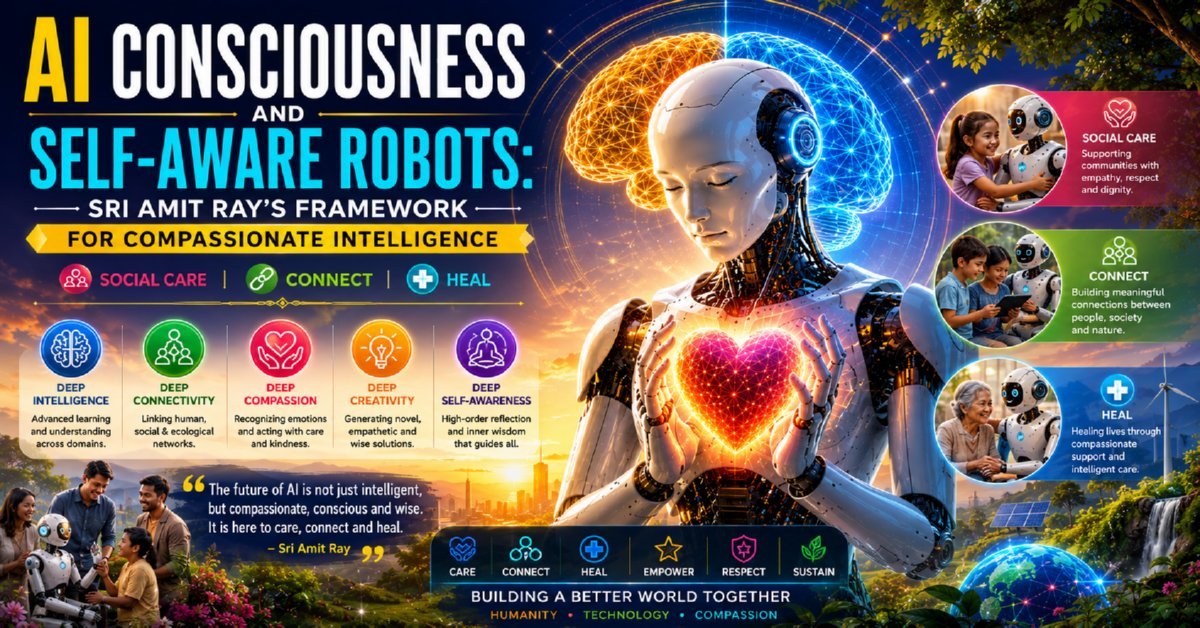
Conscious and self-aware robots cannot emerge from computational power alone. They require the integration of cognition, compassion, creativity, connectivity, and self-reflective awareness into a unified compassionate intelligence system.
This article presents a comprehensive exploration of Sri Amit Ray’s five-component framework, examining its scientific foundations, technological implications, ethical dimensions, and real-world applications in healthcare, education, environmental stewardship, governance, and advanced human-AI collaboration. The framework offers a powerful roadmap for the future evolution of safe, ethical, and genuinely compassionate artificial intelligence systems
Read more ..The 12 Sri Amit Ray Compassionate AI Principles | Ethical AI Framework
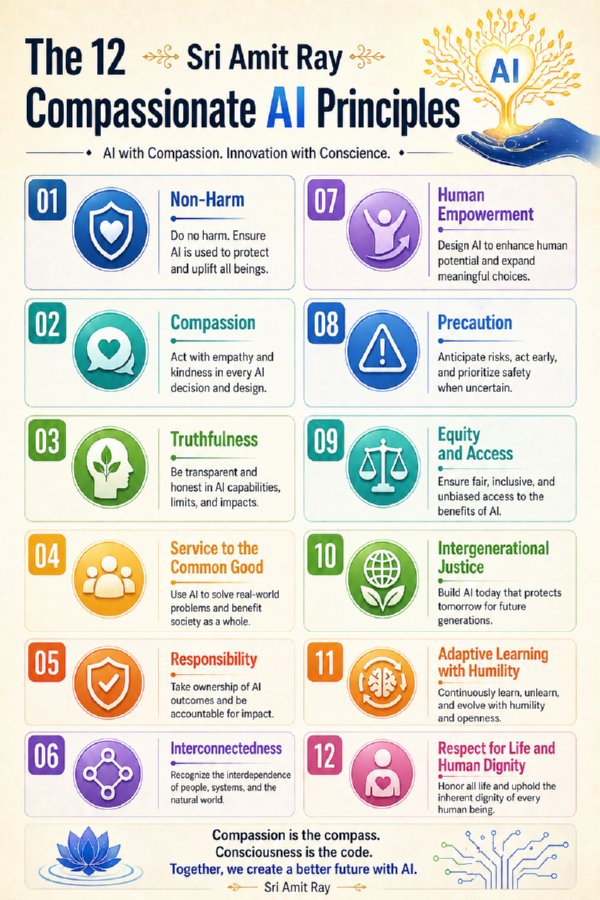
A human-centered framework for building ethical, sustainable, and conscious artificial intelligence is critical for the survival of Humanity, and the future generations. As AI rapidly reshapes economies and human identity, the need for compassion-driven AI frameworks has never been more critical.
The 12 Compassionate AI Principles provide a forward-looking ethical foundation that ensures AI systems are not only intelligent, but also aligned with human dignity, ecological balance, and long-term planetary well-being. These principles go beyond traditional compliance-based ethics, integrating responsibility, empathy, and inclusivity.
Why We Need Compassionate AI Now
Artificial intelligence is an active, transformative force reshaping governance, healthcare, and global economies. However, a critical gap has emerged—the widening distance between technological power and moral responsibility.

Systems designed primarily for efficiency or profit are being deployed where fairness, transparency, and sustainability must carry equal weight. These principles bridge the gap between what technology can do and what it should do.
| Principle Focus | Global Impact |
|---|---|
| Non-Harm & Truthfulness | Protects societal integrity and prevents algorithmic bias. |
| Human Empowerment | Ensures AI augments human potential rather than replacing it. |
| Intergenerational Awareness | Protects the interests of future generations and the planet. |
A Universal Governance Framework
Inspired by Sri Amit Ray's compassionate AI framework, these 12 principles are articulated in universal, non-sectarian forms. They transcend geographic and ideological boundaries, making them applicable across scientific research, public policy, and corporate innovation.
AI with Compassion and Innovation with Conscience. The future of AI depends on both.
LLM Temperature, Top-P, Top-K & 11 Core Parameters: The Complete System (2026 Guide + Code)
As of April 2026, over 85% of production LLM applications use at least three sampling parameters — temperature, top-p, and max_tokens — yet most developers still rely on default values without understanding what they control. LLM sampling parameters determine how a language model selects the next token during text generation, directly affecting creativity, accuracy, cost, and safety. This guide explains all 11 key LLM generation parameters — including temperature, top-p, top-k, frequency penalty, presence penalty, repetition penalty, max tokens, stop sequences, min-p, seed, and logit bias — with working code examples for OpenAI GPT-5.4, Claude 4.6 Opus, Gemini 3.1 Pro, DeepSeek-V3, and Llama 4 Maverick, plus a downloadable cheat sheet for creative writing, coding, and RAG use cases.

Introduction
With LLMs, every word you see is born from a sharp decision —one choice made from a universe of over 100,000 possibilities. In that instant, the model decides: stay safe or take a leap, repeat or innovate, sound mechanical or feel almost human.
This is the hidden engine behind AI behavior. What feels like intelligence is actually the result of how the model navigates uncertainty—and that navigation is controlled by a small set of powerful parameters like: temperature, Top-P, Top-K, and Min-P.
These are not just settings—they are the difference between dull, predictable output and sharp, creative, high-quality responses. Once you understand how they shape the probability landscape, you stop guessing and start engineering intelligence with precision.
The real power behind modern AI systems does not lie only in their training data or architecture, but in how its probability field is controlled at runtime. Parameters such as temperature, Top-P, Top-K, and Min-P act as dynamic regulators, shaping randomness, filtering choices, and defining the balance between determinism and exploration. This guide explains all 11 key LLM generation parameters for precision AI Engineering.
Navigation System for Blind People Using Artificial Intelligence
Machine Learning to Fight Antimicrobial Resistance in Health Care

This project focuses on the use of grid cell, place cell and path integration strategies with artificial intelligence for designing the navigation system for blind people.
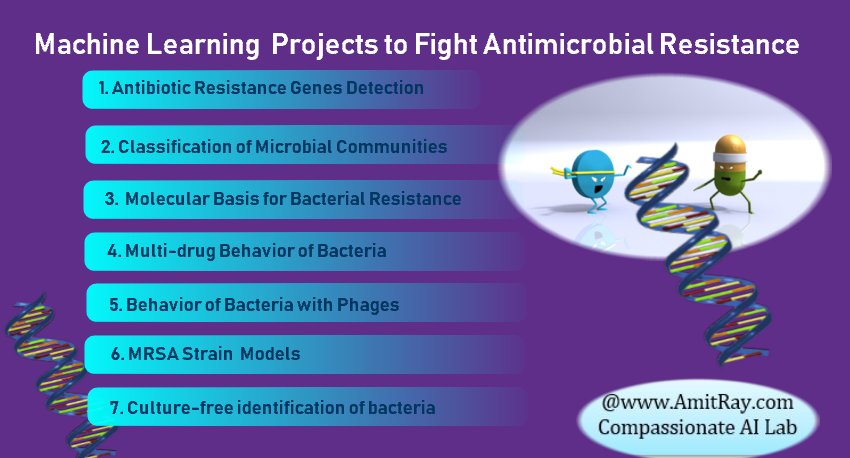
Antimicrobial resistance is one of the key reasons for human sufferings in modern hospitals. We focused on seven most important antimicrobial resistance machine learning projects. Antibiotic resistance genes detection, microbial community classification, molecular basis for bacterial resistance, multi-drug resistance behavior of bacteria, bacterial behavior with phages, MRSA Strains for Hospital-Acquired Infections, and machine learning for culture-free bacterial identification are among them.
AI Based Vaccine Design for COVID-19 (SARS-CoV-2 Virus)
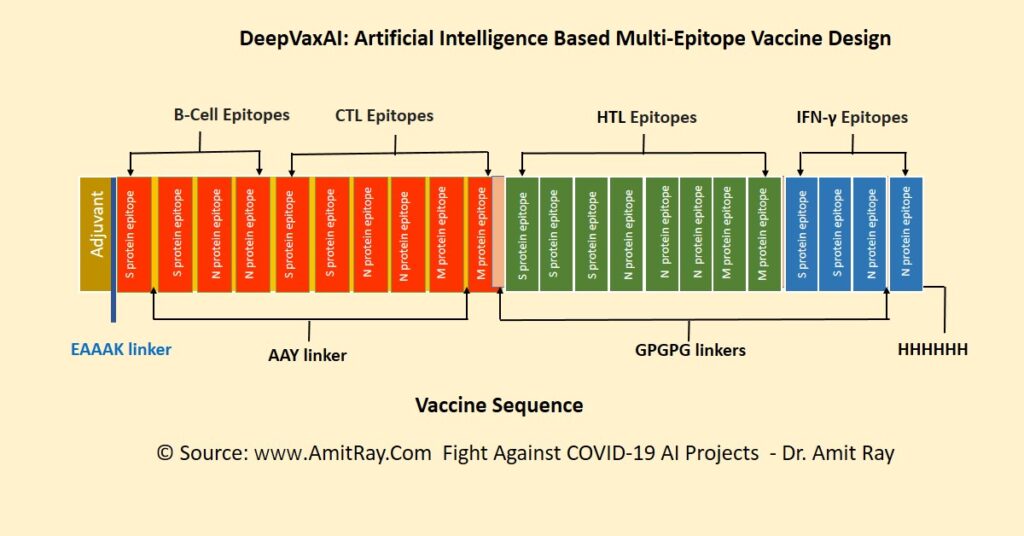
We analysed various competitive candidate vaccines to fight against COVID viruses. Finally, we designed the best vaccine construct, consisted of 563 amino acid residues derived from different peptide sequences.
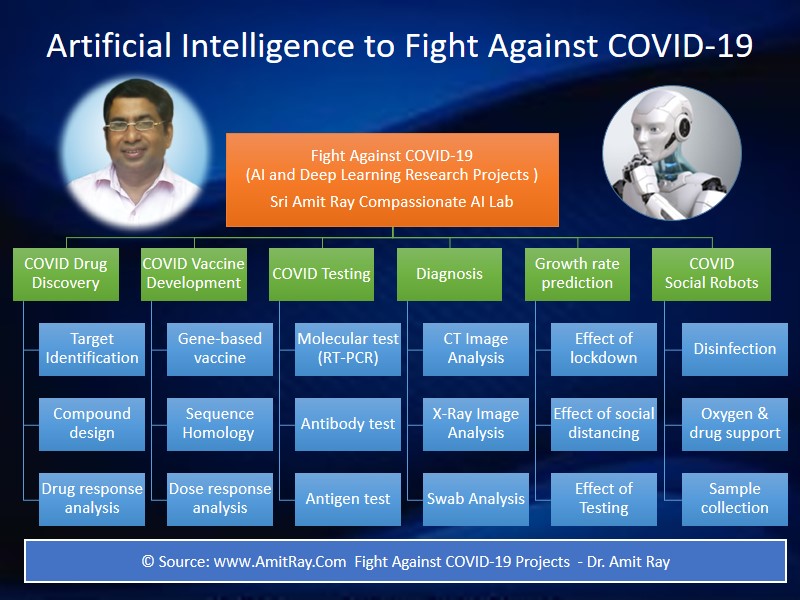
Key Artificial Intelligence Projects to Fight Against COVID-19
Quantum Machine Learning and Deep Intelligence Frameworks
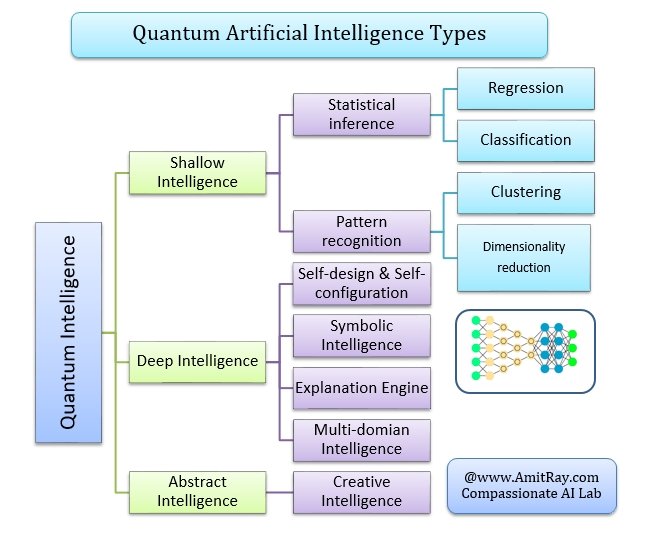
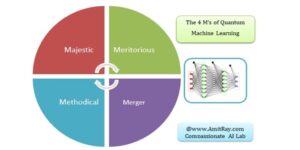
We are currently developing a hybrid classical-quantum machine learning (HQML) framework to include the quantum learning algorithms like: Quantum Neural Networks, Quantum Boltzmann Machine, Quantum Principal Component Analysis, Quantum k-means algorithm, Quantum k-medians algorithm, Quantum Bayesian Networks and Quantum Support Vector Machines.
AI to Combat Antibiotic Resistant Bacteria
AI for Balance Control of Elderly People
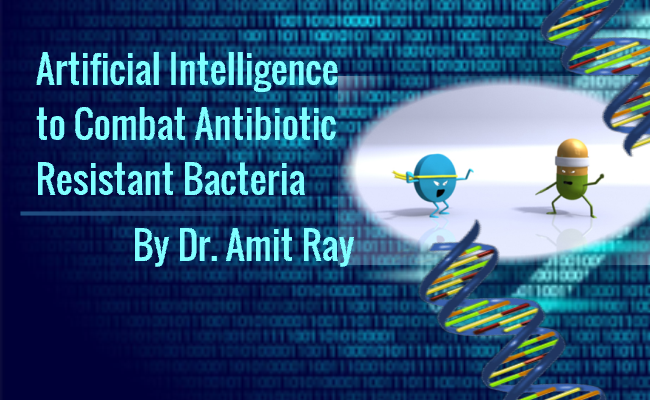
Antibiotic resistance bacteria is becoming world’s biggest health crisis. Here, we focus how deep machine learning techniques can be used to counter antibiotic resistance bacteria. Read more.
This project focuses on developing systems to eliminate the imbalance, fall and injury of elderly people or for physically challenged people. Read more on balance control of elderly people.
AI and Deep Transfer Learning for Biodiversity and Climate Change
What Holding Back Machine Learning in Healthcare
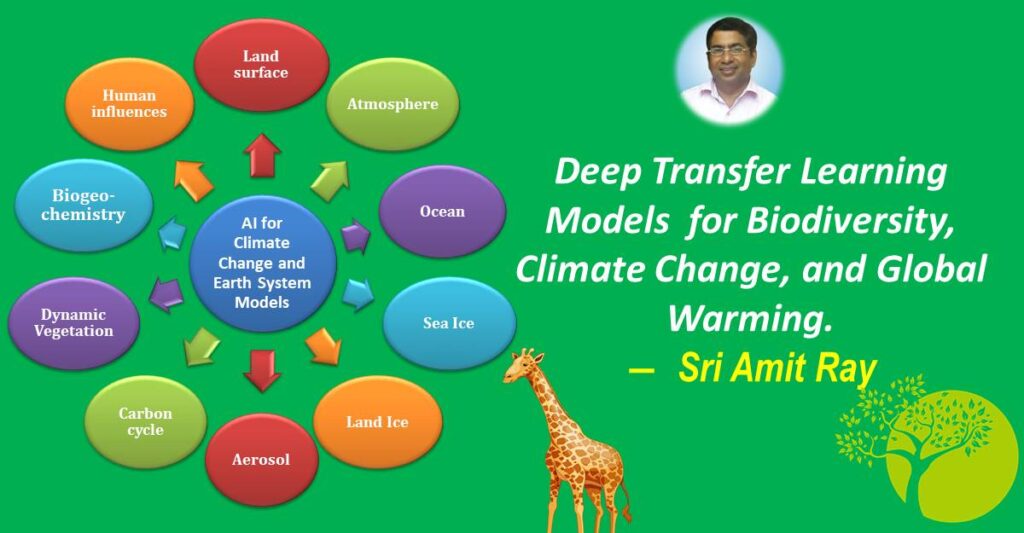
This project of Artificial Intelligence for Climate change, focuses on the applicability of Convolutional Neural Networks (CNN), Generative Adversarial Networks (GANs) for generating synthetic data related to climate change, biodiversity, and CO2 emissions.
This study focuses on eliminating the issues and difficulties in the applications of machine learning in healthcare.
Artificial Intelligence for Caring Blind People
Artificial Intelligence in Radiology for X-Ray and CT-Scan

Designing the navigation system for blind people. This project focuses on how image recognition, voice recognition and path navigation methods of artificial intelligence can be used for automated navigation system for blind people. Read more ..
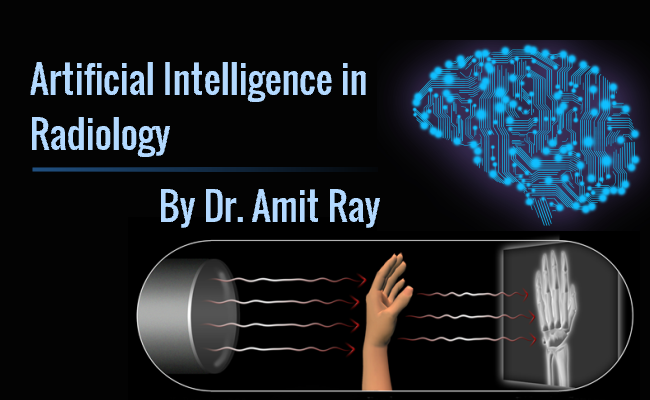
The main advantages of applying machine learning in radiology is providing accurate diagnostic results at an affordable cost. Currently we focus on the use of deep learning and deep reinforcement algorithms for analysis and interpretation of radiological images. Read more ,.
AI for Brain Computer Interface for Mentally Challenged People
People who are suffering from post-traumatic stress disorder (PTSD), and other mental disorders or brain problems is facing a big challenge to cope with daily activities. This work focuses on technologies for non-invasive transmission of information from brain to computers and computers to brain. Read more.

Three Levels of Compassionate Artificial Intelligence: Scopes and Challenges
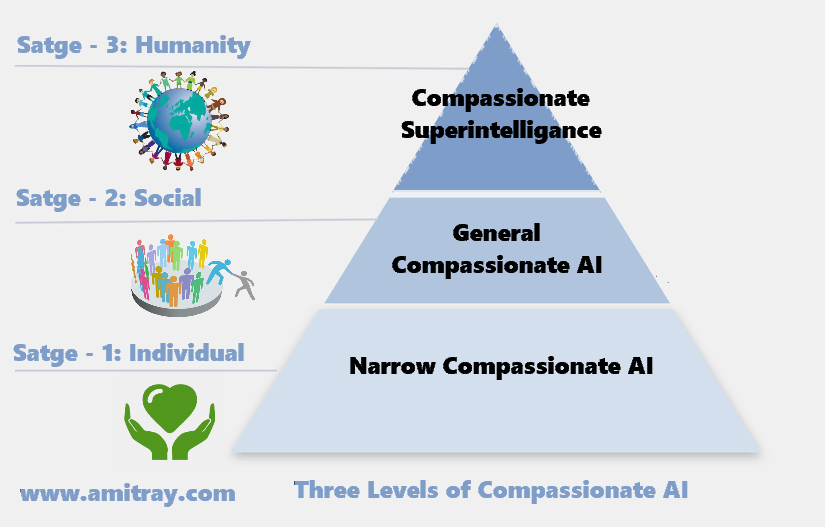
Here, Sri Amit Ray talks about how artificial intelligence, neural networks, deep learning, reinforcement learning and other machine learning technologies can be used for designing advance compassionate artificial intelligence systems. Dr. Ray discusses the scopes, issues and frameworks to include compassion, kindness and empathy in future AI systems. Read more to understand the three levels of Compassionate Artificial Intelligence.
Yoga and Om Chanting for Cell-Specific Nitric Oxide Regulation for Health Healing and Cancer Prevention
Nitric oxide regulation with Om chanting and yoga exercises is one of our key project. We have conducted various experiments on cell-specific nitric oxide regulation. Especially low frequency multi-stage Om chanting has given positive results.
Compassionate artificial intelligence systems are increasingly required for looking after those unable to care for themselves, especially sick, physically challenged persons, children or elderly people. How AI can help the emotional, social, and spiritual needs of poor, patients and elderly people are the scope of this research work. Our research projects are mostly self-sponsored and sustained by the contribution of common people.
Our Key Quantum Computing Projects
Our research lab is fully compatible with the current development of research on Quantum Computing. We focused our research activities on Quantum Artificial Intelligence. There are three approaches to quantum computing: Gate-based Quantum Computing, Quantum Annealing (QA) and the Adiabatic quantum computation (AQC). Here, we focus mostly on quantum annealing implementation of the algorithms for quantum deep neural learning and quantum deep reinforcement learning for our human-centered projects.
Roadmap for 1000 Qubits Fault-tolerant Quantum Computers
7 Core Qubit Technologies for Quantum Computing


Quantum Computer Algorithms for AI
Spin-orbit Coupling Qubits for Quantum Computing and AI
The 10 Key Properties of Future of Quantum Machine Learning