
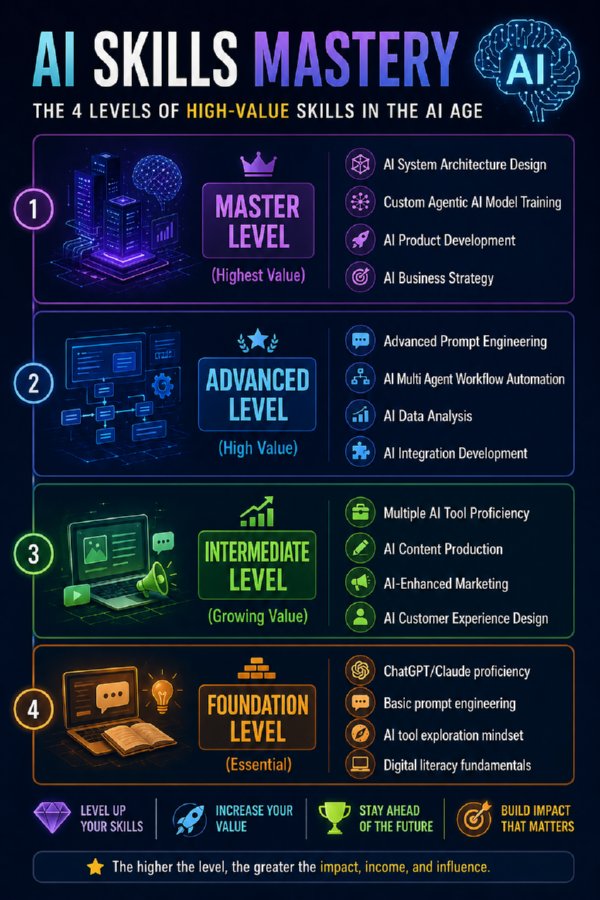
The year 2026 marks a decisive shift in the AI job market. Companies are no longer hiring based on what you know — they are hiring for what you can reliably produce with AI tools. The focus has moved from basic prompt engineering to building autonomous AI agents, designing robust workflows, ensuring AI reliability, and combining domain expertise with advanced AI capabilities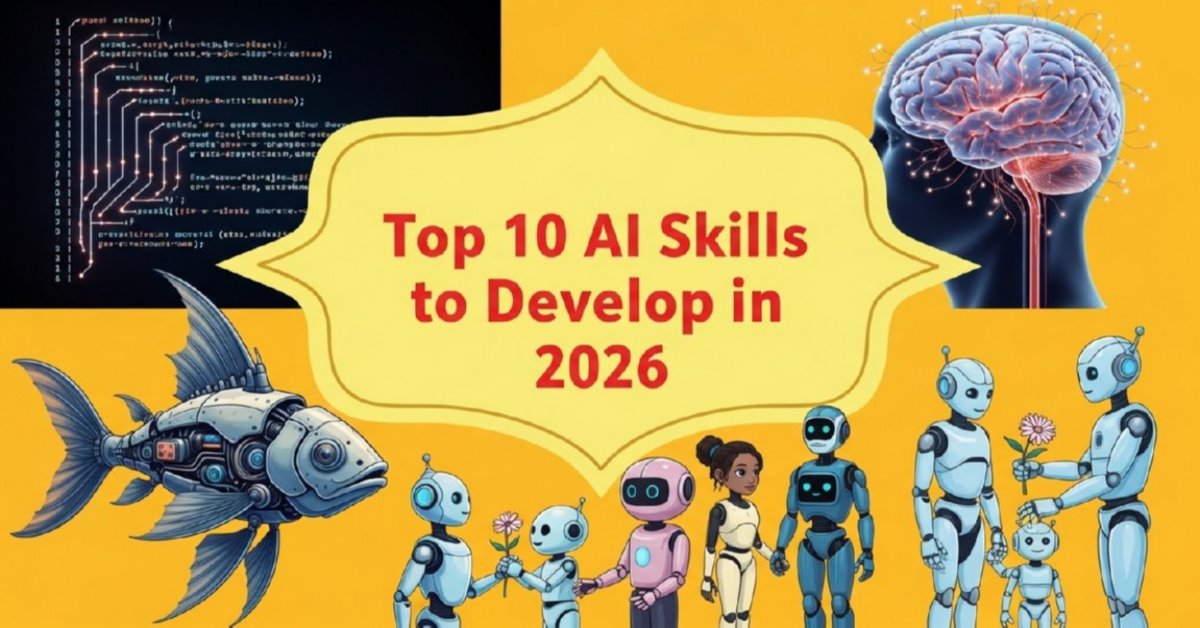
This guide reveals the 10 most valuable AI skills for 2026 and beyond — skills that will command premium compensation and provide long-term career security in an AI-first economy.
The 2026 AI Landscape
We are witnessing the largest transformation in wealth creation in human history. Organizations are moving beyond experimentation and are now embedding AI into core business systems (CRM, ERP, marketing automation, and decision engines) to deliver measurable ROI.
The winners of the next decade won’t be those who simply use AI — but those who can design, orchestrate, audit, and continuously improve intelligent systems.
The year 2026 is officially the AI job gold rush. Companies across industries—from tech giants to healthcare, finance, marketing, and manufacturing—are pouring billions into AI. The market rewards applied skills. Companies are no longer hiring for what you know; they are hiring for what you can produce using the right tools. Employers want people who can build, deploy, and ethically manage AI systems that deliver real business value.
“The greatest wealth creation opportunity in human history is unfolding right now. Those who understand AI creativity will create the wealth of tomorrow.”
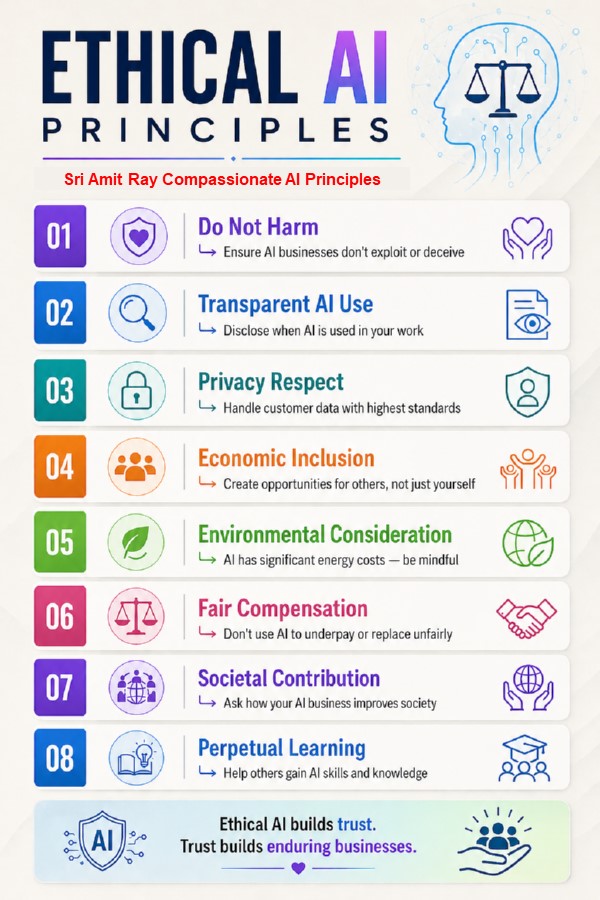
We stand at the most extraordinary inflection point in economic history. Artificial Intelligence is not merely changing how we work — it is fundamentally restructuring how overall prosperity is created, distributed, and multiplied. Whatever you do, on any AI ecosystem, always remember the 12 key compassionate AI principles.
The 2026 AI Gold Rush
The “college-to-career” pipeline just burst. While millions are still spending four years and six figures on traditional degrees, a new class of “New Collar” workers is quietly hijacking the job market. They aren’t computer scientists or math geniuses; they are AI Orchestrators—and they’re commanding $50 to $200 an hour using tools that didn’t even exist eighteen months ago.
We are officially entering the 2026 AI Gold Rush. For the first time in history, the barrier to entry for a high-six-figure career isn’t a diploma—it’s applied curiosity. Companies are no longer hiring for what you know; they are hiring for what you can produce using the right tools.
Best AI Tools and Tutorials 2026
Top 10 Skills to Develop (No Degree Needed)
1. Agentic Workflow Design
Moving beyond simple chat prompts, this involves building “agents” that can execute multi-step tasks autonomously (e.g., researching a lead, writing an email, and scheduling a meeting without human intervention).
This skill is crucial for roles in AI operations, automation engineering, and product development, where demand is surging—projected to grow 40% annually through 2030.
Key Tools & Frameworks:
- LangGraph – Best for persistent, stateful agents in complex workflows.
- CrewAI – Ideal for role-based, business-friendly team simulations.
- n8n – For back-office data processing and multi-agent orchestration.
- Pinecone / Milvus – Vector databases for long-term agent memory.
2. No-Code AI Automation
Using platforms like Zapier, Make, or n8n to connect AI models to business software (Slack, Salesforce, Shopify). This democratizes AI, allowing non-coders to automate workflows that save thousands in labor costs.
Key Platforms:
- Zapier – Most accessible, with 7,000+ app integrations.
- Make – Visual, powerful, and flexible for complex logic.
- Lindy – AI-native assistant for task delegation.
3. Advanced Prompt Engineering (Chain-of-Thought)
Structuring complex logic within prompts to ensure LLMs solve difficult reasoning problems consistently. Chain-of-Thought (CoT) prompting boosts AI accuracy by 20–50% on tasks like math or planning.
Key Resources:
- ChatGPT / Claude / Gemini – Core models for practice.
- PromptLayer – Track and version prompt performance.
- LangSmith – Debug and evaluate prompt chains.
4. AI Video & Synthetic Media Production
Creating high-quality marketing assets and training videos using tools like HeyGen, Runway, or Sora without a film crew. Slashes production costs by 90%.
Key Tools:
- Runway – Generative video editing and effects.
- HeyGen – Synthetic video and avatar creation.
- Descript – AI-powered audio/video editing.
5. Custom GPT & Assistant Development
Building specialized AI assistants trained on private company data to handle customer support or internal knowledge bases. Can improve support efficiency by 30%.
Key Platforms:
- OpenAI Custom GPTs – Specialized assistants with private data.
- Botpress – Production-grade chatbot framework.
- Flowise – Visual RAG and agent pipeline builder.
6. AI-Enhanced Data Visualization
Using AI to turn massive datasets into interactive, boardroom-ready dashboards in minutes. Accelerates decision-making and drives 65% better insights.
Key Tools:
- Tableau / Power BI – Enterprise-grade visualization.
- ChatGPT Advanced Data Analysis – AI-assisted exploration.
- Python (Pandas, Matplotlib) – Custom analysis and visuals.
7. AI Auditing & Bias Detection
Verifying AI outputs for accuracy and ethical compliance. Critical as regulations tighten (e.g., EU AI Act). Reduces legal risks and builds trust.
Key Tools:
- IBM AI Fairness 360 – Detect and mitigate bias.
- WhyLabs – Monitor data drift and anomalies.
- OpenAI Evals – Systematic model testing.
8. Human-in-the-Loop (HITL) Management
Managing the interface between AI systems and human workers to ensure quality control in automated environments. Boosts accuracy by 25%.
Key Approaches:
- Label Studio – Data annotation and feedback loops.
- RLHF techniques – Align AI with human feedback.
- Figma – Prototype collaborative AI interfaces.
9. Real-Time AI Translation & Localization
Helping global brands launch products in 50+ languages using AI dubbing and cultural adaptation. Cuts localization time by 70%.
Key Tools:
- DeepL – High-accuracy neural translation.
- HeyGen Dubbing – Multilingual voice/video localization.
- Whisper – Multilingual speech-to-text.
10. AI Cybersecurity Awareness
Protecting businesses from AI-powered phishing, deepfakes, and automated threats. Deepfake attacks are up 300% yearly.
Key Resources:
- Deepfake Detection Tools – Identify synthetic media.
- AI Phishing Simulations – Train teams to recognize threats.
- Threat Modeling Frameworks – Anticipate AI-specific risks.
How to Start Today
You don’t need a computer science degree. You need a portfolio. You need an AI mindset. You need to learn some top AI ide development tools. Pick one skill above, spend 20 hours mastering the top tool in that category, and build three to five public-facing projects. Demonstrate your ability to produce results, not just list credentials.
Frequently Asked Questions
Do I need a computer science degree to learn these AI skills?
No. Most of the skills listed here are accessible to anyone with curiosity and consistency. Tools like Zapier, Make, and no-code platforms are designed for non-technical users. Even advanced skills like agentic workflow design can be learned through structured online courses and hands-on project building — no formal degree required.
Which AI skill has the highest earning potential in 2026?
Agentic Workflow Design and Custom GPT Development currently command the highest rates for project work — due to the complexity and business impact of these systems. AI Cybersecurity Awareness is also rising sharply in value as threats multiply. However, the best-paying skill is always the one you can demonstrate with a strong portfolio.
How long does it take to become job-ready in one of these areas?
With focused effort, most people can build a job-ready portfolio in 4 to 12 weeks. Spending 20 hours mastering a core tool, then building 3–5 real projects, puts you ahead of the vast majority of applicants who still rely solely on credentials. Consistency matters far more than speed.
Will AI replace these jobs in the near future?
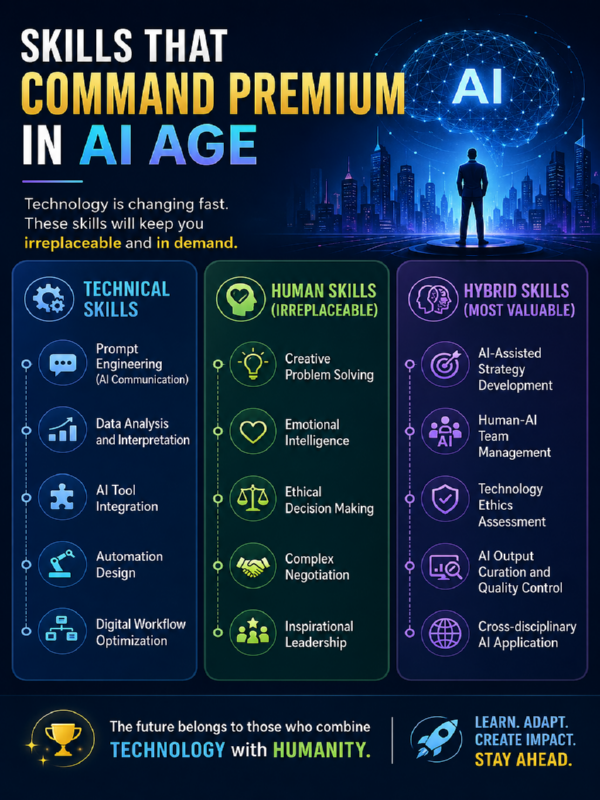
The skills listed here are specifically chosen because they require human oversight, contextual judgment, ethical reasoning, or creative direction — the very things current AI cannot autonomously perform at a reliable level. Roles like HITL Management, AI Auditing, and Agentic Workflow Design exist precisely because AI needs human governance. These are not at risk; they are growing.
What is the best first skill to learn for a complete beginner?
No-Code AI Automation (Skill #2) is the ideal starting point for beginners. Tools like Zapier and Make require no programming knowledge and provide immediate, visible results. Once comfortable, you can layer in Advanced Prompt Engineering (Skill #3) to dramatically improve the quality of outputs — forming a powerful, marketable combination.
Are these skills relevant outside the tech industry?
Absolutely. AI Video & Synthetic Media Production is transforming marketing, education, and healthcare training. Real-Time Translation & Localization is critical in legal, government, and e-commerce. AI-Enhanced Data Visualization is in demand in finance, retail, and logistics. Every industry is adopting AI — the specific application simply varies.
Closing Perspective
The AI job market of 2026 is not about chasing hype. It is about developing literacy in intelligent systems—understanding how they work, where they fail, and how humans can guide them toward useful outcomes.
Degrees still have value, but they are no longer the only signal of competence. Skills, judgment, and adaptability have become the new credentials.
Those who invest in these capabilities are not simply preparing for the future of work. They are actively shaping it.