
AI tokens are the fundamental building blocks that power modern Large Language Models (LLMs), determining how text is processed, understood, and generated at scale. In simple terms, tokenization is the process of breaking raw text into smaller units—called tokens—which can be words, subwords, characters, or even punctuation marks.
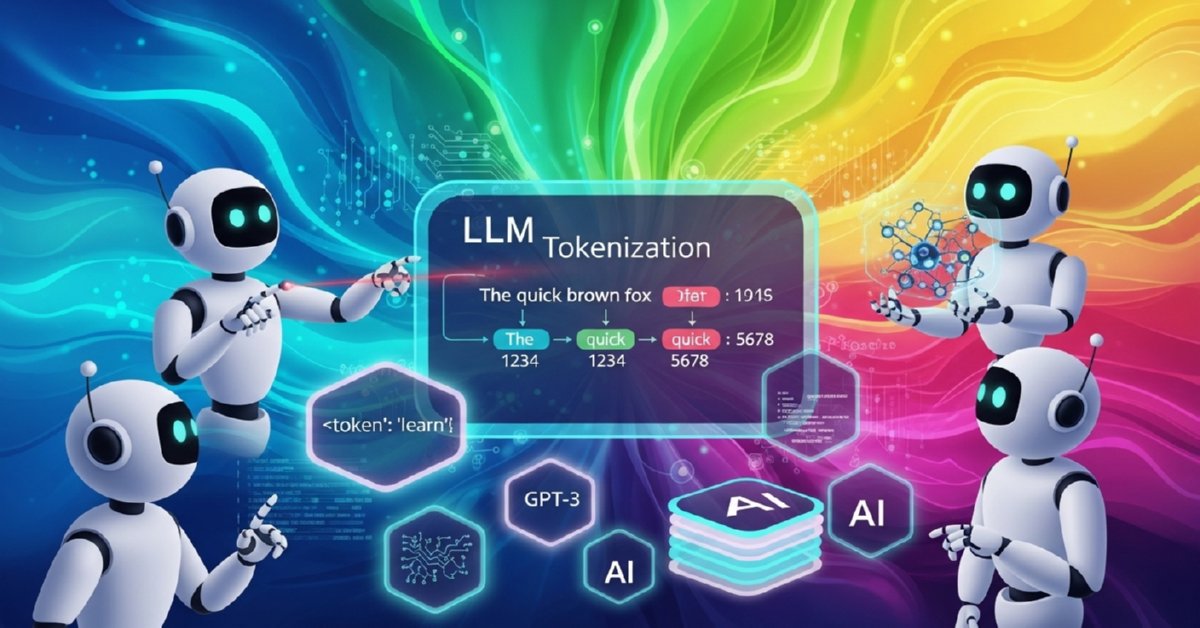
This seemingly technical step has profound implications for model efficiency, cost, context limits, and output quality. Whether you are working with GPT-based systems, building AI applications, or optimizing prompts for SEO and performance, understanding how tokens function is critical. From Byte Pair Encoding (BPE) to advanced transformer-based tokenization strategies, the way text is segmented directly impacts how meaning is captured and reconstructed by the model.
In this comprehensive guide, we will explore the mechanics of LLM tokenization, why tokens matter in real-world AI workflows, and how mastering token usage can significantly improve accuracy, scalability, and cost-efficiency in 2026-era AI systems.
Table of Contents
What Are AI Tokens?
Tokenization is the first and critical step in how Large Language Models (LLMs) process text. It converts raw text (words, sentences, code, emojis, etc.) into numerical IDs (tokens) that the model can understand.
When you type a prompt into an AI like ChatGPT, the system does not read words the way a human does. Instead, it breaks the text down into manageable, numerical chunks called tokens. Depending on the length and complexity of the word, a token could be an entire word, a single syllable, or just one letter.
Note: Tokenization is language-dependent. While English words are highly optimized (often 1 token per word), languages with complex characters (like Japanese or Arabic) or rare linguistic structures may require multiple tokens per word.
How AI Counts Tokens
Understanding token metrics is essential for managing your OpenAI API costs and ensuring your prompts fit within the model’s limitations.
The Golden Token Mantra: 1 Token ≈ 4 Characters in English. The average English word is approximately 4.7 to 5 characters long. Hence, a 1000-word article might contain about 1300–1500 tokens
To put this into a practical perspective, here are the standard conversion rates recognized by most Large Language Models:
- 1 token = ~4 characters in English
- 100 tokens = ~75 words
- 1,000 tokens = ~750 words (about 1-2 pages of text)
| Input Text Example | Character Count | Estimated Word Count | Estimated Token Count |
|---|---|---|---|
| “Apple” | 5 | 1 | 1 |
| “Unbelievable” | 12 | 1 | 2-3 (Un – believ – able) |
| A short paragraph | ~200 | ~40 | ~55 |
| A standard blog post | ~4,000 | ~800 | ~1,066 |
The Tokenization Process
How does an LLM actually convert your text into intelligence? It follows a strict sequence of events. Think of it as a computational ritual:
Processing Speed (Latency): Modern LLMs can process and generate dozens to hundreds of tokens per second. The time to first token (TTFT) is a critical metric for evaluating AI application performance.
As a practical estimate, 100 tokens are often roughly equal to 75 words in English, but this is only an approximation—not a fixed rule.
Why AI Tokens Matter
Understanding AI tokens is essential because tokens affect nearly every practical aspect of using LLMs.
- Cost: Most AI API platforms charge by token usage.
- Context window: The number of tokens limits how much text a model can remember in one interaction.
- Performance: Long prompts can slow responses and reduce focus.
- Prompt quality: Efficient prompts often produce clearer results.
- Application design: Developers must manage token budgets in chatbots, agents, search tools, and summarizers.
If you ignore token usage, your AI workflows can become expensive, less accurate, and harder to scale.
Context Windows and Limits
Every AI model has a Context Window, which is the absolute maximum number of tokens it can hold in its “short-term memory” during a single conversation. This includes both the prompt you send (input tokens) and the response it generates (output tokens).
The Hard Limit Rule: Input Tokens + Output Tokens ≤ Max Context Window.
If you send a 7,000-token prompt to a model with an 8,000-token limit, the model can only generate a maximum of 1,000 tokens in its response.
Context Window Exceeded: If your conversation exceeds the token limit, the AI will “forget” the earliest parts of the conversation. In API environments, exceeding the limit will result in an immediate error, and the prompt will fail to process.
The “Prompt Diet”: Optimization Strategies
Because API providers charge per 1,000 tokens, sending bloated prompts wastes both money and processing power. To optimize your AI interactions, put your prompts on a “Data Diet.”
Best Practices for a Token-Efficient Data Diet:
- Remove Filler Words: Strip out polite filler (“Please could you kindly…”) and be direct (“Summarize this text:”).
- Use English When Possible: Because English is heavily optimized in LLM training data, it uses fewer tokens than translating back and forth into other languages.
- Clear Formatting: Use Markdown (headers, bullet points) instead of long, transitional paragraphs to separate ideas.
Avoid: Copy-pasting raw, unformatted web pages or massive spreadsheets directly into the prompt. Always clean your data first to remove hidden HTML tags or unnecessary white spaces, which consume hidden tokens.
Frequently Asked Questions (FAQ)
What is a token in AI?
A token is a fundamental unit of data processed by a Large Language Model. Depending on the text, a token can represent a single character, a syllable, or an entire word. It is how AI models “read” and quantify text.
How do I count how many tokens my prompt uses?
You can use a general rule of thumb where 100 tokens equal roughly 75 English words. For precise counting, you can use OpenAI’s free Tokenizer tool on their platform, or implement the tiktoken Python library in your code.
Does punctuation count as tokens?
Yes. Punctuation marks, spaces, and special characters all consume tokens. This is why cleaning up raw data and removing unnecessary spacing can help reduce your total token count.
What happens if I exceed the token limit?
If you are using a web interface like ChatGPT, the AI will drop the oldest parts of the conversation from its memory to make room for new text. If you are using an API, the request will be rejected, and you will receive a token limit error.
Why do non-English languages use more tokens?
Most LLMs were trained predominantly on English datasets. The tokenizers are highly optimized to group English letters into whole words. For other languages, the tokenizer may struggle to group them efficiently, resulting in words being broken down into multiple smaller tokens, which increases the total token count and cost.