
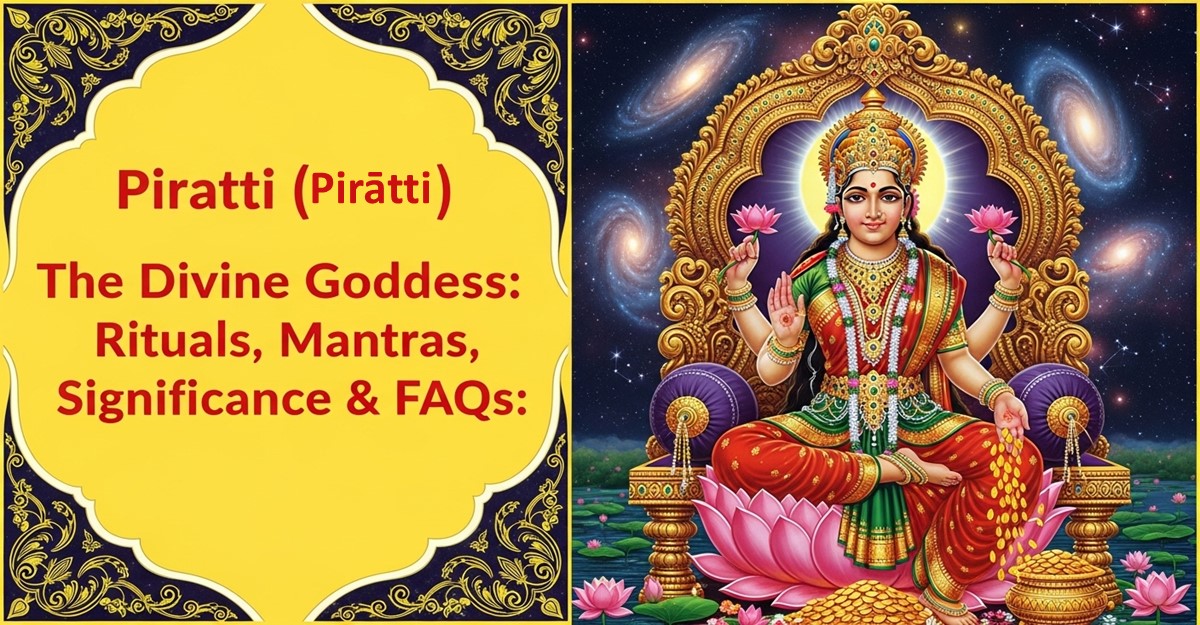
Piratti (Pirāṭṭi) is a deeply venerated Tamil term for the Supreme Goddess, most commonly referring to Goddess Lakshmi (Sri Devi) in the Vaishnavite or Parvati in the Shaivite traditions respectively. The word “Pirāṭṭi” literally translates to “the Divine Lady” or “the Queen,” emphasizing her sovereign status as the consort of the Supreme Lord. Millions of devotees across Tamil Nadu, Kerala, and the global Hindu diaspora invoke Piratti through sacred rituals, powerful mantras, and temple worship as the embodiment of grace, prosperity, and spiritual liberation.
1. Meaning of Piratti (Pirāṭṭi / Piraṭṭi / Pirātti)
The word Piratti (Tamil: பிராட்டி) is derived from the Tamil honorific system and carries profound theological weight. It is a feminine title of the highest respect, equivalent to calling someone “the Supreme Lady,” “the Queen,” or “the Sovereign Ruler.” The various transliterations — Pirāṭṭi, Piraṭṭi, and Pirātti — all refer to the same divine concept, with differences arising from romanization conventions.
Breakdown of Transliterations
- Piratti – Simplified English transliteration, most commonly used online
- Pirāṭṭi – Scholarly IAST transliteration with long vowel and retroflex markers
- Piraṭṭi – Variant with short first vowel
- Pirātti – Alternate romanization found in older texts
In everyday Tamil usage, “Pirāṭṭi” can also be a respectful address for a noble woman or a queen. However, in religious contexts, it exclusively denotes the Divine Goddess — the feminine aspect of the Supreme Being who rules alongside the Lord.
2. Origin & Etymology
The etymology of Piratti traces back to the Tamil word “Pirān” (பிரான்), meaning “the Great Lord” or “the Supreme One.” The feminine form “Pirāṭṭi” thus means “the Great Lady” or “the consort of the Supreme Lord.”
In the Sangam literature and early medieval Tamil texts, the word was used to denote women of royal or divine stature. Over centuries, as the Bhakti movement swept through South India, the Alvars (Vaishnavite poet-saints) and Nayanars (Shaivite poet-saints) adopted this term to address the Goddess with intimate devotion and reverence.
“She who is Pirāṭṭi is not merely the consort; She is the sovereign power through whom the Lord’s grace flows to all beings.” — Vaishnavite theological tradition
Historical Context
The term gained immense popularity through the works of Sri Vaishnavite Acharyas, particularly Ramanuja (1017–1137 CE) and Vedanta Desika (1268–1369 CE), who elaborated on the theological importance of the Goddess as Pirāṭṭi — the divine mediatrix between God and the devotee. In the Sri Vaishnava Sampradaya, Piratti’s role is not subordinate but co-equal and essential for salvation.
3. Spiritual Significance of Piratti
The significance of Piratti extends far beyond being a title. She represents multiple cosmic principles and theological truths that are central to Hindu philosophy.
3.1 The Principle of Purushakara (Mediatrix)
In Sri Vaishnavism, Piratti serves as the “Purushakara” — the divine mediator. Just as a mother intercedes with the father on behalf of an erring child, Piratti intercedes with the Lord (Perumal/Vishnu) on behalf of the devotee. Without her recommendation, the soul’s approach to God remains incomplete.
3.2 Embodiment of Compassion (Dayā)
While the Lord represents justice (Nyaya), Piratti represents mercy (Dayā). She softens the Lord’s justice with her boundless compassion. This dual nature of the Divine Couple ensures that devotees are both guided and forgiven.
3.3 Inseparability from the Lord (Nithya Yoga)
Piratti is considered eternally inseparable from the Lord. Just as fragrance is inseparable from a flower, and light from the sun, Piratti is never apart from her Lord. This concept is known as “Nithya Yoga” and is a foundational principle in both Vaishnavite and Shaivite theology.
3.4 Source of All Creation
In the Vaishnavite tradition, Piratti as Sri (Lakshmi) is the creative energy (Shakti) through which the Lord manifests the universe. In the Shaivite tradition, she as Parvati/Uma is the Parashakti — the ultimate power that activates Shiva himself.
3.5 The Three Roles of Piratti
- Sri (Prosperity) – She grants material and spiritual wealth
- Bhū (Earth/Sustenance) – She nourishes and sustains all life
- Nīḷā/Nappinnai (Divine Love) – She represents intimate divine love and devotion
5. Piratti in Shaivism – Uma Devi (Parvati)
In the Shaivite tradition, Piratti refers to Goddess Parvati (Uma, Amman, Ambika), the consort of Lord Shiva. The Nayanar saints and the Tirumurai hymns celebrate her as the left half of Shiva (Ardhanarishvara) and the supreme mother of the universe.
Piratti in Shaiva Siddhanta
In Shaiva Siddhanta philosophy, Piratti as Shakti is the dynamic creative power of Shiva. While Shiva is the transcendent, unchanging reality, Piratti is the immanent force that creates, sustains, and dissolves the cosmos. This theology is encapsulated in the famous saying: “Shiva without Shakti is Shava (corpse).”
Prominent Shaivite Forms of Piratti
- Meenakshi – The fish-eyed Goddess of Madurai
- Kamakshi – The Goddess of Kanchipuram
- Akilandeswari – The Goddess of the Universe in Thiruvanaikaval
- Visalakshi – The wide-eyed Goddess of Varanasi
- Periyanayaki – The Great Lady in many Shiva temples
Piratti in Tevaram and Tiruvachakam
The Tevaram hymns of Appar, Sundarar, and Thirugnana Sambandar frequently address Shiva alongside his Piratti. Manikkavasakar’s Tiruvachakam contains passages that exalt the Goddess as the mother who guides the soul toward Shiva’s grace.
6. Famous Piratti Temples
Piratti is worshipped in thousands of temples across India, but certain temples are especially renowned for her divine presence and miraculous power.
Vaishnavite Piratti (Thayar) Temples
- Srirangam – Ranganayaki Thayar Temple – The most important Vaishnavite Piratti shrine, located within the Sri Ranganathaswamy Temple complex in Trichy, Tamil Nadu
- Tirumala – Alamelu Mangai (Padmavathi) Temple, Tiruchanoor – The consort shrine of Lord Venkateswara (Tirupati)
- Kanchipuram – Perundevi Thayar Temple – Associated with Sri Varadaraja Perumal
- Srivilliputhur – Andal Temple – Birthplace and temple of Andal, considered Bhūmi Piratti’s incarnation
- Melkote – Cheluvanarayana Temple, Bibi Nachiyar – Unique temple with historical Islamic-Hindu syncretism in the Piratti worship
Shaivite Piratti (Amman) Temples
- Madurai – Meenakshi Amman Temple – One of India’s most iconic temples dedicated to Piratti
- Kanchipuram – Kamakshi Amman Temple – A major Shakti Peetha
- Thiruvanaikaval – Akilandeswari Temple – Celebrated for the powerful Piratti who is tamed by Adi Shankaracharya’s Sri Chakra
- Mylapore – Karpagambal Temple – The wish-fulfilling Piratti of Chennai
- Thiruverkadu – Devi Karumariamman Temple – A renowned Piratti temple in the outskirts of Chennai
Kerala Piratti Traditions
In Kerala, the term “Pirāṭṭi” holds special cultural significance. “Onam Piratti” is a term sometimes associated with the festive mother-figure during Onam celebrations. The Bhagavathy temples across Kerala — such as the Chottanikkara Bhagavathy Temple and Kodungallur Bhagavathy Temple — embody the fierce and compassionate aspects of Piratti.
7. Rituals & Worship Practices
Worshipping Piratti involves a rich array of rituals that vary between Vaishnavite and Shaivite traditions, but all share the common thread of devotion, surrender, and seeking the Goddess’s grace.
7.1 Daily Temple Rituals (Nitya Puja)
- Suprabhatam (Morning Awakening) – Piratti is gently awakened with sacred hymns at dawn
- Thirumanjanam (Sacred Bath) – Ceremonial bathing of the deity with water, milk, turmeric, sandalwood, and rosewater
- Alankaram (Adornment) – Elaborate decoration with flowers, silk garments, and jewels
- Deepa Aradhana (Lamp Worship) – Offering of camphor and oil lamps
- Naivedyam (Food Offering) – Sacred food prepared and offered with specific mantras
- Sayanam (Night Rest) – The closing ritual where Piratti is ceremonially put to rest
7.2 Special Rituals for Piratti
- Lakshmi Puja / Sri Sukta Homam – Fire ritual invoking Piratti Lakshmi with the sacred Sri Suktam hymn
- Kumkumarchana – Offering of vermillion (kumkum) to the Goddess, especially on Fridays
- Sahasranama Archana – Recitation of 1,000 names of the Goddess while offering flowers
- Vasanta Utsavam – Spring festival celebrating Piratti’s beauty and grace
- Navaratri Celebrations – Nine nights of intense worship dedicated to the Goddess in her various forms
- Panguni Uthiram / Meena Bharani – Celebrations of the divine marriage of Piratti with the Lord
7.3 Vaishnavite-Specific Rituals
In Sri Vaishnava temples, the Thayar (Piratti) has a separate sanctum and independent worship schedule. Key rituals include:
- Thayar Purappadu – Procession of Piratti’s deity around the temple
- Ubhaya Nachiyar Thirumanjanam – Bathing ceremony for both Sri Devi and Bhū Devi
- Thirukkalyanam – Ceremonial re-enactment of the divine wedding
7.4 Shaivite-Specific Rituals
- Abhishekam with Turmeric – Turmeric paste bath symbolizing the golden hue of the Goddess
- Lalita Sahasranama Archana – Offering flowers with the 1,000 names of Lalita (a form of Parvati)
- Ashtottara Archana – 108 names worship with red lotus or jasmine flowers
- Amman Thiruvizha – Grand annual festival for the Goddess in Shaivite temples
8. Sacred Mantras of Piratti
Chanting Piratti mantras is one of the most powerful spiritual practices in Hinduism. These mantras invoke the Goddess’s energy for protection, prosperity, wisdom, and liberation.
8.1 Vaishnavite Piratti Mantras
Sri Suktam (Hymn to Lakshmi)
The Sri Suktam is the most ancient and sacred Vedic hymn dedicated to Piratti Lakshmi, found in the Rig Veda Khilani:
“Hiraṇyavarṇāṁ hariṇīṁ suvarṇa rajatasrajām,
Chandrāṁ hiraṇmayīṁ lakṣmīṁ jātavedo ma āvaha”(O Fire God, bring to me Lakshmi, who is golden-hued, deer-like, adorned with gold and silver garlands, radiant as the moon.)
Lakshmi Gayatri Mantra
“Om Mahalakshmyai cha vidmahe,
Vishnu patniyai cha dhīmahi,
Tanno Lakshmiḥ prachodayāt”(We meditate upon Mahalakshmi, the consort of Vishnu. May Goddess Lakshmi illuminate our intellect.)
Dvadasha Nama Mantra (Twelve Names)
Reciting the twelve names of Piratti Lakshmi is considered extremely auspicious:
“Śrīḥ, Padmā, Kamalā, Mukundamahiṣī, Lakṣmīḥ, Trilokasundarī,
Viṣṇupatnī, Vaishnavī, Varalakṣmī, Haripriyā, Indirai, Tiru”
8.2 Shaivite Piratti Mantras
Parvati Gayatri Mantra
“Om Girijāyai cha vidmahe,
Shivāpatnyai cha dhīmahi,
Tanno Gaurī prachodayāt”(We meditate upon Girija (daughter of the mountain). We contemplate Shiva’s consort. May Gauri illuminate our intellect.)
Lalita Maha Mantra (Sri Vidya)
The Panchadashi Mantra and Shodashi Mantra are the most sacred Sri Vidya mantras dedicated to Piratti as Lalita Tripurasundari. These are initiation-based mantras transmitted only by a qualified Guru.
Univers al Durga Mantra
“Om Dum Durgāyai Namaḥ”
(Salutations to Goddess Durga, the invincible one.)
Sacred Rituals and Puja Vidhi for Piratti Worship
Performing proper Piratti puja requires understanding the sacred rituals passed down through generations. These rituals create a divine connection between the devotee and the goddess.
Essential Puja Items (Samagri)
- Piratti idol or image (Vigraha/Photo)
- Copper or silver kalash (pot)
- Fresh flowers – lotus, jasmine, rose
- Kumkum (vermillion) and Turmeric
- Sandalwood paste (Chandana)
- Incense sticks (Agarbatti)
- Camphor (Karpura)
- Ghee lamp (Deepa)
- Fresh fruits and sweets
- Coconut and betel leaves
- Rice (Akshata)
- Sacred thread (Kalava)
Step-by-Step Puja Vidhi
1. Preparation (Sankalpa)
Begin by taking a bath and wearing clean clothes. Sit facing east or north. Sprinkle water for purification while chanting:
Yah Smaret Pundarikaksham Sa Bahyabhyantarah Shuchih”
2. Kalash Sthapana
Fill the copper pot with water, place mango leaves, and a coconut on top. This represents the presence of all holy rivers and the goddess herself.
3. Dhyana (Meditation)
Close your eyes and visualize Piratti in her divine form. Meditate on her golden complexion, four arms, and benevolent smile.
4. Avahana (Invocation)
Invite the goddess into the idol or image by offering flowers while chanting the Piratti invocation mantra.
5. Shodashopachara (16-fold worship)
Perform these 16 offerings in sequence:
- Asana – Offering a seat
- Padya – Washing feet
- Arghya – Offering water
- Achamana – Water for sipping
- Snana – Ceremonial bath
- Vastra – Offering clothes
- Yajnopavita – Sacred thread
- Gandha – Sandalwood paste
- Pushpa – Flowers
- Dhupa – Incense
- Deepa – Lamp
- Naivedya – Food offering
- Tambula – Betel leaves
- Dakshina – Monetary offering
- Pradakshina – Circumambulation
- Namaskara – Prostration
6. Aarti and Conclusion
Perform aarti with camphor while singing the Piratti Aarti. Conclude by distributing prasad to family members.
Best Times for Piratti Puja
- Friday: Most auspicious day for goddess worship
- Full Moon (Purnima): Enhanced divine energy
- Navaratri: Nine nights of goddess worship
- Brahma Muhurta: 4:00 AM – 6:00 AM
- Pradosh Kala: Evening twilight hours
8.3 Tamil Piratti Mantras and Hymns
- Abhirami Anthadhi – 100 verses by Abhirami Bhattar praising Piratti Abhirami of Thirukkadaiyur
- Andal’s Thiruppavai – 30 verses for Margazhi month worship
- Nachiyar Tirumoli – Andal’s passionate devotional poetry to the Lord through Piratti’s perspective
- Sri Stuti by Vedanta Desika – A masterpiece praising Piratti Lakshmi’s theological role
8.4 How to Chant Piratti Mantras
- Choose a clean, quiet space facing east or north
- Light a ghee lamp and incense
- Place a picture or idol of Piratti before you
- Begin with Pranayama (breathing exercises) and Sankalpa (intention-setting)
- Chant the chosen mantra 108 times using a lotus-seed or tulasi mala
- Conclude with prostrations and silent meditation
- Fridays and full moon days are especially auspicious for Piratti mantra chanting
9. Festivals Dedicated to Piratti
Throughout the year, numerous festivals celebrate Piratti in her various forms. These festivals draw millions of devotees and are marked by elaborate rituals, processions, and community gatherings.
Major Piratti Festivals
- Navaratri (September–October) – Nine nights of Goddess worship, culminating in Vijayadashami. The most important Piratti festival across all traditions.
- Varalakshmi Vratam (August) – A special Friday observance dedicated to Piratti Lakshmi, widely celebrated by married women for family prosperity.
- Panguni Uthiram (March–April) – Celebrates the divine marriage of Piratti with the Lord in many temples.
- Aadi Perukku / Aadi Pooram (July–August) – Festivals honoring Piratti Andal and the goddess in rivers and water bodies.
- Meenakshi Thirukalyanam (April–May) – The grand celestial wedding of Piratti Meenakshi with Sundareswarar in Madurai.
- Karthigai Deepam (November–December) – Festival of lights with special worship to Piratti.
- Thai Pongal / Bhogi (January) – Harvest festival with Piratti Lakshmi worship for agricultural prosperity.
- Margazhi Month (December–January) – Entire month dedicated to Piratti Andal’s Thiruppavai recitations.
10. Daily Piratti Worship Guide for Householders
Integrating Piratti worship into daily life brings continuous blessings. Here’s a practical guide for householders.
Morning Routine (6:00 AM – 7:00 AM)
- Wake up and take a purifying bath
- Light the lamp at the home shrine
- Offer fresh flowers and incense
- Chant Piratti mantra 11 or 21 times
- Recite Piratti Stotra or Lalita Sahasranama
- Perform brief meditation visualizing the goddess
- Offer naivedya (fruit or prepared food)
Evening Routine (6:00 PM – 7:00 PM)
- Light evening lamp (Sandhya Deepa)
- Offer incense and camphor
- Perform aarti with devotional songs
- Chant mantra minimum 11 times
- Offer gratitude for the day’s blessings
Weekly Friday Special Puja
Fridays are sacred to Piratti. Enhanced worship includes:
- Red or yellow clothing
- Special offerings of sweets and fruits
- Lotus flowers (if available)
- Extended mantra chanting (108 times)
- Reading sacred texts about the goddess
- Distributing prasad to family and neighbors
Simple Altar Setup for Home
- Clean, elevated space facing east or north
- Piratti image or idol (brass or panchaloha preferred)
- Small bell and incense holder
- Brass or silver lamp
- Flower vase
- Small plate for offerings
- Water vessel for abhisheka
11. Piratti in Tamil Literature & Hymns
The literary tradition surrounding Piratti is vast, spanning over two millennia of Tamil devotional poetry and philosophical treatises.
11.1 Alvar Literature (Vaishnavite)
- Andal’s Thiruppavai – 30 verses sung during Margazhi; Andal herself embodies Piratti Bhūmi Devi
- Andal’s Nachiyar Tirumoli – 143 verses expressing the Goddess’s love for Vishnu
- Nammalvar’s Thiruvaimozhi – Contains extensive passages on Piratti’s role in salvation
- Thirumangai Alvar’s Periya Tirumoli – Celebrates Piratti in various Divya Desams
11.2 Acharya Literature
- Sri Stuti (Vedanta Desika) – Philosophical hymn on Piratti Lakshmi’s supremacy
- Chatussloki (Yamunacharya) – Four verses establishing Piratti’s theological importance
- Sri Gunarathna Kosa (Parasara Bhattar) – Treasury of Piratti’s divine qualities
- Srimad Rahasyatraya Sara (Vedanta Desika) – Theological treatise with extensive chapters on Piratti’s mediatory role
11.3 Shaivite Literature
- Abhirami Anthadhi (Abhirami Bhattar) – 100 linked verses to Piratti Abhirami
- Soundarya Lahari (Adi Shankaracharya) – 100 verses on the beauty and power of Piratti
- Lalita Sahasranama – 1,000 names of the Goddess found in the Brahmanda Purana
- Devi Mahatmyam (Durga Saptashati) – 700 verses narrating Piratti’s cosmic battles and victories
11.4 Modern Tamil Devotional Music
Composers like Muthuswami Dikshitar, Papanasam Sivan, and Subramania Bharathiar have created timeless compositions on Piratti. Bharathiar’s “Shakti songs” are among the most celebrated Tamil poems on the Goddess, combining spiritual devotion with nationalist fervor.
12. Benefits of Worshipping Piratti
Devotees who regularly worship Piratti through rituals and mantras report numerous spiritual, material, and emotional benefits supported by traditional scriptures.
Spiritual Benefits
- Moksha (Liberation) – Piratti’s grace is considered essential for attaining final liberation
- Purification of Karma – Her worship dissolves accumulated negative karma
- Divine Protection – She shields devotees from spiritual obstacles and evil influences
- Enhanced Meditation – Her mantras deepen meditative states and spiritual awareness
- Guru’s Grace – Piratti guides devotees to the right spiritual teacher
Material Benefits
- Prosperity & Wealth – As Lakshmi, she bestows financial abundance
- Marital Harmony – Her blessings strengthen relationships and family bonds
- Health & Well-being – She removes diseases and grants longevity
- Success in Endeavors – Her grace removes obstacles in education, career, and business
- Progeny – She blesses devoted couples with children
Emotional & Psychological Benefits
- Inner Peace – Chanting her mantras calms the mind and reduces anxiety
- Confidence – Her worship builds inner strength and self-assurance
- Compassion – Devotees develop greater empathy and kindness
- Fearlessness – As Durga, she destroys all fears from the devotee’s heart
13. How to Worship Piratti at Home
You don’t need to visit a temple to connect with Piratti. A sincere home worship practice can be deeply transformative. Here is a step-by-step guide:
Setting Up Your Piratti Altar
- Choose a clean northeast corner of your home
- Place a wooden or marble platform covered with a red or white cloth
- Install a picture or idol of Piratti (Lakshmi, Parvati, or your chosen form)
- Keep a small lamp (Kuthuvilakku), incense holder, and bell nearby
- Place a small water vessel (Kalasham) adorned with mango leaves and a coconut
Daily Worship Routine
- Morning (6:00–7:00 AM): Light the lamp, offer fresh flowers, and chant Sri Suktam or Lakshmi Gayatri 108 times
- Offer Naivedyam: Fresh fruits, cooked rice, or sweets
- Friday Special Puja: Perform Kumkumarchana with red flowers and kumkum
- Evening (6:00–7:00 PM): Light the lamp again and recite Lalita Sahasranama or Vishnu Sahasranama
- Before Sleep: Offer mental prayers to Piratti, surrendering the day’s actions to her
Special Offerings Piratti Loves
- Red lotus flowers – Most sacred offering
- Jasmine garlands – Symbol of purity
- Turmeric and kumkum – Represents her married/auspicious status
- Sweet Pongal or Payasam – Favorite food offerings
- Ghee lamp – More auspicious than oil lamps for Piratti
- Sandalwood paste – Applied to the deity’s forehead
- Gold or yellow-colored items – Symbolizing prosperity
Important Days for Home Piratti Worship
- Every Friday – Lakshmi’s day
- Every Tuesday – Durga/Amman’s day
- Pournami (Full Moon) – Maximum Piratti energy
- Amavasya (New Moon) – For Kali/fierce forms of Piratti
- Navaratri (9 nights) – Most powerful period for worship
14. Frequently Asked Questions (FAQs) About Piratti
What does Piratti (Pirāṭṭi) mean?
Piratti (Pirāṭṭi) is a Tamil honorific meaning “the Divine Lady,” “the Supreme Queen,” or “the Goddess.” It is derived from “Pirān” (the Great Lord), making Pirāṭṭi the feminine counterpart — the Great Lady. In Hindu worship, it specifically refers to Goddess Lakshmi in Vaishnavism or Goddess Parvati in Shaivism.
Is Piratti the same as Lakshmi?
In the Sri Vaishnava tradition, yes — Piratti most commonly refers to Goddess Sri Lakshmi, the eternal consort of Lord Vishnu. However, the term is broader than a single deity. In Shaivite contexts, Piratti refers to Goddess Parvati/Uma. The word itself is a title of respect rather than a specific name.
What is the difference between Pirāṭṭi, Piraṭṭi, and Pirātti?
These are all different romanized spellings of the same Tamil word பிராட்டி. The variations arise from different transliteration systems (IAST, ISO 15919, simplified English). Pirāṭṭi uses full IAST diacritical marks, Piraṭṭi has a short first vowel, and Pirātti is an older or simplified romanization. All refer to the same divine concept.
Why is Piratti important in Sri Vaishnavism?
In Sri Vaishnavism, Piratti (Lakshmi) plays the indispensable role of “Purushakara” — the divine mediator between the devotee and the Lord. She recommends the devotee to God, intercedes with her compassion to balance divine justice, and is considered co-equal with Vishnu in granting Moksha. Without her grace, liberation is deemed impossible according to this theology.
Can men worship Piratti, or is it only for women?
Piratti worship is absolutely open to everyone — men, women, and children alike. While certain vratas like Varalakshmi Vratam are traditionally observed by married women, the mantras, temple worship, and daily puja of Piratti are universal. Many of the greatest Piratti devotees in history — Abhirami Bhattar, Vedanta Desika, Adi Shankaracharya — were men.
What are the best mantras to chant for Piratti?
The most recommended mantras include: Sri Suktam (Vedic hymn to Lakshmi), Lakshmi Gayatri Mantra, “Om Shreem Mahalakshmyai Namaha” for prosperity, Lalita Sahasranama for Shakti worship, and “Om Dum Durgayai Namaha” for protection. Choose based on your tradition and, ideally, receive initiation from a qualified Guru for advanced mantras.
Which day is best for Piratti worship?
Friday is considered the most auspicious day for worshipping Piratti Lakshmi. Tuesday is ideal for fierce forms like Durga and Amman. Full moon days (Pournami) are excellent for all forms of Piratti worship. The Navaratri period (nine nights in September–October) is the most powerful time of the year for Goddess worship.
What flowers should I offer to Piratti?
Red lotus is the most sacred offering for Piratti Lakshmi. Red roses, jasmine (malli), champaka (shenbagam), hibiscus (chembaruthi) for Durga forms, and marigold are all excellent choices. Avoid thorny flowers and wilted blossoms. Always offer fresh, fragrant flowers with devotion.
Is Andal considered a form of Piratti?
Yes, in Sri Vaishnavism, Andal (Kodhai/Goda Devi) is considered an incarnation of Bhūmi Piratti (Goddess Earth), one of the three consorts of Lord Vishnu. Her Thiruppavai and Nachiyar Tirumoli are among the most important Tamil devotional texts. She is the only female Alvar among the twelve.
What is the role of Piratti in Moksha (liberation)?
According to Sri Vaishnava theology, Piratti’s role in Moksha is absolutely essential. She performs “Purushakara” — recommending the surrendered soul to the Lord. She also performs “Upaya” — being a means of salvation herself, alongside the Lord. The Lord may judge, but Piratti always forgives, making her the devotee’s greatest advocate for liberation.
Can I worship Piratti without a Guru?
Basic Piratti worship — lighting lamps, offering flowers, chanting simple mantras like Sri Suktam, and visiting temples — does not require formal initiation. However, for advanced practices like Sri Vidya upasana, Panchadashi Mantra, or tantric rituals, a qualified Guru’s initiation (Diksha) is essential and traditionally mandatory.
What food offerings (Naivedyam) does Piratti prefer?
Traditional offerings include sweet Pongal (rice cooked with jaggery and ghee), Payasam (kheer), fresh fruits (especially bananas and pomegranates), coconut, honey, and milk-based sweets like Mysore Pak and Laddu. Avoid onion, garlic, and non-vegetarian items. The food should be prepared with cleanliness and devotion.
What is the connection between Piratti and Onam in Kerala?
In Kerala culture, the term “Pirāṭṭi” is used respectfully for noble women, and during Onam, it carries festive significance. The harvest festival celebrates King Mahabali’s return, and the feminine divine energy — the Piratti aspect — is honored through floral rangoli (Pookalam), traditional meals, and community celebrations that invoke abundance and grace.
How many forms does Piratti have?
Piratti manifests in countless forms. The primary ones include: Sri Devi (Lakshmi), Bhū Devi (Earth Goddess), Nīḷā Devi (Nappinnai), Parvati, Durga, Kali, Saraswati, Meenakshi, Kamakshi, Akilandeswari, Andal, Lalita Tripurasundari, Annapurna, and Rajarajeshwari. Each form represents specific cosmic functions and divine qualities of the one Supreme Goddess.
15. Conclusion
Piratti (Pirāṭṭi) is not just a title — she is the living, breathing heart of ancient Hindu devotion. Whether she is invoked as Lakshmi in the radiant sanctum of Srirangam, as Meenakshi in the magnificent corridors of Madurai, or as Andal in the sacred soil of Srivilliputhur, Piratti remains the eternal mother, queen, and divine mediatrix who bridges the vast distance between the finite soul and the infinite Lord.
Her rituals are pathways of devotion. Her mantras are keys to transcendence. Her significance is the foundation upon which millions build their spiritual lives. To worship Piratti is to acknowledge that grace, compassion, and divine love are not abstract concepts — they are the very essence of the Goddess who walks with you, advocates for you, and ultimately leads you home.
Begin your journey with Piratti today. Light a lamp, offer a flower, chant her name with sincerity, and experience the transformative power of the Divine Mother’s boundless grace.
“Where Piratti is worshipped with devotion, there Lakshmi dwells eternally. Where her name is chanted, no poverty — material or spiritual — can ever enter.” — Traditional saying