Lord Shiva in Hinduism is the Lord of Compassion (Karunaavatarm) not merely a deity; He is the personification of the supreme reality, the stillness behind the chaos, and the destroyer of illusion. Known as Mahadev (the Great God), Shiva represents the primal void from which creation springs and into which it eventually dissolves. Whether viewed through the lens of Vedic history, Puranic mythology, or the advanced yogic science of the Sri Amit Ray 114 chakras and 72,000 nadis, Shiva is the eternal witness.
This comprehensive guide explores the multidimensional nature of Lord Shiva, covering His historical evolution, deep symbolism, sacred geography, and the profound spiritual practices associated with Him.
Lord Shiva, also known as Mahadev, is the supreme yogi, the destroyer of ignorance, and the eternal consciousness beyond birth and death. To understand the meaning of Shiva is to understand transformation itself — the sacred dissolution that leads to awakening.
This complete guide explores who Mahadev is, the deeper meaning of Shiva, his symbolism, mythology, sacred temples, mantras, meditation practices, and the profound spiritual science behind his worship.
Who is Lord Shiva?
Lord Shiva is one of the principal deities of Hinduism and is regarded as the Supreme Being within Shaivism, one of the largest denominations in Hinduism. He is known as Mahadev (the greatest among gods), Maheshwara (the great lord), Pashupati (lord of all living beings), Adiyogi (the first yogi), and Nataraja (the lord of dance). Together with Brahma (the creator) and Vishnu (the preserver), Shiva forms the Hindu Trimurti, where he serves as the transformer and destroyer — not of existence itself, but of ignorance, ego, and the illusion of separateness.
However, to limit Shiva to the role of “destroyer” is to misunderstand the profundity of his nature. In Shaivite theology, Shiva is not merely one god among many — he is Brahman itself, the formless, infinite, timeless, unchanging absolute reality. He is simultaneously Saguna (with attributes — the benevolent Shankara, the fierce Rudra, the dancing Nataraja) and Nirguna (without attributes — pure consciousness beyond all form). This paradoxical nature makes Shiva the most philosophically complex and spiritually accessible deity in the Hindu pantheon.
Lord Shiva is known as Yogeshwara, Bhuteshwara, Kaleshwara, Sarveshwara, Maheshwara, and Adi Yogi — the first yogi who transmitted the science of yoga to the Saptarishis (seven sages) at the banks of Kanti Sarovar near Mount Kailash. He is the originator of the yogic sciences, including the knowledge of meditations, chakras, 72,000 nadis, pranayama, dhyana, and the path to liberation (moksha). In this sense, every practitioner of yoga — whether consciously or unconsciously — is walking the path first illuminated by Shiva.
Shiva’s iconography is rich and layered: the crescent moon on his matted locks represents the cyclic nature of time; the river Ganga flowing from his hair represents purification and the flow of grace; the third eye on his forehead represents the eye of wisdom that sees beyond surface reality; the serpent Vasuki around his neck represents mastery over fear and ego; and the tiger skin on which he sits represents his conquest over animal nature and primal desires.
He is simultaneously the lord of ascetics who meditates in the solitude of the Himalayas and the devoted householder who is an ideal husband to Parvati and a loving father to Ganesha and Kartikeya. This duality teaches seekers that spirituality does not require renunciation of the world — it requires the transformation of one’s relationship with the world.
Shiva is worshipped through numerous forms, including the Shiva Lingam, the 12 Jyotirlingas, and through powerful Shiva mantras that devotees chant for spiritual awakening, inner peace, and liberation.
What is the Meaning of Shiva?
The Sanskrit word “Shiva” (शिव) literally means “the auspicious one”, “the benevolent”, or “the gracious.” This etymology is itself a profound teaching: the force that dissolves, transforms, and destroys is not malevolent — it is auspicious. Destruction of ignorance, ego, suffering, and delusion is the highest form of grace.
In the Shiva Purana, Shiva’s name is explained through multiple layers of meaning:
- Shi (शि) — that which purifies, dispels sins
- Va (व) — that which bestows, grants grace
Thus, Shiva = the one who purifies and bestows grace. The Shvetashvatara Upanishad (3.11) describes Shiva as “Eko Devah Sarvabhuteshu Gudhah” — the one God hidden in all beings, the inner self of all, the all-pervading consciousness. The word Shiva means “the auspicious one.” Yet the deeper meaning of Shiva refers to pure awareness — consciousness untouched by change. Shiva represents:
- Dissolution of ego
- Inner stillness
- Transformation
- Liberation (Moksha)
In the sacred chant Om Namah Shivaya, the devotee bows not to an external deity alone, but to the Shiva within.
In Advaita Vedanta, Shiva represents Sat-Chit-Ananda — existence, consciousness, and bliss. He is not a being who exists in the universe; he is the existence of the universe. In Kashmir Shaivism, Shiva is defined as Prakasha (the light of consciousness) and Vimarsha (the reflective awareness), which together constitute the absolute reality.
The name Shiva also contains within it the entire spectrum of yogic philosophy. When a practitioner chants Om Namah Shivaya, they are not merely invoking an external deity — they are affirming their own innermost nature as pure, auspicious consciousness. The mantra activates the subtle energy pathways of the 72,000 nadis and purifies each of the 114 chakras, drawing the practitioner toward the direct experience of what the name Shiva points to.
In tantric philosophy, “Shiva” also denotes the static, transcendent principle of consciousness as opposed to Shakti, the dynamic, creative power. Shiva without Shakti is Shava (a corpse) — consciousness without energy is inert. Shakti without Shiva is chaos — energy without consciousness is purposeless. Their union is the universe itself.
Why is Shiva Called Mahadev?
Mahadev (महादेव) literally translates to “the greatest god” or “the god of gods.” The prefix Maha means “great” or “supreme,” and Deva means “divine being” or “god.” Shiva is called Mahadev because in the Shaivite understanding, all other gods — including Brahma and Vishnu — emerge from, exist within, and dissolve back into Shiva.
Several scriptural events explain why Shiva earned the title Mahadev:
1. The Lingodbhava – The Infinite Pillar of Light
According to the Shiva Purana and the Linga Purana, once Brahma and Vishnu entered a debate about who was supreme. A blazing pillar of infinite light (Jyotirlinga) appeared between them, extending endlessly in both directions. Brahma took the form of a swan and flew upward to find its top; Vishnu became a boar and dug downward to find its base. Neither could find the end. When the pillar revealed itself as Shiva, both Brahma and Vishnu acknowledged his supremacy. This is the origin of the 12 Jyotirlingas and the reason Shiva is called Mahadev.
2. The Drinking of Halahala Poison
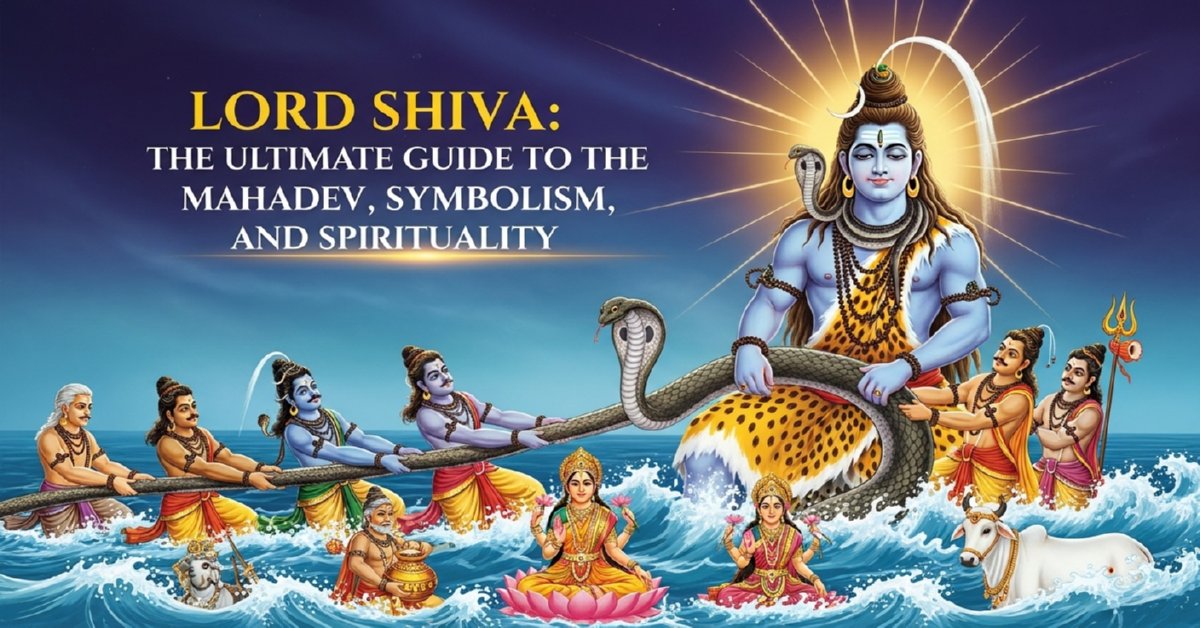
During the Samudra Manthan (churning of the cosmic ocean), a deadly poison called Halahala emerged that threatened to destroy all creation. No god or demon could contain it. Shiva alone stepped forward and drank the poison, holding it in his throat, which turned blue — earning him the name Neelkanth (the blue-throated one). This act of supreme sacrifice and compassion — saving all of creation by absorbing its poison — is why he is Mahadev: the one whose compassion exceeds all boundaries.
3. The Destroyer of the Three Cities (Tripurantaka)
When the three demonic cities of gold, silver, and iron — collectively called Tripura — became invincible and tyrannized the universe, all the gods combined their powers into a single arrow, a single chariot, and handed them to Shiva. With a single arrow and a mere smile, Shiva destroyed all three cities. This demonstrated that the combined power of all gods was merely a fraction of Shiva’s, confirming his status as Mahadev.
The title Mahadev is not merely a hierarchical designation — it is a devotional reality. For millions of devotees worldwide, calling upon Mahadev is calling upon the ultimate refuge, the final truth, the deepest compassion, and the most intimate presence in the universe. The chant “Har Har Mahadev” reverberates in temples, mountains, and the hearts of seekers as an affirmation of this truth.
Family of Lord Shiva
The family of Lord Shiva, revered as the Shiv Parivar, represents the complete expression of divine harmony in Sanatana Dharma. At its center is Lord Shiva, united with his consort Goddess Parvati, the embodiment of Shakti (divine energy). Parvati is regarded as the reincarnation of Shiva’s first wife, Goddess Sati, symbolizing the eternal union of consciousness and cosmic power.
Their divine children include Lord Ganesha, the remover of obstacles and lord of wisdom, and Lord Kartikeya (Skanda or Murugan), the commander of the celestial armies and symbol of courage and spiritual victory. Goddess Saraswati and Goddess Lakshmi are the daughters of Shiva Parvati, representing knowledge and prosperity as inseparable aspects of divine balance. Lord Ganesha is dearer to Parvati, and Goddess Lakshmi is dearer to Lord Shiva. Kartikeya and Saraswati are independent in nature. Depending on regional myths, other children mentioned include Ayyappa, Jalandhar, and daughters such as Mansa (goddess of snakes).
The Shiv Parivar symbolizes the integration of power, wisdom, prosperity, discipline, and compassion within one sacred household. Devotional lore often describes Lord Ganesha as especially dear to Mother Parvati, while Goddess Lakshmi is closely associated with Lord Shiva’s benevolent grace. Nandi, the sacred bull and Shiva’s vahana (vehicle), is not only his foremost devotee but is also lovingly described in certain traditions as a companion figure within the divine family.
Regional and Puranic narratives further expand the family to include figures such as Lord Ayyappa, Jalandhara, and Goddess Mansa (the serpent goddess), reflecting the richness and diversity of Shaiva traditions across India. Together, the Shiv Parivar represents cosmic equilibrium, spiritual evolution, and the ideal model of divine family unity.
Shiva’s family represents a complete spiritual teaching in itself — every member symbolizes a dimension of the divine:
Parvati (Shakti / Uma / Gauri)
Parvati is Shiva’s consort, the reincarnation of Sati, and the embodiment of Shakti — divine feminine energy. She is the mother of the universe and represents devotion, determination, love, and creative power. Her forms include the gentle Gauri, the fierce Durga and Kali, and the wisdom goddess Lalita Tripurasundari. The Shiva-Parvati relationship is the model of divine partnership — consciousness and energy in perfect balance.
Ganesha (Ganapati)
Ganesha, the elephant-headed god, is Shiva and Parvati’s son — the remover of obstacles, the lord of beginnings, and the patron of wisdom, arts, and sciences. The story of Shiva beheading Ganesha (when Ganesha, created by Parvati, blocked Shiva’s entry) and then restoring him with an elephant head is rich with symbolic meaning about ego, transformation, and the birth of wisdom from the death of limitations.
Kartikeya (Skanda / Murugan)
Kartikeya is Shiva’s second son, the god of war, youth, and spiritual valor. Born from Shiva’s third eye fire (received by the six Krittikas), he is the commander of the divine armies and represents the focused, disciplined spiritual will needed to conquer inner demons. He is especially revered in South India as Murugan.
Nandi
Nandi, while technically Shiva’s vehicle, is considered a member of his family and his foremost devotee. Nandi represents dharma, joy, and unwavering devotion.
The image of Shiva’s family on Mount Kailash — the ascetic god as a loving householder, the fierce destroyer as a gentle father — teaches that the highest spiritual attainment does not require abandoning relationships but transforming them into expressions of divine love.
Shiva and Mount Kailash
Mount Kailash (6,638 meters / 21,778 feet), located in the Trans-Himalayan region of Tibet, is the most sacred mountain in the world for Hindus, Buddhists, Jains, and followers of the Bon religion. In Hindu cosmology, it is the abode of Lord Shiva and Parvati — the axis mundi, the center of the universe, the point where heaven meets earth.
Spiritual Significance
Mount Kailash represents Shiva’s consciousness itself — unmoving, eternal, towering above the world of change. The mountain has never been climbed; multiple expeditions have been organized, but all have been called off due to religious sensitivities, weather, or mysterious circumstances. This unclimbed status reinforces its symbolism: the ultimate truth cannot be “conquered” by human effort alone — it must be approached with humility, surrender, and grace.
The Kailash Parikrama
The Parikrama (circumambulation) of Mount Kailash is a 52-kilometer sacred trek performed by thousands of pilgrims annually. Hindus and Buddhists walk clockwise; followers of Bon walk counterclockwise. The trek, performed at altitudes above 4,500 meters, is itself a form of intense tapas — physical endurance offered as devotion. The highest point of the Parikrama is the Dolma La Pass (5,636 meters), considered a point of spiritual death and rebirth.
Lake Mansarovar
Near Mount Kailash lies Lake Mansarovar, one of the highest freshwater lakes in the world. Its name means “lake of the mind” (Manas = mind, Sarovar = lake). It represents the purified mind — still, clear, and reflecting the divine. Bathing in Mansarovar is believed to cleanse the soul of all sins accumulated over a hundred lifetimes.
The Inner Kailash
In yogic tradition, Mount Kailash also exists within the human body. The Sahasrara Chakra (crown center) is the “inner Kailash” — the seat of Shiva-consciousness within each being. Through Lord Shiva meditation and the awakening of Kundalini through the 114 chakras, the practitioner undertakes an inner pilgrimage to their own Kailash, where the individual soul merges with cosmic consciousness.
108 Names of Lord Shiva and Their Meaning
In Hindu tradition, the number 108 is considered sacred — there are 108 Upanishads, 108 beads on a mala, and 108 sacred sites. The 108 names of Lord Shiva (Shiva Ashtottara Shatanamavali) are chanted during worship, meditation, and festivals like Maha Shivaratri to invoke different aspects of Shiva’s grace.
Each name reveals a dimension of Shiva’s nature. Here are some of the most significant:
- Shiva — The Auspicious One
- Mahadeva — The Greatest God
- Shankara — The Bestower of Joy and Well-being
- Maheshwara — The Great Lord
- Rudra — The Howler, the Fierce One, the Remover of Sorrow
- Neelkanth — The Blue-Throated One
- Pashupati — Lord of All Living Beings
- Nataraja — The Lord of the Cosmic Dance
- Adiyogi — The First Yogi
- Bhairava — The Terrifying One Who Destroys Fear
- Dakshinamurti — The Supreme Guru Who Teaches Through Silence
- Ardhanarishvara — The Half-Male, Half-Female Form
- Lingeshwara — The Lord of the Lingam
- Tripurari — The Destroyer of the Three Cities
- Umapati — The Husband of Uma (Parvati)
- Gangadhara — The Bearer of the River Ganga
- Kailashpati — The Lord of Mount Kailash
- Vishwanath — The Lord of the Universe
- Chandrashekhar — The One Who Wears the Moon
- Mrityunjaya — The Conqueror of Death
For the complete list of all 108 names with their meanings, mantras, and devotional significance, read our dedicated guide: 108 Names of Lord Shiva with Meanings.
Chanting these 108 names, especially during Maha Shivaratri or during daily meditation with a rudraksha mala, is believed to activate deep spiritual energies within the 114 chakra system, purify the subtle body, and draw the devotee closer to the direct experience of Shiva-consciousness.
From Vedic Rudra to Puranic Mahadev: The Historical Evolution
The figure of Shiva as we know him today is the result of a profound spiritual evolution spanning thousands of years, from the earliest hymns of the Rigveda (circa 1500 BCE) through the Yajurveda, the Upanishads, the Epics, and the Puranas.
Rudra in the Rigveda
In the Rigveda, the deity Rudra appears as a fierce, storm-associated god — the father of the Maruts (storm gods). Rigveda hymn 1.114 addresses Rudra as a terrifying yet benevolent deity: “We pray to Rudra, the lord of songs, the lord of sacrifices, who possesses healing remedies.” Even in this earliest form, the paradox is present: Rudra is both the cause of disease and the healer, both terrifying and gracious.
The Shatarudriya of the Yajurveda
The Shatarudriya (also called Sri Rudram), found in the Krishna Yajurveda (Taittiriya Samhita, 4.5), is the most important Vedic hymn for understanding Shiva’s nature. It consists of 11 anuvakas that describe Rudra-Shiva in hundreds of forms — as the lord of thieves, as the lord of animals, as the one who dwells in forests, in rivers, in the heart. The Sri Rudram declares that Rudra is present in everything: “Namo bhavaya cha rudraya cha” — salutations to the cause of existence and to the one who removes suffering.
The Shvetashvatara Upanishad
The Shvetashvatara Upanishad (circa 400-200 BCE) marks the pivotal transition from Vedic Rudra to the Supreme Shiva. Verse 3.11 declares: “Eko devah sarvabhuteshu gudhah, sarvavyapi sarvabhutantaratma” — The one God is hidden in all beings, all-pervading, the inner Self of all beings. This Upanishad explicitly identifies Rudra-Shiva with the ultimate Brahman, the absolute reality. It also introduces the concept of Shiva as Ishwara (personal God) — a revolutionary theological development.
The Puranic Consolidation
In the Shiva Purana, Linga Purana, Skanda Purana, and Vayu Purana, the diverse attributes of Rudra, Pashupati, and various local deities were unified into the comprehensive figure of Mahadev — the supreme lord with a complete mythology, a family, specific forms of worship, sacred sites (Jyotirlingas), and an elaborate cosmic role.
The Indus Valley Connection
The famous “Pashupati Seal” from Mohenjo-Daro (circa 2600-1900 BCE) depicts a seated figure in a yogic posture, surrounded by animals, possibly wearing horns. Many scholars, following Sir John Marshall, have identified this figure as a proto-Shiva, suggesting that Shiva-worship may predate even the Vedic period, making it one of the oldest continuous religious traditions on Earth.
This evolution — from Vedic storm god to universal consciousness — mirrors the spiritual journey that every practitioner undertakes: from fear-based worship to wisdom-based realization, from seeing the divine as external to discovering it within, through the subtle pathways of the 72,000 nadis and the ascending lotus-centers of the 114 chakras.
Shiva in the Trimurti
The Trimurti (literally “three forms”) is the Hindu trinity consisting of Brahma (the creator), Vishnu (the preserver), and Shiva (the transformer/destroyer). This framework represents the three fundamental cosmic functions through which the universe operates.
Shiva’s role in the Trimurti is often described as destruction, but this is a simplification. More accurately, Shiva performs five cosmic acts (Pancha Kriya):
- Srishti (Creation) — through his will, manifesting the universe
- Sthiti (Preservation) — sustaining the universe through cosmic law
- Samhara (Dissolution) — withdrawing the universe back into himself at the end of each cosmic cycle
- Tirobhava (Concealment) — hiding his true nature behind the veil of Maya
- Anugraha (Grace) — revealing himself to devoted seekers and granting liberation
In this Shaiva understanding, the Trimurti is not three equal, independent gods but rather three aspects of Shiva himself. Brahma is Shiva’s creative aspect; Vishnu is his preserving aspect; and Rudra is his dissolving aspect. This is explicitly stated in the Shiva Purana: “Shiva is the cause, Shiva is the effect, Shiva is the entire universe.”
Vaishnavites, of course, hold a reciprocal view, with Vishnu as the supreme. Both perspectives are honored within Hinduism, which has traditionally accommodated diverse theological frameworks as different pathways to the same ultimate reality.
The philosophical depth of the Trimurti concept teaches that creation, preservation, and destruction are not separate events but simultaneous aspects of every moment. In every breath, cells are born and die. In every moment, thoughts arise and dissolve. To meditate on Shiva’s role in the Trimurti is to become aware of this ceaseless transformation — and to discover the unchanging witness behind it all, which is Shiva himself.
Major Mythological Stories of Mahadev
The mythology of Lord Shiva is vast, emotionally rich, and spiritually profound. Each story encodes deep philosophical teachings. Here are the most significant narratives:
1. Samudra Manthan & Neelakantha
When the Devas and Asuras churned the cosmic ocean (Kshirasagara) to obtain Amrita (the nectar of immortality), a terrible poison — Halahala — emerged, threatening to destroy all creation. No god could handle it. Shiva, moved by compassion for all beings, drank the entire poison. Parvati pressed His throat to prevent the poison from descending, turning it blue — earning Shiva the name Neelakantha (the blue-throated one). This story teaches that the divine absorbs the world’s suffering so that creation may continue.
2. The Marriage of Shiva and Parvati
After Sati’s self-immolation at Daksha’s sacrifice, Shiva withdrew into deep meditation. Sati was reborn as Parvati, daughter of the Himalaya. Through intense tapas (ascetic practice), devotion, and unwavering determination, Parvati won Shiva’s heart. Their marriage — celebrated in temples across India — represents the union of consciousness (Shiva) and energy (Shakti), the sacred foundation of all creation.
3. Destruction of Daksha’s Sacrifice
When Daksha Prajapati (Sati’s father) deliberately insulted Shiva and excluded Him from a great Vedic sacrifice, Sati — unable to bear the dishonor of her husband — immolated herself in the sacrificial fire. Shiva, consumed by grief and fury, created Virabhadra and Bhadrakali from His rage, who destroyed the sacrifice and beheaded Daksha. Later, Shiva, in His compassion, restored Daksha to life with a goat’s head. This story illustrates the consequences of ego, pride, and disrespect toward the divine.
Lord Shiva is known as, Dakshayoga Vinasaka refers to Lord Shiva as the “Destroyer of Daksha’s Sacrifice.” This title commemorates the moment Shiva took the fierce form of Virabhadra to stop the yagna (sacrifice) of King Daksha, following the self-immolation of Sati. Symbolically, this represents the destruction of pride, religious hypocrisy, and the ego, teaching that divine consciousness (Shiva) cannot be separated from energy (Shakti).
4. The Birth of Ganesha
Parvati created Ganesha from sandalwood paste and set him as guardian at her door. When Shiva returned and was denied entry by the boy He didn’t recognize, a conflict ensued. Shiva severed Ganesha’s head. Upon Parvati’s grief, Shiva restored Ganesha with the head of an elephant and declared Him to be worshipped first among all gods. This story explores themes of authority, devotion, ego, restoration, and divine family dynamics.
5. Nataraja — The Cosmic Dance
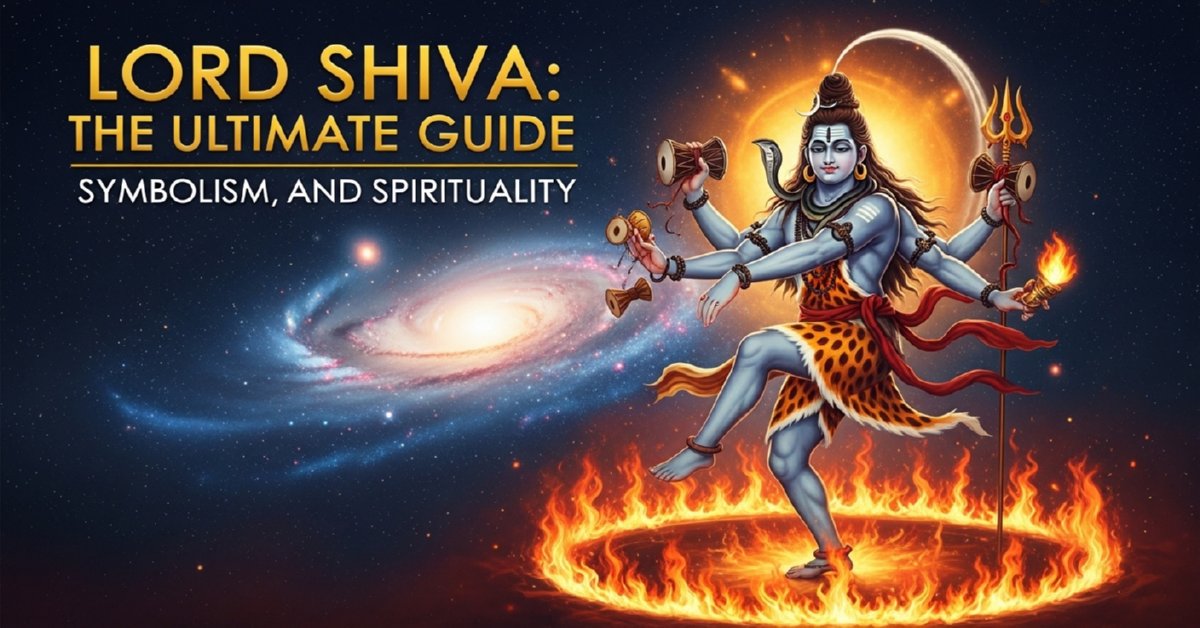
In the Chidambaram temple legend, Shiva performed the Ananda Tandava — the cosmic dance of bliss — in the golden hall (Chit Sabha). This dance simultaneously creates, preserves, destroys, conceals, and reveals. The Nataraja image — Shiva dancing within a circle of fire, one foot on the dwarf Apasmara (ignorance) — is one of the most profound artistic representations of the divine in any culture.
6. Ravana and the Shiva Tandava Stotram
Ravana, the mighty king of Lanka, was one of Shiva’s greatest devotees. He composed the Shiva Tandava Stotram — a powerful hymn praising Shiva’s cosmic dance — while imprisoned under Mount Kailash, which he had tried to lift. Pleased by Ravana’s devotion, Shiva freed him and gifted him the Chandrahasa sword. This shows that Shiva’s grace is available to all devotees, regardless of their moral standing in worldly terms.
7. Ardhanarishvara
When the sage Bhringi wished to worship only Shiva and circumambulate Him alone (ignoring Parvati), he was shown the Ardhanarishvara form — Shiva as half-male, half-female — demonstrating that Shiva and Shakti are one inseparable reality. You cannot worship consciousness without acknowledging its energy, nor energy without its consciousness.
8. The Story of Markandeya & Mrityunjaya
The boy sage Markandeya, destined to die at age 16, clung to the Shiva Lingam in devotion when Yama (Death) came for him. Shiva emerged from the Lingam, kicked Yama away, and declared Markandeya eternally sixteen. This story established the Maha Mrityunjaya Mantra as the mantra that conquers death and is one of the most powerful Shiva mantras.
9. Shiva as Dakshinamurthy — The Silent Teacher
Shiva sits beneath a banyan tree facing south, teaching the four Kumaras (Sanaka, Sanandana, Sanatana, Sanatkumara) the highest truth through silence. The disciples’ doubts are resolved without a single word being spoken. This image represents the transmission of Advaitic knowledge through presence, silence, and the Guru’s grace — the deepest form of teaching, closely related to the practice of Lord Shiva meditation.
10. Shiva and Kama (Manmatha)
When the gods sent Kamadeva (god of desire) to shoot flower-arrows at Shiva to awaken His desire for Parvati, Shiva opened His third eye and reduced Kama to ashes. Later, at Rati’s (Kama’s wife) plea and Parvati’s request, Shiva restored Kama in formless form — Ananga (the bodiless one). This teaches that desire must be transcended, not through suppression, but through the fire of awareness.
Major Shaivism Traditions
Shaivism is one of the four major denominations of Hinduism (along with Vaishnavism, Shaktism, and Smartism). It encompasses a rich diversity of theological, philosophical, and ritual traditions united by devotion to Lord Shiva. The major Shaiva traditions include:
1. Shaiva Siddhanta
The most widely practiced Shaiva tradition, dominant in Tamil Nadu and Sri Lanka. It is a dualistic-cum-non-dualistic philosophy that recognizes three fundamental categories: Pati (God/Shiva), Pashu (the individual soul), and Pasha (the bonds that tie the soul). The goal is to liberate the soul from its bonds through Shiva’s grace. The 63 Nayanars (Tamil Shaiva saints) are central to this tradition, and the Tirumurai (a 12-volume collection of hymns) is its sacred literature.
2. Kashmir Shaivism (Trika)
A non-dual tradition that flourished in Kashmir from the 8th to 12th centuries CE. Founded by Vasugupta (who received the Shiva Sutras) and elaborated by Abhinavagupta, Kashmir Shaivism teaches that the entire universe is a manifestation of Shiva’s consciousness. The system describes 36 tattvas (principles of reality) and teaches that liberation is achieved through recognition (pratyabhijna) — realizing that one’s own consciousness is Shiva. This tradition has deep connections to the understanding of the 114 chakras and subtle energy systems.
3. Lingayatism (Veerashaivism)
Founded by Basavanna in the 12th century CE in Karnataka, Lingayatism is a reformist Shaiva movement that rejected caste discrimination, Vedic ritualism, and untouchability. Lingayats wear a small Shiva Lingam (Ishtalinga) on their body and emphasize Kayaka (dignified work) and Dasoha (sharing with others). It represents Shiva’s egalitarian dimension — the god who is equally accessible to all, regardless of caste, gender, or social status.
4. Nath Tradition
Founded by Matsyendranath and Gorakhnath, the Nath tradition emphasizes Hatha Yoga, Kundalini awakening, and the mastery of the subtle body — including the 72,000 nadis, the chakras, and the flow of prana. Shiva as Adinath (the first lord) is the supreme guru of this tradition. The Nath yogis were instrumental in transmitting yogic knowledge across India.
5. Pashupata Shaivism
One of the oldest Shaiva sects, founded by Lakulisha (circa 2nd century CE). Pashupatas worshipped Shiva as Pashupati (lord of animals/souls) and practiced unconventional austerities designed to break social conditioning and ego-attachment.
6. Aghori Tradition
The Aghoris are an ascetic Shaiva sect who worship Shiva as Bhairava and seek to transcend all dualities — including the duality between purity and impurity, life and death. Their extreme practices, performed in cremation grounds, are meant to realize Shiva’s teaching that the divine pervades everything without exception.
Scriptural References: Vedas, Puranas, Agamas
Lord Shiva’s presence in Hindu scripture is vast and spans every category of sacred literature:
Vedic Literature
- Rigveda — Hymns to Rudra (1.43, 1.114, 2.33, 7.46)
- Yajurveda — The Shatarudriya (Sri Rudram) in the Taittiriya Samhita
- Atharvaveda — References to Bhava, Sharva, and other Rudra-forms
- Shvetashvatara Upanishad — The pivotal text identifying Rudra with Brahman
- Kaivalya Upanishad — Teaches meditation on Shiva for liberation
- Atharvashiras Upanishad — Describes Rudra as the absolute reality
Puranic Literature
- Shiva Purana — The most comprehensive Purana dedicated to Shiva’s glory, including the stories of Sati and Parvati, the origin of the 12 Jyotirlingas, and the destruction of Daksha’s sacrifice
- Linga Purana — Focused on the symbolism and worship of the Shiva Lingam
- Skanda Purana — The largest Purana, containing extensive Shiva narratives
- Vayu Purana — Contains the thousand names of Shiva (Shiva Sahasranama)
- Kurma Purana — Details Shiva’s Pashupata philosophy
Agamic Literature
The Shaiva Agamas are a vast body of tantric scripture (28 primary Agamas and over 200 subsidiary texts) that detail the theology, ritual, yoga, and temple architecture of Shaivism. Key Agamas include the Kamika Agama, Karana Agama, and Mrigendra Agama. These texts provide the practical foundations for Shiva worship, including the consecration of Shiva Lingams, temple construction, and the elaborate daily puja procedures performed in Shiva temples worldwide.
Epic Literature
- Mahabharata — Contains the Shiva Sahasranama (Book 13), the Kiratarjuniya (Shiva’s encounter with Arjuna), and the Anushasana Parva teachings on Shiva
- Ramayana — Shiva’s bow (Pinaka), Shiva’s gift of the Pashupatastra, and the worship of the Shiva Lingam at Rameshwaram
Meaning of the Shiva Lingam
The Shiva Lingam is the most iconic and widely worshipped symbol of Lord Shiva. Found in virtually every Shiva temple across the world, the Lingam is an aniconic (non-representational) form that points beyond itself to the formless reality that Shiva represents.
Etymology
The word “Linga” comes from the Sanskrit root “ling” meaning “to dissolve” or “to merge”, and also means “sign,” “mark,” or “symbol.” The Shiva Lingam is therefore the “sign of Shiva” — the mark of the formless infinite within the world of forms. The Linga Purana (1.3.2) states: “The supreme Shiva is formless, partless, and without attributes. The Lingam is the symbol of that formless one.”
Philosophical Meaning
The Shiva Lingam represents multiple layers of cosmic truth:
- The Cosmic Egg (Brahmanda) — The oval shape of the Lingam represents the cosmic egg from which all creation emerges
- The Union of Shiva and Shakti — The cylindrical Lingam (representing Shiva/consciousness) resting on the Yoni base (representing Shakti/creative energy) symbolizes the inseparable union of consciousness and energy, spirit and matter, the static and the dynamic
- The Pillar of Infinite Light — Referencing the Lingodbhava story where Shiva manifested as an infinite column of light
- The Formless Absolute — Unlike anthropomorphic images, the Lingam deliberately avoids human form, pointing to the truth that ultimate reality transcends all forms and attributes
Types of Shiva Lingams
- Swayambhu Lingam — Self-manifested, naturally occurring Lingams (like the 12 Jyotirlingas)
- Bana Lingam — Naturally shaped stones found in the Narmada River
- Parada Lingam (Mercury Lingam) — Made of solidified mercury, considered extremely powerful
- Spatika Lingam (Crystal Lingam) — Symbolizing purity and transparency of consciousness
- Manushya Lingam — Human-made Lingams installed in temples
The Lingam and the Chakra System
In yogic anatomy, there are three Swarupa Lingams within the human subtle body: the Svayambhu Lingam in the Muladhara Chakra, the Bana Lingam in the Anahata Chakra, and the Itara Lingam in the Ajna Chakra. These three inner Lingams correspond to the ascending stages of Kundalini awakening and are directly related to the Ray 114 chakra system. Lord Shiva meditation practices involve focusing awareness on these inner Lingams to awaken dormant spiritual energy.
Complete Symbolism of Lord Shiva
Every element of Shiva’s iconography carries profound spiritual meaning. Understanding these symbols transforms mere idol worship into deep contemplation:
The Third Eye (Trinetra)
Shiva’s third eye, located on his forehead between the eyebrows (corresponding to the Ajna Chakra in the 114 chakra system), represents the eye of wisdom — the capacity to see beyond the surface of things into their essential nature. When opened, it destroys illusion, ego, and desire. The burning of Kamadeva (the god of desire) by Shiva’s third eye symbolizes the destruction of craving through the fire of spiritual insight.
The Crescent Moon (Chandrama)
The crescent moon adorning Shiva’s matted locks represents the cyclic nature of time, the waxing and waning of all phenomena. It also symbolizes Shiva’s mastery over time — he wears time as an ornament, not as a constraint. The moon represents the mind in Vedic symbolism; Shiva wearing the moon signifies his complete mastery over the fluctuations of the mind.
The River Ganga
The Ganga flowing from Shiva’s hair represents the flow of purifying wisdom and grace. When the celestial Ganga descended to earth, its force would have shattered the world; Shiva caught the river in his matted locks, breaking its fall and releasing it gently. This symbolizes how the guru (Shiva as Dakshinamurti) receives overwhelming cosmic knowledge and transmits it in digestible, compassionate doses to seekers.
The Serpent Vasuki (Naga)
The serpent coiled around Shiva’s neck represents Kundalini Shakti — the dormant spiritual energy coiled at the base of the spine. Shiva wearing the serpent calmly around his neck indicates his complete mastery over this primal energy. It also represents the ego — which Shiva has tamed — and the cycle of time (as serpents represent cyclical renewal through shedding of skin). The serpent’s connection to the 72,000 nadis is significant: Kundalini rising through the nadis is the core mechanism of spiritual transformation.
The Trishul (Trident)
Shiva’s trident represents his lordship over the three gunas (Sattva, Rajas, Tamas), the three worlds (heaven, earth, underworld), the three times (past, present, future), and the three states of consciousness (waking, dreaming, deep sleep). The trident points to the fourth state — Turiya — pure consciousness beyond all three, which is Shiva himself.
The Damaru (Drum)
Shiva’s damaru represents the primordial sound — Nada Brahman — from which the universe emerged. The 14 Maheshwara Sutras (the phonetic foundation of Sanskrit grammar) are said to have emerged from the beats of Shiva’s damaru. The damaru’s shape — two triangles meeting — represents the union of Shiva and Shakti, the masculine and feminine principles.
The Tiger Skin
The tiger skin on which Shiva sits represents his conquest of animal nature — the primal instincts of lust, anger, greed, and fear. The tiger represents desire; sitting on it means mastery over desire.
The Ashes (Vibhuti / Bhasma)
Shiva smears sacred ash on his body, reminding devotees that all material existence ultimately reduces to ash. Vibhuti represents detachment and the impermanence of the physical world. Simultaneously, ash is what remains when all impurities are burned away — it represents the indestructible essence that survives all transformation.
The Rudraksha
Rudraksha beads (literally “tears of Rudra”) are sacred seeds worn and used in meditation by Shiva devotees. Different-faced (mukhi) rudrakshas correspond to different deities, planets, and healing energies. They are used in chanting the 108 names of Lord Shiva and in Lord Shiva meditation.
The Bull Nandi
Nandi, Shiva’s bull vehicle (vahana), represents dharma (righteousness), devotion, and the individual soul perpetually facing the divine. Nandi is always positioned facing the Shiva Lingam in temples, symbolizing the ideal devotee — one who has turned completely toward the divine, in unwavering attention and surrender.
Ardhanarishvara
The Ardhanarishvara form — Shiva as half-male, half-female — represents the inseparability of Shiva (consciousness) and Shakti (energy), and teaches that the divine is beyond gender. It affirms that the masculine and feminine principles exist within every being and that wholeness requires their integration.
Maha Shivaratri & Sacred Observances
Maha Shivaratri (the “Great Night of Shiva”) is the most important festival dedicated to Lord Shiva, observed annually on the 14th day of the dark fortnight in the Hindu month of Phalguna (February-March). It is celebrated with all-night vigil, fasting, chanting, and worship across India, Nepal, and worldwide by millions of devotees.
Significance of Maha Shivaratri
Multiple spiritual significances are attributed to this night:
- The night when Shiva performed the Ananda Tandava (cosmic dance of bliss)
- The night of Shiva and Parvati’s marriage
- The night when the Shiva Lingam first manifested as a column of infinite light
- The night when Shiva drank the Halahala poison to save creation
- The night when the planetary alignment is most conducive to spiritual practice and the natural upward pull on the spine activates the 114 chakras
Observances
Devotees observe Maha Shivaratri through:
- Upavasa (fasting) — abstaining from food and/or consuming only fruits and milk
- Jagaran (night vigil) — staying awake all night in prayer and meditation
- Abhishekam — ritual bathing of the Shiva Lingam with water, milk, honey, yogurt, and bel leaves
- Mantra chanting — especially Om Namah Shivaya and other powerful Shiva mantras
- Meditation — deep Lord Shiva meditation during the four praharas (watches) of the night
For a complete guide to Maha Shivaratri including the exact date, puja vidhi, fasting rules, and mantras, read: Maha Shivaratri 2026: Date, Puja Vidhi, Fasting Rules, Mantras – Complete Guide.
Also be sure to avoid the common errors during this sacred observance: 10 Mistakes to Avoid During Maha Shivaratri Fasting.
Other Sacred Observances
- Pradosh Vrat — observed every 13th day of the lunar fortnight, especially powerful for Shiva worship
- Shravan (Sawan) — the entire month of Shravan (July-August) is considered most sacred to Shiva. Mondays in Shravan (Shravan Somvar) are observed with fasting and puja
- Masik Shivaratri — the monthly Shivaratri observed on each lunar month’s 14th dark fortnight day
- Kartik Purnima — associated with Shiva’s Tripurantaka form
How to Worship Lord Shiva at Home
Lord Shiva is known as Bholenath (the innocent lord) and Ashutosh (easily pleased). He is the most accessible of all deities — his worship does not require elaborate rituals or expensive offerings. Pure devotion, a sincere heart, and even the simplest offering can invoke his grace.
Setting Up a Shiva Altar at Home
- Place a Shiva Lingam (stone, crystal, or Narmadeshwar Bana Lingam) on a clean platform
- Place a Nandi figure facing the Lingam
- Keep a small pot of clean water, a lamp (diya), and incense nearby
- If possible, include a picture of Shiva (Nataraja, Dakshinamurti, or Shiva-Parvati)
Daily Shiva Puja (Simple Method)
- Cleansing: Bathe or wash hands and face before worship
- Invocation: Ring a bell and light a diya (lamp) and incense
- Abhishekam: Pour clean water slowly over the Shiva Lingam while chanting Om Namah Shivaya
- Offering Bel Leaves: Offer three-leaf clusters of Bel (Bilva) leaves — the leaf most dear to Shiva. Each leaf represents the three eyes, the three gunas, and the trident
- Offering Flowers: White flowers (especially Datura, Aak/Calotropis, and jasmine) are favored
- Dhoop & Deep: Offer incense and lamp
- Mantra Chanting: Chant the five powerful Shiva mantras — Om Namah Shivaya (minimum 108 times), Maha Mrityunjaya Mantra, or Rudram
- Meditation: Sit quietly and meditate on Shiva’s form or the formless awareness. Practice Lord Shiva meditation
- Aarti: Perform Shiva aarti with the diya
- Prasad: Offer fruits (avoid Tulsi/basil, which is sacred to Vishnu, not Shiva) and distribute as prasad
Special Offerings Dear to Shiva
- Bel (Bilva) leaves — the most sacred offering
- Water — especially Ganga water
- Milk — for Abhishekam
- Honey
- Bhasma (sacred ash)
- Datura flowers and fruits
- Rudraksha
- White sandalwood paste
For the detailed Maha Shivaratri puja vidhi, see: Maha Shivaratri 2026: Complete Puja Guide.
Benefits of Worshipping Lord Shiva
The worship of Lord Shiva — through puja, mantra, meditation, fasting, and pilgrimage — is believed to confer profound spiritual and material benefits:
Spiritual Benefits
- Moksha (Liberation) — Shiva’s worship directly leads to the ultimate goal of liberation from the cycle of birth and death
- Destruction of Karma — Shiva as Mahakala (lord of time) has the power to dissolve accumulated karma
- Awakening of Kundalini — Shiva mantras and meditation activate the dormant spiritual energy at the base of the spine, ascending through the 72,000 nadis and the 114 chakras
- Destruction of Ego — Regular worship erodes the false sense of separate self
- Inner Peace — Shiva is Shankara (the bestower of peace); his worship brings deep mental stillness
- Protection from Negativity — Shiva as Bhairava protects devotees from evil influences, black magic, and negative energies
Health Benefits
- Victory over Death — The Maha Mrityunjaya Mantra is specifically chanted for healing, longevity, and protection from untimely death
- Mental Health — Shiva meditation reduces anxiety, depression, and mental agitation
- Nadi Purification — Chanting Om Namah Shivaya purifies the 72,000 nadis, improving overall vitality and prana flow
Material Benefits
- Removal of Obstacles — Shiva’s worship (along with his son Ganesha) removes material and spiritual obstacles
- Marital Harmony — Unmarried women worship Shiva for a good husband; married couples worship Shiva-Parvati for harmonious relationships
- Success and Prosperity — Shiva as Ashutosh (easily pleased) quickly grants boons to sincere devotees
- Fearlessness — Shiva’s worship destroys all forms of fear.
Powerful Shiva Mantras & Their Meaning
Mantras are the vibrational essence of the divine. Shiva mantras are among the most powerful in the entire Hindu tradition, capable of transforming consciousness, healing the body, and liberating the soul. Here are the most important Shiva mantras to chant and meditate upon:
1. Om Namah Shivaya (ॐ नमः शिवाय)
The Panchakshari Mantra — the five-syllable mantra of Shiva.
Meaning: “I bow to Shiva” / “Salutations to the Auspicious One”
Significance: This is the most fundamental and widely chanted Shiva mantra. The five syllables (Na-Ma-Shi-Va-Ya) represent the five elements (earth, water, fire, air, ether), the five senses, and the five cosmic functions of Shiva. It is called the Maha Mantra of Shaivism. Regular chanting purifies the mind, opens the heart, and connects the devotee directly with Shiva’s consciousness.
2. Maha Mrityunjaya Mantra (महा मृत्युञ्जय मन्त्र)
The Death-Conquering Mantra
“Om Tryambakam Yajamahe, Sugandhim Pushtivardhanam,
Urvarukamiva Bandhanan, Mrityor Mukshiya Maamritat.”
Meaning: “We worship the three-eyed one (Shiva), who is fragrant and who nourishes all beings. May He liberate us from death, as the cucumber is severed from its vine, and grant us immortality.”
Significance: This mantra from the Rig Veda (7.59.12) is chanted for healing, protection from untimely death, overcoming fear, and spiritual liberation. It is one of the most powerful healing mantras in existence. It activates the Ajna Chakra (third eye) and promotes healing energy through the 72,000 nadis.
3. Rudra Gayatri Mantra
“Om Tatpurushaya Vidmahe, Mahadevaya Dhimahi, Tanno Rudrah Prachodayat.”
Meaning: “We know the Supreme Being (Tatpurusha). We meditate upon Mahadeva. May Rudra inspire and guide us.”
4. Shiva Moola Mantra
“Om Namah Shivaya Shubham Shubham Kuru Kuru Shivaya Namah Om.”
Meaning: “Om, salutations to Shiva, bestow auspiciousness upon us, salutations to Shiva, Om.”
5. Shiva Dhyana Mantra
“Karpur Gauram Karunavataram, Sansara Saram Bhujagendra Haram, Sada Vasantam Hridayaravinde, Bhavam Bhavani Sahitam Namami.”
Meaning: “I bow to the one who is white as camphor, the incarnation of compassion, the essence of worldly existence, who wears the serpent king as a garland, who always dwells in the lotus of the heart — I bow to that Shiva along with Bhavani (Parvati).”
For a deeper exploration of these and other Shiva mantras with pronunciation guides and meditation instructions, visit: Five Shiva Mantras to Chant and Meditate.
6. Sri Rudram: The Ancient Vedic Anthem to Lord Shiva
Sri Rudram (also known as the Satarudriya) is a powerful Vedic hymn found in the Krishna Yajur Veda. It is one of the oldest and most revered prayers dedicated to Lord Shiva in his Rudra (fierce) form. This sacred text is unique because it recognizes the divine in all aspects of the universe—both the beautiful and the terrifying—proclaiming that everything is a manifestation of Shiva.
The hymn is divided into two parts: Namakam (the repeated use of the word “Namo” or salutations) and Chamakam (the prayers for blessings). Notably, the holiest of all mantras, the Panchakshari Mantra (Om Namah Shivaya), is found at the very heart of the Sri Rudram. Reciting this hymn is believed to purify the environment, remove karmic obstacles, and grant the seeker spiritual enlightenment.
Lord Shiva Meditation Practice
Shiva is the Yogeshwara, Bhuteshwara, Kaleshwara, Sarveshwara, Mahayogi, as well as Adiyogi — the first yogi, the originator of meditation. According to tradition, Shiva transmitted 112 meditation techniques to Parvati, as recorded in the Vijnana Bhairava Tantra. Lord Shiva meditation is therefore not merely devotional but is grounded in the deepest yogic science.
Basic Shiva Meditation
- Preparation: Sit in a comfortable, steady posture (Padmasana, Siddhasana, or simply cross-legged). Face north or east. Light incense or a lamp if available.
- Invocation: Chant Om Namah Shivaya three times to center the mind and invoke Shiva’s presence
- Breath Awareness: Close your eyes. Observe the natural flow of breath — inhaling and exhaling. Let the mind settle.
- Visualization: Visualize Lord Shiva seated in deep meditation on Mount Kailash — serene, luminous, the crescent moon on His head, the Ganga flowing from His locks, the third eye gently closed, a subtle smile on His face. Feel His peace pervading your entire being.
- Mantra Integration: With each inhale, silently chant “Om,” and with each exhale, “Namah Shivaya.” Or use “So” on the inhale and “Ham” on the exhale (Soham — “I am That”).
- Absorption: Gradually let go of the visualization. Rest in the pure awareness that remains — this awareness IS Shiva. You are not meditating ON Shiva; you are recognizing that awareness itself is Shiva.
- Closing: After 20–45 minutes (or longer), gently bring awareness back to the body. Chant Om three times. Offer gratitude to Mahadev.
Advanced Practices
For those seeking deeper practice, Lord Shiva meditation can be integrated with:
- Chakra meditation through the 114 chakra system, progressively awakening each energy center
- Nadi purification through pranayama and the 72,000 nadis healing practice
- Rudra meditation using the Sri Rudram as a mantra-meditation
- Shiva Tandava meditation — visualizing the cosmic dance as a meditation on the five acts of consciousness
- Third-eye (Ajna) meditation — focusing on the point between the eyebrows
- Vijnana Bhairava Tantra techniques — 112 dharanas for entering the state of Bhairava (expanded Shiva-consciousness)
Shiva, Kundalini & the 114 Chakras
In advanced spiritual anatomy, Lord Shiva resides in the Sahasrara Chakra (Crown) while Shakti (Kundalini) resides in the Muladhara Chakra (Root). The goal of Yoga is to raise the Kundalini energy up the spine to unite Shakti with Shiva, resulting in enlightenment.
While most systems discuss 7 chakras, but in 2005, Sri Amit Ray discovered and identifies 114 Chakras in the human body. It includes the 11 Rudra Chakras, and 24 Compassion Chakras associated with Lord Shiva. These chakras are totally different from the traditional 7 chakras. Shiva represents the mastery of this entire energetic grid. Understanding this network is vital for deep healing and evolution. You can learn deeply about this ancient science in the Ray 114 Chakra Healing and Guided Meditation Course.
72,000 Nadis
Prana (life force) moves through 72,000 Nadis (energy channels). Shiva is the consciousness that directs this flow. Blockages in these nadis cause disease and suffering; clearing them leads to vitality and bliss. For advanced training on purifying these channels, refer to the Ray 72000 Nadis Healing and Guided Meditation Courses.
Scientific & Neuroscientific Perspectives
Modern neuroscience draws parallels between the state of deep meditation (Shiva consciousness) and the activation of the Pineal Gland (Third Eye). The concept of Shiva as the “void” aligns with quantum physics’ understanding of the vacuum state—an empty space teeming with potential energy. Shiva’s dance (Nataraja) is frequently cited by physicists (like Fritjof Capra) as a perfect metaphor for the movement of subatomic particles.
Nataraja and Modern Physics: Shiva’s Cosmic Dance
One of the most celebrated connections between Shiva and modern science is the parallel between Nataraja — Shiva as the Lord of the Cosmic Dance — and the discoveries of modern physics, particularly quantum mechanics and particle physics.
The CERN Connection
At CERN (the European Organization for Nuclear Research) in Geneva, Switzerland — home to the Large Hadron Collider and some of the most advanced physics experiments in the world — a two-meter bronze statue of Nataraja stands prominently in the main plaza. This statue was a gift from the Indian government in 2004, and its placement at CERN is deeply symbolic.
The renowned physicist Fritjof Capra, in his groundbreaking 1975 book The Tao of Physics, drew explicit parallels between the dance of Nataraja and the dance of subatomic particles:
“Hundreds of years ago, Indian artists created visual images of dancing Shivas in a beautiful series of bronzes. In our time, physicists have used the most advanced technology to portray the patterns of the cosmic dance. The metaphor of the cosmic dance thus unifies ancient mythology, religious art, and modern physics.”
Key Parallels
- Creation and Destruction at the Subatomic Level: In quantum field theory, particles are constantly being created and destroyed in the quantum vacuum — a ceaseless dance of energy and matter. This mirrors Nataraja’s dance, which simultaneously creates (Srishti), sustains (Sthiti), and destroys (Samhara) the universe.
- The Quantum Vacuum and Shunya (Void): The concept of the quantum vacuum — a field of potentiality from which all particles arise and into which they dissolve — bears remarkable similarity to the Shaivite concept of Shunya or Paramashiva — the void that is simultaneously the fullness of all potential existence.
- Wave-Particle Duality and Shiva-Shakti: The wave-particle duality of quantum mechanics — where every quantum entity exhibits both wave-like and particle-like properties depending on observation — echoes the Shiva-Shakti duality, where consciousness (Shiva) and energy (Shakti) are two aspects of one reality.
- The Observer Effect and Consciousness: Quantum mechanics has revealed that the act of observation influences the behavior of subatomic particles. This resonates with the Shaivite view that consciousness (Shiva) is not merely a passive witness but the fundamental substrate that gives rise to and shapes reality itself.
Shiva in Art, Dance, and Culture
The image of Nataraja (Shiva as the Lord of Dance) is the most recognizable piece of Indian art globally. It represents the cosmic cycles of creation and destruction. Classical Indian dance forms like Bharatanatyam are deeply rooted in Shaivite traditions, where the dancer seeks to embody the divine rhythm of Shiva.
Shiva in Sculpture and Iconography
Indian sculpture has produced some of the most magnificent representations of Shiva in human history. These works are not merely decorative — they are spiritual technologies, designed to evoke specific states of consciousness in the viewer and serve as focal points for meditation and worship.
The Nataraja Bronze (Chola Dynasty)
Perhaps the single most iconic representation of Shiva in world art is the Nataraja bronze created by artists of the Chola Dynasty (9th–13th century CE) in South India. These bronze sculptures, created using the lost-wax casting technique (cire perdue), depict Shiva performing the Ananda Tandava — the dance of bliss — within a ring of fire (Prabhamandala).
The Chola Nataraja is universally regarded as one of the greatest artistic achievements in human history. Art historian Ananda Coomaraswamy called it “the clearest image of the activity of God which any art or religion can boast of.” The sculpture captures in a single frozen moment the entire cosmic process of creation, preservation, destruction, concealment, and grace.
Elephanta Caves: The Trimurti
The Elephanta Caves on Gharapuri Island near Mumbai contain one of the most awe-inspiring sculptural representations of Shiva: the massive Sadashiva or Trimurti sculpture, carved in the 5th–6th century CE. Standing approximately 20 feet (6 meters) high, this three-headed bust depicts three aspects of Shiva:
The Devotional Meaning of Mahadev
Beyond rituals and philosophy, Shiva is the Lord of Compassion (Karuna). He accepts those rejected by the world—ghosts, ghouls, and sinners. He does not ask for gold or riches; He is pleased with a simple offering of water and leaves. This makes Him the most accessible God for the common man. Loving Shiva is about loving the self and seeing the divine in all beings.
Frequently Asked Questions About Lord Shiva (Mahadev)
1. What is the meaning of Shiva?
The word Shiva means “the auspicious one.” In Sanskrit, it signifies pure consciousness, transformative power, and the eternal witness beyond creation and destruction.
2. Why is Lord Shiva called Mahadev?
Mahadev means “The Great God.” He is called Mahadev because he transcends all gods and represents the supreme cosmic reality beyond time, space, and form.
3. What is the deeper spiritual meaning of Mahadev?
Mahadev symbolizes inner stillness, ego dissolution, and total surrender. He represents the state where individuality merges into universal consciousness.
4. What does Shiva represent spiritually?
Shiva represents compassion, auspiciousness, and also destruction of ignorance, awakening of inner power (Kundalini), and realization of the formless absolute.
5. Why is Shiva associated with destruction?
Shiva’s destruction is not negative—it is transformation. He destroys illusion, ego, and outdated patterns to enable spiritual rebirth.
6. What is the meaning of the name Mahadev in Hinduism?
Mahadev combines “Maha” (great) and “Deva” (divine being), meaning the supreme divine consciousness beyond duality.
7. What is Shiva’s role in the Trimurti?
In the Trimurti, Shiva is the destroyer, Vishnu is the preserver, and Brahma is the creator. Together, they govern the cosmic cycle.
8. What is the meaning of Om Namah Shivaya?
This sacred mantra means “I bow to Shiva,” symbolizing surrender to inner divinity and cosmic consciousness. It is the mantra of purifying the five elements and aligning your 114 chakras with the cosmic consciousness.
9. Why is Shiva called Neelkanth?
Shiva drank poison during Samudra Manthan to save the universe. His throat turned blue, earning him the name Neelkanth (blue-throated one).
10. What is the significance of the Shiva Lingam?
The Shiva Lingam represents infinite cosmic energy, unity of Shiva and Shakti, and the formless nature of Mahadev.
11. What does Shiva’s third eye symbolize?
It symbolizes higher perception, intuitive wisdom, and the power to destroy ignorance instantly.
12. Why does Shiva wear a snake?
The serpent represents awakened Kundalini energy and mastery over fear and death.
13. What is the meaning of Mahashivaratri?
Maha Shivaratri means “The Great Night of Shiva,” symbolizing spiritual awakening, devotion, and inner transformation.
14. Why is Shiva worshipped on Monday?
Monday (Somvar) is considered sacred to Shiva because he is associated with the moon (Soma), which he wears on his head.
15. What is the difference between Shiva and Mahadev?
Shiva refers to the auspicious consciousness; Mahadev emphasizes his supreme status as the greatest deity.
16. Is Shiva the supreme God?
In Shaivism, Shiva (Mahadev) is the ultimate reality—the unchanging awareness underlying existence.
17. Why is Mahadev called Bholenath?
He is called Bholenath because he is innocent, compassionate, and easily pleased by sincere devotion.
18. What does Shiva’s Trishul represent?
The Trishul symbolizes control over creation, preservation, and destruction, as well as past, present, and future.
19. How can one connect with Mahadev spiritually?
Through meditation, chanting “Om Namah Shivaya,” fasting on Shivaratri, and living a life of awareness and detachment.
20. What is the ultimate meaning of Shiva?
The ultimate meaning of Shiva is pure auspiciousness, ultimate peace, formless consciousness—the eternal truth beyond birth and death.
21. Who are Mahadev, Adiyogi, and Nataraja?
These names represent different facets of the deity: Mahadev means the “Great God” or God of Gods; Adiyogi refers to him as the “First Yogi” who gave the science of Yoga to humanity; and Nataraja is the “Lord of the Dance,” depicting his cosmic energy.
22. How to worship Lord Shiva at home?
Worshipping Lord Shiva at home typically involves a simple ritual (Abhishekam) of offering water, milk, or honey to a Shiva Lingam. Devotees also offer Bilva leaves, light incense, and meditate while chanting Shiva mantras to invoke his presence.
23. What is the meaning of Shiva’s symbolism?
Shiva’s symbolism is rich with spiritual meaning: the Crescent Moon represents the passage of time, the Snake around his neck shows mastery over fear and ego, and the sacred ash (Vibhuti) signifies the ultimate reality of life and death.
24. What is the relationship between Shiva and Parvati?
Shiva and Parvati represent the divine union of consciousness and energy. Parvati, the reincarnation of Sati, performed intense penance to win Shiva’s heart, symbolizing the soul’s journey toward spiritual realization through devotion.
25. What does the Third Eye of Shiva represent?
The Third Eye of Shiva represents spiritual wisdom and the perception that goes beyond the physical world. It is the eye of “Gyaan” (knowledge) that can burn away desire and illusion to reveal the absolute truth.
26. What are the benefits of chanting Om Namah Shivaya?
Chanting the Om Namah Shivaya mantra helps in purifying the mind, reducing stress, and attaining mental clarity. It is believed to harmonize the five elements of nature within the body and bring the practitioner closer to their inner spiritual self.
Conclusion: The Eternal Meaning of Shiva
Om Namah Shivaya. You have reached the end of the most comprehensive resource on Lord Shiva — also known as Mahadev, Shankara, Rudra, Neelkanth, and Adiyogi. Whether you seek historical understanding, devotional depth, ritual guidance, or philosophical insight, this guide explores every dimension of the Supreme Being. Shiva is simultaneously the destroyer and the regenerator, compassionate divinity, the silent ascetic and the cosmic dancer.
For those seeking deeper meditative transformation, Shiva’s grace is accessed through the energy body. Exploring the 114 chakras and the 72,000 nadis reveals how the “Destroyer” dissolves the blockages and awaken the enlightening compassion within us. Whether you approach Him through the devotion of the Puranas, the rigorous discipline of Yoga, or advanced energy work, the ultimate destination remains the same: Moksha (liberation).
To understand Shiva is to understand the self. By chanting His powerful mantras and meditating on His form, we dissolve the ego and merge into the ocean of infinite bliss: Sat-Chit-Ananda.
Om Namah Shivaya.