
Bilva Patra (Bael leaves) is one of the most sacred offerings in Shiva worship. Its trifoliate structure symbolizes Lord Shiva’s three eyes, while its medicinal properties are deeply valued in Ayurveda. Beyond ritual use, Bilva represents subtle consciousness, detoxification, and higher awareness linked to the third eye and spiritual memory systems.
Bilva Patra, derived from the Aegle marmelos tree, holds a unique position at the intersection of spirituality, Ayurveda, and symbolic neuroscience. Revered in Vedic traditions, it is not merely a ritual leaf but a multidimensional element connecting devotion, physiology, and subtle cognition. This article explores its deeper significance across Shiva worship, third eye activation, healing science, and spiritual frameworks.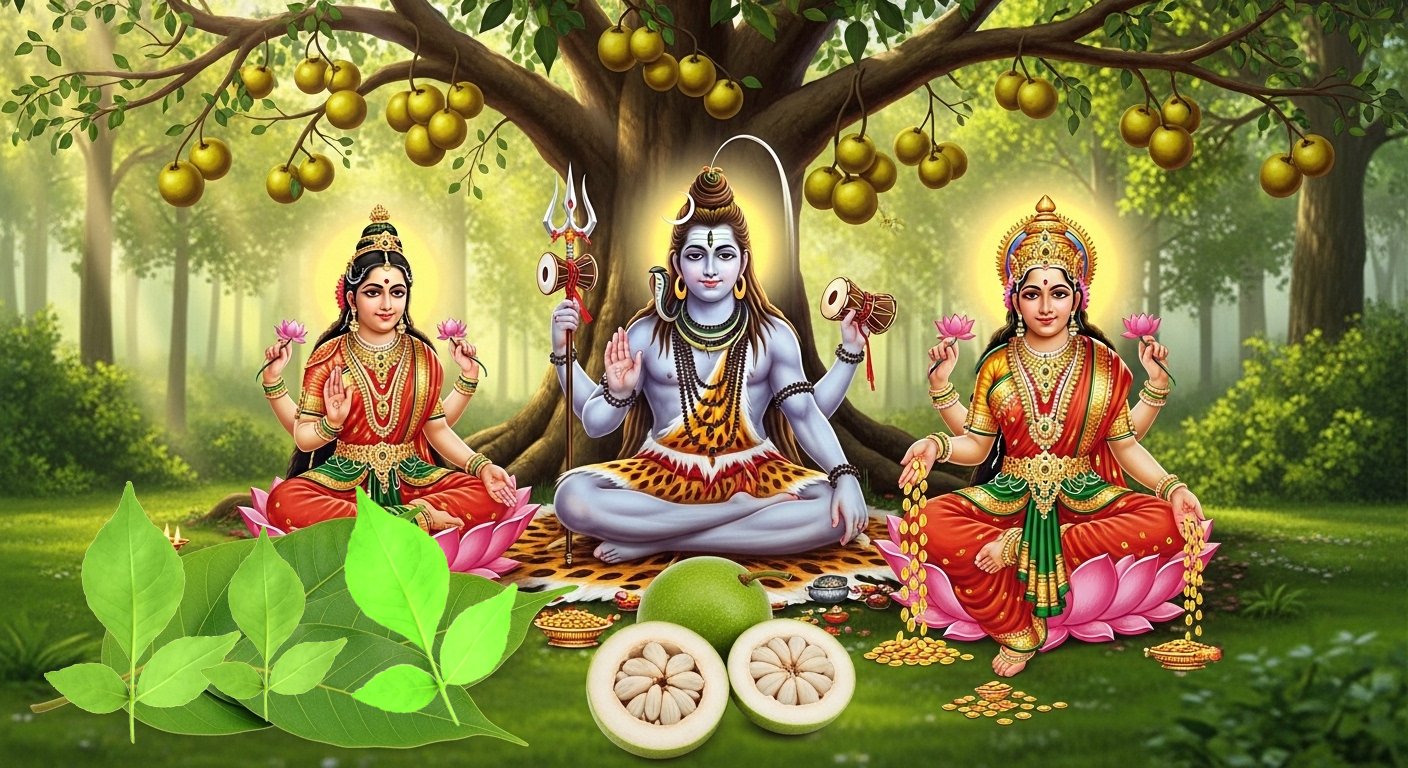
Introduction
The Bilva is considered Trideva-Swarupa (Brahma, Vishnu, and Shiva; the Trinity) but also Tridevi-Swarupa (Lakshmi, Saraswati and Durga). It is one of the rare botanical items that can balance both the Saumya (gentle) energy of Lakshmi/Parvati and the Ugra energy.
In the context of Durga Puja (especially in Bengal and Eastern India), the Bilva tree is central to the ritual of Bodhon (Awakening), Before the main Puja begins, Goddess Durga is “awakened” in a Bilva tree. One of the names or attributes associated with the Supreme Goddess is Bilva-Nilaya, meaning “She who resides in the Bilva forest.” Offering Bilva leaves to Durga is said to destroy the “demons” of the mind, such as ego and anger, just as she destroyed Mahishasura.
In this comprehensive guide, we explore every dimension of Bilva Patra — from its deep spiritual significance in Lord Shiva worship, Goddess Lakshmi to its role in Ayurvedic medicine, its connections to the Akashic Records, the mantras that activate its power, and what modern science has to say about this extraordinary leaf.
 The story of the Bilva tree created from Goddess Parvati’s sweat is detailed in the Skanda Purana, specifically in Chapter 250, usually titled “Creation of the Bilva Tree”. In this chapter, the sage Vāṇī recounts how the goddess became tired during her divine tapas on Mandarachala Mountain, sweat fell to the ground, and there arose the sacred Bilva (Bael) tree, which Parvati herself then names. In the tradition of Sri Amit Ray 114 Chakras Bilva Patra represent the 72 + 24 + 18, distribution of the chakras. The 72 chakras are connected with the higher consciousness.
The 6th Sloka of the Shri Suktam states:
“आदित्यवर्णे तपसोऽधिजातो वनस्पतिस्तव वृक्षोऽथ बिल्वः”
Meaning: O Divine Goddess, radiant like the Sun (Āditya-varṇe), You are born from the power of spiritual austerity (Tapas). The lord of sacred trees (Vanaspati) belongs to You, and that sacred tree is indeed the Bilva (Bael tree).
This verse symbolically associates the Bilva tree with the Goddess Lakshmi, emphasizing its purity, sacredness, and its origin in divine spiritual energy.
Symbolism of the Three Leaves
- Three Eyes of Shiva (Sun, Moon, Fire)
- Three Gunas (Sattva, Rajas, Tamas)
- Three States of Consciousness (Waking, Dream, Deep Sleep)
- Trimurti (Brahma, Vishnu, Shiva)
The trifoliate structure acts as a symbolic bridge between material existence and higher awareness.
1. What Is Bilva Patra?
Bilva Patra (also spelled Bilwa Patra, Bel Patra, or Bael leaf) refers to the trifoliate leaf of the Bael tree (Aegle marmelos), a tree native to the Indian subcontinent. The name “Bilva” comes from the Sanskrit root, and the tree is also known as the “Wood Apple” tree in English.
Botanical Identity
- Scientific Name: Aegle marmelos
- Family: Rutaceae
- Native Region: Indian subcontinent, Southeast Asia
- Other Names: Bael, Bel, Bilwa, Sriphal, Wood Apple, Golden Apple
Each Bilva leaf naturally grows in a trifoliate pattern — three leaflets emerging from a single stalk. This unique structure is central to its spiritual symbolism, representing the holy trinity of Brahma, Vishnu, and Maheshwara (Shiva), as well as the three eyes of Lord Shiva, the three gunas (Sattva, Rajas, Tamas), and much more. Modern phytochemical analysis has confirmed the presence of numerous bioactive compounds in the leaves, validating the ancient reverence for this tree [1].
2. Bilva Patra and Lord Shiva: The Sacred Connection
Of all the offerings made to Lord Shiva, Bilva Patra holds the highest place. The Shiva Purana explicitly states that offering Bilva leaves to Lord Shiva is more meritorious than performing elaborate yagnas (fire ceremonies), donating gold, or undertaking arduous pilgrimages.
Why Is Bilva Patra Dear to Lord Shiva?
Multiple Puranic texts provide reasons for this deep connection:
- Origin from Goddess Lakshmi: According to the 6th sloka of Sri Sukta Goddess Lakshmi is associated with the Bilva tree, similarly in Puranic accounts, the Bilva tree originated from the drops of perspiration of Goddess Parvati during her penance for Lord Shiva. Hence, Lakshmi resides in the Bilva tree, and offering its leaves to Shiva also invokes the blessings of prosperity.
- Manifestation of Shiva’s Energy: The Bilva tree is considered a direct manifestation of Lord Shiva’s energy on Earth. Each part of the tree — roots, trunk, branches, leaves, and fruit — represents different forms of the divine.
- Cooling Effect on the Fiery Lord: Lord Shiva, who consumed the Halahala poison to save the universe, is associated with immense heat and transformative fire energy. The naturally cooling properties of Bilva leaves are believed to soothe and please the Lord. Scientific studies have confirmed the anti-inflammatory and cooling pharmacological properties of Aegle marmelos leaf extracts [2].
- Symbol of Surrender: The three-lobed leaf represents the surrendering of the three aspects of existence — body, mind, and soul — to the Supreme Consciousness.
“Tridalam trigunākāram trineetram cha triyāyudham
Trijanma pāpa samhāram eka bilvam Shivārpanam”“I offer one Bilva leaf to Lord Shiva, which has three leaves, represents the three qualities, the three eyes, the three weapons, and which destroys the sins of three lifetimes.”
The Symbolism in Shiva Lingam Worship
When a devotee places a Bilva Patra on a Shiva Lingam with the smooth side facing upward and the stalk pointing toward the devotee, it symbolizes the devotee’s ego being offered at the feet of the divine. The act is one of the most powerful expressions of Bhakti (devotion) in Shaivism.
The Lingam itself represents the formless, infinite nature of Shiva (Nirguna Brahman), while the Bilva leaf represents the devotee’s consciousness being merged with that infinite reality.
Bilva Patra (Bael leaf) and Goddess Lakshmi
The fruit of the Bilva is often called Sriphal (the fruit of Sri/Lakshmi). Offering it is believed to bring both material wealth and spiritual liberation. When a devotee offers Bilva leaves to Lord Shiva, Goddess Lakshmi is said to be immensely pleased, as the tree is her own manifestation. In some traditions, Bilva leaves are kept in lockers or places where money is stored during Diwali to ensure the permanent stay of Sthira Lakshmi (stable wealth).
-
Birth of the Tree: It is believed that the tree grew from the palm of Goddess Lakshmi.
-
Presence of Divinity: Scriptural traditions suggest that Lakshmi resides in the Bilva tree in the form of Mahalakshmi. It is said that she stays at the base of the tree as Gauri, in the trunk as Vidya, and in the branches as Lakshmi herself
The Bilvashtakam prayer explicitly mentions this connection in its verses:
Lakshmyaascha Tapasaa Jaato Mahadevasya Cha Priyah.
(Born from the penance of Lakshmi and dear to Mahadeva) This verse confirms that the tree was created by her spiritual power specifically to worship Lord Shiva.
3. The Three Leaves and the Third Eye
One of the most profound and lesser-discussed aspects of Bilva Patra is its connection to Lord Shiva’s Third Eye (Ajna Chakra) and the broader framework of trinities in Hindu philosophy.
The Trident of Consciousness
The three leaves of the Bilva Patra correspond to multiple trinities:
- Three Eyes of Shiva: The left eye (Moon / Ida Nadi), the right eye (Sun / Pingala Nadi), and the third eye (Fire / Sushumna Nadi). The Bilva leaf represents the union of all three into a single point of awareness.
- Three Gunas: Sattva (purity), Rajas (activity), and Tamas (inertia). Offering the Bilva Patra symbolizes transcending all three gunas to reach the state of Turiya — pure consciousness beyond qualities.
- Three States of Consciousness: Waking (Jagrat), Dreaming (Swapna), and Deep Sleep (Sushupti). The fourth state, Turiya, is Shiva himself.
- Three Bodies: Sthula Sharira (gross body), Sukshma Sharira (subtle body), and Karana Sharira (causal body).
- Three Worlds: Bhuloka (Earth), Bhuvarloka (Atmosphere), and Svargaloka (Heaven).
Connection to the Third Eye (Ajna Chakra)
In yogic tradition, the Third Eye or Ajna Chakra is the seat of intuition, higher perception, and spiritual awakening. It is located between the eyebrows and is associated with Lord Shiva’s ability to see beyond the illusion of Maya.
The three petals of the Bilva leaf are mystically connected to the activation of the Third Eye. When a devotee meditates on the Bilva Patra placed on the Shiva Lingam, the triangular energy pattern of the leaf is believed to resonate with the triangular geometry of the Ajna Chakra.
Lord Shiva’s Third Eye is not merely a destructive force — it represents the eye of wisdom that burns away ignorance. Similarly, the Bilva Patra, when offered with devotion and understanding, is said to burn away the three types of karma: Sanchita (accumulated), Prarabdha (currently experienced), and Agami (future).
4. Powerful Mantras for Bilva Patra Offerings
The power of Bilva Patra is amplified exponentially when combined with the correct mantras. Vedic mantras create specific vibrational frequencies that activate the spiritual potential of the leaf and deepen the devotee’s connection with Lord Shiva.
Bilvashtakam (The Eight Verses on Bilva)
The most famous and widely recited hymn dedicated to the Bilva leaf is the Bilvashtakam, attributed to Adi Shankaracharya. Each verse ends with the refrain “Eka bilvam Shivārpanam” — “I offer one Bilva leaf to Lord Shiva.”
Verse 1:
“Tridalam trigunākāram trineetram cha triyāyudham |
Trijanma pāpa samhāram eka bilvam Shivārpanam ||”Meaning: I offer a Bilva leaf that has three parts, represents the three qualities, the three eyes, and the three weapons, and which destroys the sins of three births.
Maha Mrityunjaya Mantra with Bilva Offering
The Maha Mrityunjaya Mantra is one of the most potent Vedic mantras, and when recited while offering Bilva Patra to Lord Shiva, its healing and protective powers are said to increase manifold.
“Om Tryambakam Yajāmahe Sugandhim Pushti Vardhanam |
Urvārukamiva Bandhanān Mrityor Mukshīya Māmritāt ||”“We worship the three-eyed Lord Shiva, who is fragrant and nourishes all beings. May he liberate us from death, just as a ripe cucumber is severed from the vine, and grant us immortality.”
Recommended Practice: Chant this mantra 108 times while offering 108 Bilva leaves to the Shiva Lingam. This practice is especially powerful during Maha Shivaratri, Mondays (Somvar), and the Pradosh Vrat.
Om Namah Shivaya with Bilva Patra
The Panchakshari Mantra — Om Namah Shivaya — is the foundational mantra of Shaivism. When each syllable is meditated upon while placing a Bilva leaf, the five syllables (Na-Ma-Shi-Va-Ya) correspond to the five elements (Earth, Water, Fire, Air, Ether), the five senses, and the five faces of Shiva.
Shiva Gayatri with Bilva Puja
“Om Tatpurushāya Vidmahe Mahādevāya Dhīmahi |
Tanno Rudrah Prachodayāt ||”
Reciting the Shiva Gayatri while performing Bilva Puja enhances mental clarity, spiritual vision, and the activation of the Third Eye.
5. Bilva Patra in Meditation Practices
Beyond temple rituals, the Bilva leaf holds a significant place in meditative and yogic practices. Advanced spiritual practitioners have used Bilva Patra as a tool for deepening meditation, activating chakras, and accessing higher states of consciousness.
Bilva Patra Dhyana (Leaf Meditation)
This is a simple yet profound meditation technique that can be practiced at home:
- Preparation: Sit in a comfortable meditative posture (Padmasana or Sukhasana). Place a fresh Bilva leaf on a clean surface before you, or hold it gently in your palms.
- Centering: Close your eyes and take 21 deep breaths. With each exhale, release attachments. With each inhale, draw in Shiva consciousness.
- Visualization: Visualize the three leaves of the Bilva Patra as three streams of light — white (Sattva/Moon), red (Rajas/Sun), and gold (Tamas transmuted to Fire) — converging at a single point between your eyebrows.
- Mantra Integration: Silently chant “Om Namah Shivaya” while visualizing the three lights merging into a brilliant point of white-blue light at the Ajna Chakra.
- Surrender: After 15-30 minutes, mentally offer the Bilva leaf to the Shiva Lingam within your heart (Hridaya Lingam). Feel a deep sense of peace and dissolution of the ego.
Chakra Activation with Bilva Leaves
In certain Tantric meditation traditions, fresh Bilva leaves are placed on specific chakra points during meditation:
- Muladhara (Root): Grounds spiritual energy
- Anahata (Heart): Opens the heart to divine love
- Ajna (Third Eye): Enhances intuition and inner vision
- Sahasrara (Crown): Facilitates connection with cosmic consciousness
Forest Meditation Under the Bilva Tree
Sitting in meditation under a Bilva tree is considered highly auspicious. The tree is believed to emanate a subtle spiritual energy field that naturally calms the mind, purifies the aura, and facilitates deeper states of Samadhi (meditative absorption). Many ancient rishis are said to have attained enlightenment under Bilva trees. Interestingly, modern research has confirmed that the Bilva tree releases volatile phytochemicals with demonstrated anxiolytic and neuroprotective properties [3], offering a scientific basis for the calming effects experienced during such practices.
6. Sacred Stories and Legends
The significance of Bilva Patra is deeply woven into Hindu mythology through numerous captivating stories that reveal why this leaf holds such immense power.
The Story of the Hunter and the Bilva Tree (Maha Shivaratri Origin)
Perhaps the most famous story connected to both Bilva Patra and Maha Shivaratri is the tale of the hunter (Vyādha or Lubdhaka):
A poor hunter went into the forest on the day of Shivaratri but could not find any prey. As night fell, he climbed a Bilva tree to stay safe from wild animals. To stay awake and alert, he kept plucking Bilva leaves one by one and dropping them below.
Unknown to him, there was a Shiva Lingam directly beneath the tree. The falling Bilva leaves landed perfectly on the Lingam. The hunter unknowingly fasted all day (the Shivaratri fast), stayed awake all night (the jagaran/vigil), and offered Bilva leaves to the Lord.
By morning, Lord Shiva appeared before him, greatly pleased with this unintentional yet pure worship. The hunter was blessed with liberation (Moksha). This story teaches that even an accidental offering of Bilva Patra with an innocent heart can move Lord Shiva to grant his highest blessings.
Goddess Lakshmi and the Bilva Tree
Worshipping Goddess Lakshmi with Bilva leaves on Fridays is considered highly auspicious. She is also honored as Bilva-Nillaya. The Bilva tree is also called “Shriphala” — the fruit of Sri (Lakshmi).
This is why the Bilva tree is considered the abode of both Lakshmi (prosperity) and Shiva (liberation), making it a rare sacred entity that can bestow both material well-being and spiritual freedom.
The Curse of the Demon King and the Bilva Leaf
In another Puranic story, a powerful demon king performed severe penance and received a boon that made him nearly invincible. Lord Shiva, to protect the universe, decreed that the demon could only be weakened by the spiritual energy generated through the offering of Bilva leaves. Devotees who offered Bilva Patra during their worship collectively generated enough spiritual merit to weaken the demon’s power, allowing the gods to restore cosmic balance.
The Pandavas and the Bilva Tree
During their exile in the Mahabharata, the Pandavas are said to have worshipped Lord Shiva with Bilva leaves in the forest. It is believed that their devotion through Bilva Patra offerings gave them the strength, protection, and divine support needed to eventually reclaim their kingdom.
7. Rituals: How to Offer Bilva Patra Correctly
While the story of the hunter shows that even accidental offerings please Lord Shiva, performing the Bilva Patra offering with proper ritual knowledge multiplies its spiritual benefits many times over.
Step-by-Step Bilva Patra Offering Ritual
- Selecting the Leaves:
- Choose fresh, green, unblemished trifoliate Bilva leaves
- All three leaflets should be intact — do not use leaves with missing or torn parts
- Avoid leaves that have been eaten by insects
- Ideally, pluck the leaves yourself after seeking permission from the tree with a prayer
- Purification:
- Wash the leaves gently with clean water
- Pat them dry and arrange them on a clean plate
- Sprinkle a few drops of Ganga water or pure water mixed with a pinch of turmeric
- Positioning:
- Place the leaf on the Shiva Lingam with the smooth side facing upward
- The stalk should point toward you (the devotee)
- The three leaf tips should point toward the Lingam
- Mantra Chanting:
- Recite the Bilvashtakam or “Om Namah Shivaya”
- For each leaf offered, chant at least one round of the mantra
- Sankalpa (Intention):
- Before beginning, state your intention (Sankalpa) clearly
- Whether it’s for spiritual growth, healing, prosperity, or peace — let your heart speak
Best Days for Bilva Patra Offering
- Maha Shivaratri: The most auspicious night — offering 108 or 1,008 Bilva leaves brings immense spiritual merit
- Mondays (Somvar): Dedicated to Lord Shiva — weekly Bilva Patra offering is highly beneficial
- Pradosh Vrat: The 13th day of each lunar fortnight, especially the twilight hours
- Shravan Month: The entire month of Shravan (July-August) is sacred to Shiva
- Trayodashi: The 13th lunar day of each fortnight
How Many Bilva Leaves to Offer?
- 1 leaf: For daily worship
- 3 leaves: Representing the three aspects of consciousness
- 11 leaves: For the eleven Rudras
- 21 leaves: For the 21 aspects of Prana
- 108 leaves: For a complete cycle of spiritual purification
- 1,008 leaves: The supreme offering, performed during Maha Shivaratri or special pujas
8. Bilva Patra in Ayurveda: Healing Properties
The reverence for the Bilva tree extends far beyond the temple. In Ayurveda, the ancient Indian system of medicine, every part of the Bilva tree — leaves, fruit, bark, and roots — has been used for thousands of years as powerful healing agents. A comprehensive ethnobotanical and pharmacological review has documented the extensive traditional uses and confirmed numerous therapeutic properties of Aegle marmelos [4].
Ayurvedic Properties of Bilva
- Rasa (Taste): Kashaya (Astringent), Tikta (Bitter)
- Guna (Quality): Laghu (Light), Ruksha (Dry)
- Virya (Potency): Ushna (Hot)
- Vipaka (Post-Digestive Effect): Katu (Pungent)
- Dosha Effect: Balances Kapha and Vata; may increase Pitta in excess
Health Benefits of Bilva Leaves
- Digestive Health: Bilva leaves are one of Ayurveda’s most trusted remedies for chronic diarrhea, dysentery, irritable bowel syndrome (IBS), and other digestive disorders. The astringent properties help firm up loose stools, while the antibacterial compounds address infections. Peer-reviewed research has confirmed the significant antidiarrheal and gastroprotective activity of Bilva leaf and fruit extracts [1].
- Diabetes Management: Ayurvedic texts describe Bilva leaves as Pramehaghna (destroyer of diabetes). Fresh juice of Bilva leaves, taken on an empty stomach, is traditionally used to help regulate blood sugar levels. Modern clinical and preclinical studies have validated these hypoglycemic effects, identifying Aegeline as a key bioactive compound responsible for improved glucose metabolism [5].
- Respiratory Health: Bilva leaves, when prepared as a decoction, help clear congestion, reduce inflammation of the respiratory tract, and address chronic bronchitis and asthma.
- Cardiac Support: The alkaloids and flavonoids in Bilva leaves support heart health by helping maintain healthy cholesterol levels and improving blood circulation [3].
- Anti-Inflammatory: Bilva leaf paste applied externally reduces inflammation, swelling, and pain in joints and muscles. Studies have isolated specific anti-inflammatory compounds including Marmelosin and Lupeol that demonstrate significant inhibition of inflammatory pathways [2].
- Fever Reduction: Decoctions of Bilva leaves have been used for millennia as a natural antipyretic (fever reducer).
- Skin Disorders: Bilva leaf paste is used in Ayurveda to treat eczema, psoriasis, fungal infections, and allergic rashes.
- Eye Health: Juice of fresh Bilva leaves, when diluted, is traditionally used as eye drops for treating conjunctivitis and other eye inflammations (always under professional Ayurvedic guidance).
Bilva Fruit (Bael Fruit) in Ayurveda
The fruit of the Bilva tree is equally revered in Ayurvedic healing:
- Unripe Bael: Used for digestive disorders, particularly chronic diarrhea
- Ripe Bael: Acts as a mild laxative, rich in vitamins and minerals
- Bael Sherbet: A cooling summer drink made from ripe Bael pulp, sugar, and water — excellent for preventing heat stroke and dehydration
Traditional Ayurvedic Preparations
- Bilva Swarasa: Fresh juice of Bilva leaves (10-20 ml with honey)
- Bilva Kwatha: Decoction of Bilva leaves, bark, and root
- Bilvadi Churna: Powdered Bilva with other herbs for digestive health
- Bilva Taila: Medicated oil with Bilva for external application
- Dasamoola: One of the 10 root herbs in this famous Ayurvedic formulation
9. Modern Science Validates the Bilva Tree
What ancient sages knew intuitively and prescribed for millennia is now being confirmed by modern scientific research. The Aegle marmelos tree has been the subject of numerous peer-reviewed studies in pharmacology, biochemistry, and ethnobotany, creating a robust evidence base that validates its traditional uses [1] [4].
Key Bioactive Compounds
Researchers have identified an impressive array of bioactive compounds in the Bilva tree:
- Marmelosin: Exhibits anti-inflammatory, antifungal, and antitumor properties
- Aegeline: Shows anti-diabetic activity by stimulating glucose absorption [5]
- Lupeol: A potent anti-inflammatory and anti-cancer compound
- Skimmianine: Has antimicrobial and cardioprotective properties
- Rutin: A powerful antioxidant flavonoid
- Limonene & Eugenol: Aromatic compounds with antimicrobial properties
- Tannins: Responsible for the astringent, anti-diarrheal action
- Coumarins: Anti-coagulant and anti-inflammatory properties
Scientific Studies and Findings
- Anti-Diabetic Properties: A comprehensive review published in the Journal of Pharmaceutical Research International confirmed that Bilva leaf extracts significantly reduce blood glucose levels through multiple mechanisms, including improved insulin sensitivity and enhanced glucose uptake. The compound Aegeline was identified as the primary active agent responsible for these hypoglycemic effects [5].
- Antimicrobial Activity: Multiple studies have demonstrated that Bilva leaf extracts show significant antimicrobial activity against a range of pathogens, including E. coli, Staphylococcus aureus, Salmonella typhimurium, and various fungi. A detailed phytochemical analysis confirmed that alkaloids, flavonoids, and tannins present in the leaves are responsible for this broad-spectrum antimicrobial action [4].
- Anti-Cancer Potential: Research has found that Bilva leaf extracts contain compounds that induce apoptosis (programmed cell death) in certain cancer cell lines, particularly in breast and colon cancer cells. A systematic pharmacological review documented the cytotoxic activity of Marmelosin and related coumarins against multiple cancer cell lines [1].
- Radioprotective Effects: Studies have found that Bilva leaf extract provides significant protection against radiation damage in animal models — a finding with profound implications for radiation therapy patients [3].
- Cardioprotective Action: Research has shown that Bilva leaf extract helps reduce total cholesterol, LDL cholesterol, and triglycerides while increasing HDL cholesterol, supporting Ayurvedic claims about its heart-health benefits [3].
- Hepatoprotective (Liver Protection): Studies indicate that Bilva leaf extract protects the liver against toxin-induced damage, likely due to its high antioxidant content. A pharmacognostical and pharmacological review confirmed the hepatoprotective potential of Aegle marmelos in both in vitro and in vivo models [1].
- Anti-Ulcer Activity: Research confirms that Bilva leaf extract reduces gastric acid secretion and protects the stomach lining, supporting its traditional use for ulcers and acidity [4].
- Neuroprotective and Anxiolytic Effects: A recent comprehensive study published in ScienceDirect has documented the neuroprotective properties of Aegle marmelos phytochemicals, demonstrating their potential in managing neurodegenerative conditions and anxiety-related disorders [2].
The Science Behind “Sacred Trees”
Interestingly, modern environmental science has also revealed that the Bilva tree releases specific phytochemicals into the surrounding air that have measurable health benefits:
- The tree releases volatile organic compounds that may have mood-stabilizing and anxiety-reducing effects — potentially explaining why meditating under a Bilva tree feels so peaceful [2]
- The Bilva tree is an excellent air purifier, absorbing CO2 and releasing oxygen more efficiently than many other trees
- The aromatic compounds released by the tree have natural insect-repellent properties
10. Bilva Patra and the Akashic Records
This is perhaps the most esoteric and fascinating connection of the Bilva Patra — its link to the Akashic Records, the cosmic library of all events, thoughts, emotions, and experiences that have ever occurred throughout existence.
What Are the Akashic Records?
In Hindu and Vedantic philosophy, the Akashic Records (from the Sanskrit word “Akasha” meaning sky, space, or ether) are the energetic imprint of every soul’s journey. They exist in the causal plane — the subtlest layer of creation — and contain the complete record of all past, present, and potential future experiences.
The concept is found in various traditions: in Hinduism as the Chitragupta’s records, in Theosophy as the Akashic Records, and in Buddhism as the Alaya Vijnana (storehouse consciousness).
How Does Bilva Patra Connect to the Akashic Records?
The connection between the Bilva leaf and the Akashic Records operates on several mystical levels:
- The Ether Element Connection: Lord Shiva is the master of the Akasha Tattva (ether element), which is the subtlest of the five elements and the medium through which the Akashic Records exist. Since Bilva Patra is Shiva’s most beloved offering, it serves as a key or access point to this Akashic dimension.
- Trifoliate Geometry and Cosmic Memory: The three leaves of the Bilva correspond to the three dimensions of time — past, present, and future. In advanced meditation practices, contemplating the Bilva leaf as a symbol of tri-temporal awareness is said to open the practitioner to insights from the Akashic Records.
- Karmic Purification: The Bilvashtakam explicitly states that the Bilva Patra destroys the sins of three lifetimes. This isn’t just poetic language — it refers to the clearing of negative karmic imprints stored in the Akashic field. When Bilva leaves are offered with true devotion, the vibrational frequency generated is believed to rewrite karmic patterns in the causal body.
- The Shiva Lingam as Akashic Antenna: In certain mystical interpretations, the Shiva Lingam represents the cosmic database itself — the point where all information about creation converges. The Bilva leaf placed upon it acts as an interface between the individual soul (Jivatma) and the cosmic record (Paramatma).
- Nadi Readings and Bilva: In the Tamil tradition of Nadi Jyotisha (Nadi Astrology), ancient palm leaf manuscripts attributed to Sage Agastya and other rishis are believed to be records channeled from the Akashic field. Interestingly, many of these readings prescribe Bilva Patra offerings to Lord Shiva as specific remedies for karmic issues identified in the readings — creating a beautiful feedback loop between the Akashic diagnosis and the Bilva Patra remedy.
Meditation to Access Akashic Insights Through Bilva
For advanced practitioners interested in using Bilva Patra as a gateway to Akashic wisdom, here is a traditional practice:
- Begin in deep meditation after offering Bilva leaves to a Shiva Lingam
- Place one fresh Bilva leaf on your Ajna Chakra (third eye center)
- Chant “Om Akasha Tatvaya Namah” (Salutations to the Ether Element) 108 times
- Enter a state of deep silence and receptivity
- Allow visions, insights, or knowings to arise spontaneously
- Record any impressions immediately after the meditation
11. Spiritual Benefits of Bilva Patra
The spiritual benefits of regular Bilva Patra worship extend across every dimension of a devotee’s life. Here is a comprehensive overview:
Karmic Benefits
- Destruction of accumulated negative karma (Sanchita Karma)
- Mitigation of current life challenges (Prarabdha Karma)
- Prevention of future negative karmic accumulation (Agami Karma)
- Purification of ancestral karma (Pitru Dosha)
Spiritual Growth
- Acceleration of spiritual evolution and self-realization
- Deepening of meditation practice
- Activation of the Third Eye and heightened intuition
- Strengthening of the connection with Lord Shiva and Shakti
- Opening of the Hridaya (spiritual heart)
Protection and Grace
- Protection from negative energies, evil eye, and psychic attacks
- Divine grace and blessings of Lord Shiva
- Blessings of Goddess Lakshmi (prosperity and abundance)
- Protection during spiritual practices and astral experiences
- Shield against the malefic effects of planetary afflictions (Graha Dosha)
Mental and Emotional Benefits
- Deep inner peace and emotional stability
- Release of deep-seated fears, anxieties, and traumas
- Enhancement of willpower and determination
- Clarity of thought and improved decision-making
- Detachment from material attachments without loss of joy
It is worth noting that the mental calm and emotional equilibrium attributed to Bilva Patra practices may also have a neurochemical dimension. As modern research has shown, bioactive compounds in Bilva leaves demonstrate anxiolytic and neuroprotective effects [2] [3], suggesting that the spiritual and scientific benefits are complementary rather than contradictory.
Astrological Remedies
In Vedic Astrology (Jyotish), offering Bilva Patra is prescribed as a remedy for:
- Kaal Sarp Dosha
- Mangal Dosha (Mars affliction)
- Saturn’s challenging transits (Sade Sati)
- Rahu-Ketu afflictions
- Weak placement of Moon in the natal chart
12. Do’s and Don’ts of Bilva Patra Worship
✅ Do’s
- Do use fresh, green, trifoliate leaves with all three leaflets intact
- Do wash the leaves before offering
- Do place the smooth side upward on the Shiva Lingam
- Do chant appropriate mantras while offering
- Do offer with a clean body and pure intention
- Do seek permission from the tree before plucking leaves (a simple prayer of gratitude)
- Do offer an odd number of leaves (1, 3, 5, 11, 21, 108, 1008)
- Do combine the offering with Abhishekam (ritual bathing of the Lingam) for maximum benefit
❌ Don’ts
- Don’t use torn, damaged, or insect-eaten leaves
- Don’t use dried or wilted leaves for fresh offerings
- Don’t place the leaf with the rough/veined side up (this is considered inauspicious)
- Don’t pluck Bilva leaves after sunset or on specific days as prescribed by local traditions
- Don’t use the same Bilva leaf for offering twice
- Don’t step on fallen Bilva leaves or treat them disrespectfully
- Don’t cut down a Bilva tree — this is considered a grave sin in Hindu tradition
- Don’t offer Bilva leaves to deities other than Shiva and related forms unless specifically prescribed
Frequently Asked Questions (FAQ) About Bilva Patra
1. Why is Bilva Patra offered to Lord Shiva?
Bilva Patra is offered to Lord Shiva because the Shiva Purana and other sacred texts state that the Bilva tree is the direct manifestation of Shiva’s energy on Earth. The three-lobed leaf represents Shiva’s three eyes, the three gunas, and the three aspects of existence. The cooling properties of the leaf are believed to soothe Lord Shiva, who consumed the Halahala poison. Offering Bilva Patra is considered more meritorious than elaborate rituals or material donations.
2. Can Bilva Patra be offered to other deities besides Lord Shiva?
While Bilva Patra is primarily and most powerfully offered to Lord Shiva, it can also be offered to Goddess Parvati (as Shiva’s consort), Lord Ganesha, and in some traditions, to Goddess Lakshmi (since the Bilva tree is said to have originated from her). However, Bilva is not traditionally offered to Lord Vishnu or his avatars, as different leaves and flowers are sacred to different deities.
3. What are the scientifically proven health benefits of Bilva leaves?
Bilva leaves have been validated by peer-reviewed scientific research for numerous health benefits including: managing diabetes and blood sugar levels [5], treating digestive disorders like diarrhea and IBS [1], supporting heart health, reducing inflammation [2], fighting microbial infections [4], protecting the liver, reducing fever, neuroprotection [2], and treating skin disorders. The leaves contain powerful bioactive compounds such as Marmelosin, Aegeline, Lupeol, and Rutin [3].
4. How should I place Bilva Patra on a Shiva Lingam?
Place the Bilva leaf with the smooth (upper) side facing upward toward the sky and the stalk pointing toward you (the devotee). The three leaf tips should point toward or rest on the Lingam. This positioning symbolizes the offering of your ego and individual identity to the divine. While placing the leaf, chant “Om Namah Shivaya” or the Bilvashtakam for maximum spiritual benefit.
5. What is the Bilvashtakam mantra?
The Bilvashtakam is a sacred hymn of eight verses attributed to Adi Shankaracharya, dedicated to the glory of the Bilva leaf in Shiva worship. Each verse describes a spiritual significance of the Bilva leaf and ends with “Eka Bilvam Shivaarpanam” (I offer one Bilva leaf to Lord Shiva). It is the most important and widely recited mantra during Bilva Patra offerings and is considered especially powerful during Maha Shivaratri and Mondays.
6. Can I use dried Bilva leaves for Shiva Puja?
Fresh, green Bilva leaves are always preferred for Shiva Puja. Dried leaves should generally not be used as fresh offerings. However, in situations where fresh leaves are absolutely unavailable (such as in cold climates or urban settings far from Bilva trees), some traditions permit offering dried leaves with sincere devotion, as Lord Shiva values the purity of intention above all. You may also use Bilva leaf powder sprinkled on the Lingam as an alternative.
7. What is the connection between Bilva Patra and the Third Eye?
The three leaflets of the Bilva Patra symbolize Lord Shiva’s three eyes — the left eye (Moon/Ida), right eye (Sun/Pingala), and Third Eye (Fire/Sushumna). In yogic practice, the triangular geometry of the Bilva leaf resonates with the triangular energy pattern of the Ajna Chakra (Third Eye). Meditating with a Bilva leaf placed on the forehead is believed to enhance the flow of pranic energy to the Third Eye center, promoting intuition, inner vision, and spiritual awakening.
8. How does Bilva Patra relate to the Akashic Records?
The Bilva Patra connects to the Akashic Records through its association with Lord Shiva as the master of the Akasha (ether) element. The three leaves represent past, present, and future — the three dimensions of time recorded in the Akashic field. Offering Bilva leaves is believed to purify negative karmic imprints stored in the Akashic Records. In Nadi Astrology traditions, Bilva Patra offerings are specifically prescribed as remedies for karmic issues identified through Akashic readings.
9. Is it a sin to cut a Bilva tree?
Yes, cutting down a Bilva tree is considered a grave sin (Mahapapa) in Hindu tradition. The Shiva Purana states that the Bilva tree is a living form of Lord Shiva, and destroying it is equivalent to destroying a sacred temple. If a Bilva tree needs to be removed for unavoidable reasons, proper rituals of atonement should be performed, and ideally, multiple new Bilva saplings should be planted as compensation.
10. Can women offer Bilva Patra to Lord Shiva?
Absolutely yes. There is no restriction in the Vedas, Upanishads, or Shiva Purana preventing women from offering Bilva Patra to Lord Shiva. Lord Shiva is known as the most egalitarian of all Hindu deities — he accepts devotion from all beings regardless of gender, caste, age, or social status. The story of the hunter receiving Shiva’s grace through accidental worship demonstrates that Shiva’s only criterion is the sincerity of the heart.
11. What is the best time to offer Bilva Patra?
The most auspicious times include: early morning during Brahma Muhurta (4:00-6:00 AM), during the Pradosh Kaal (twilight hours), on Mondays, during Maha Shivaratri, throughout the month of Shravan, and on Trayodashi (13th lunar day). However, Bilva Patra can be offered at any time with devotion. The Pradosh period (about 1.5 hours before and after sunset on Trayodashi) is considered especially powerful.
12. How many Bilva leaves should I offer daily?
For daily worship, offering even a single Bilva leaf with devotion is sufficient and highly meritorious. For special occasions, you can offer 3, 11, 21, 108, or 1,008 leaves. The number should ideally be odd. The Bilvashtakam says “Eka Bilvam Shivaarpanam” — even one Bilva leaf offered with love is enough to please Lord Shiva. Quality of devotion always matters more than quantity of leaves.
13. Does modern science support the medicinal claims about Bilva Patra?
Yes, extensively. Peer-reviewed studies published in journals indexed in PubMed, ScienceDirect, and Europe PMC have confirmed Bilva’s anti-diabetic [5], antimicrobial [4], anti-inflammatory, hepatoprotective, cardioprotective [1] [3], neuroprotective [2], and anti-cancer properties. The convergence between ancient Ayurvedic claims and modern pharmacological evidence is remarkably strong, making Aegle marmelos one of the most scientifically validated medicinal plants in Ayurveda.
14. Conclusion: The Eternal Power of the Bilva Leaf
The Bilva Patra stands as one of the most remarkable confluences of spirituality, healing, science, and mysticism in any world tradition. A single three-lobed leaf carries within it the entire cosmos of Shiva consciousness — from the physical healing validated by modern pharmacology [1] [2] [3] [4] [5] to the mystical dimensions of Akashic wisdom.
Whether you approach the Bilva leaf as a devotee seeking Lord Shiva’s grace, a seeker exploring meditation and consciousness, a health-conscious individual interested in Ayurvedic healing, or a curious mind wanting to understand what modern science says about ancient sacred plants — the Bilva Patra has something profound to offer you.
The simplicity of the leaf belies its infinite depth. As the Bilvashtakam reminds us, offering even one Bilva leaf to Lord Shiva with a pure heart can destroy the sins of three lifetimes and open the doorway to liberation.
In the words of the ancient rishis:
“Where the Bilva tree stands, there Shiva resides. Where the Bilva leaf is offered, there grace flows. Where the devotee remembers the Bilva, there karma dissolves.”
May the sacred Bilva Patra guide you on your journey toward healing, awakening, and ultimate freedom.
Om Namah Shivaya 🙏
15. Scientific References
- Sharma, P. C., Bhatia, V., Bansal, N., & Sharma, A. (2018). A Review on Bael Tree (Aegle marmelos): Morphology, Phytochemistry, and Pharmacology. PMC — National Center for Biotechnology Information. This comprehensive review covers the complete pharmacological profile of Aegle marmelos, including anti-diabetic, anti-cancer, hepatoprotective, antimicrobial, and gastroprotective properties, along with detailed phytochemical analysis.
https://pmc.ncbi.nlm.nih.gov/articles/PMC6034160/ - Recent Pharmacological Advances (2025). Comprehensive Pharmacological and Phytochemical Analysis of Aegle marmelos: Neuroprotective, Anti-inflammatory, and Therapeutic Applications. ScienceDirect. This recent study documents the neuroprotective, anti-inflammatory, anxiolytic, and diverse therapeutic properties of Bilva phytochemicals, with emphasis on modern molecular mechanisms and potential drug development.
https://www.sciencedirect.com/science/article/pii/S2949824425004616 - Baliga, M. S., Bhat, H. P., Joseph, N., & Fazal, F. (2015). Phytochemistry and Medicinal Uses of the Bael Fruit (Aegle marmelos Correa): A Concise Review. Europe PMC. This concise yet authoritative review examines the cardioprotective, radioprotective, antioxidant, and chemopreventive properties of Aegle marmelos, with detailed analysis of bioactive compounds including Marmelosin, Lupeol, Rutin, and Skimmianine.
https://europepmc.org/article/pmc/4649562 - Ethnobotanical and Pharmacological Review (2024). Phytochemical Screening, Ethnobotanical Significance, and Pharmacological Activities of Aegle marmelos. International Journal of Scientific Research in Science and Technology (IJSRST). This study provides a thorough analysis of the ethnobotanical significance and traditional medicinal uses of the Bilva tree across Indian subcontinent communities, correlating folk medicine claims with modern pharmacological evidence for antimicrobial, anti-ulcer, and immunomodulatory activities.
https://ijsrst.com/index.php/home/article/view/IJSRST24115115 - Pharmacological and Therapeutic Review (2020). Anti-diabetic and Hypoglycemic Potential of Aegle marmelos: A Comprehensive Review. Journal of Pharmaceutical Research International (JPRI). This review specifically focuses on the anti-diabetic mechanisms of Bilva, documenting the role of Aegeline and other bioactive compounds in improving insulin sensitivity, enhancing glucose uptake, and protecting pancreatic beta cells — validating the ancient Ayurvedic classification of Bilva as Pramehaghna (destroyer of diabetes).
https://journaljpri.com/index.php/JPRI/article/view/7155