
Abstract
This article provides a comprehensive 2026 research guide to irritable bowel syndrome (IBS), a disorder of gut-brain interaction (DGBI). It reviews the clinical definition of IBS, its principal subtypes—IBS with constipation (IBS-C), IBS with diarrhea (IBS-D), mixed IBS (IBS-M), and unsubtyped IBS (IBS-U)—along with common symptoms, proposed pathophysiological mechanisms, risk factors, and the principles of positive clinical diagnosis based on the Rome IV criteria. The guide summarizes current evidence for conventional biomedical management, dietary interventions including the low-FODMAP approach, probiotics, gut-directed and brain-gut behavioural therapies, and the currently clinical evidence for Ayurveda and limited in homeopathy. It also discusses long-term symptom management, alarm or red-flag features requiring medical evaluation, and an integrative yoga- and Ayurveda-informed dietary and lifestyle framework. This article is intended for educational and research purposes only and should not be used as a substitute for individualized medical diagnosis or treatment.
Introduction
Irritable bowel syndrome (IBS) is a common and often misunderstood gastrointestinal disorder. People with IBS may experience genuine and, at times, severe abdominal pain, bloating, altered bowel habits, urgency, diarrhea, constipation, a sensation of incomplete evacuation, fatigue, and substantial impairment in quality of life, even when routine investigations do not identify structural abnormalities. Modern gastroenterology classifies IBS within the broader group of disorders of gut-brain interaction (DGBI), in which bidirectional communication among the brain, enteric nervous system, intestinal sensory pathways, gastrointestinal motility, immune signaling, visceral sensitivity, and the gut microbiome may contribute to symptom generation and persistence.
IBS research continues to evolve rapidly. Recent developments include the 2025 Seoul Consensus, systematic reviews examining probiotics and plant-based interventions, prospective research investigating the relationship between life adversity and IBS, emerging reviews of multi-symptom management in IBS-C, and studies addressing diagnostic disparities and associated comorbid conditions. However, in comparison, the Ayurveda research on IBS [21,22] is very limited because of lack of funds and intertest in India. These references form the core evidence framework for this 2026 guide.
What Is Irritable Bowel Syndrome?
IBS is diagnosed clinically from a characteristic symptom pattern rather than by finding one single abnormal blood test, scan or biopsy. The Rome IV framework describes IBS as recurrent abdominal pain, on average, at least one day per week during the last three months, associated with at least two of the following: relation to defecation, a change in stool frequency, or a change in stool form; symptom onset should be at least six months before diagnosis.
The 2025 Seoul Consensus treats IBS as a chronic disorder of gut-brain interaction and provides recommendations across definition, risk factors, diagnostic strategies, general management and medical treatment. Read the consensus.
NIDDK explains that IBS can cause pain, diarrhea, constipation, bloating and incomplete evacuation, and that symptoms can come and go over years. IBS itself does not usually damage the digestive tract.
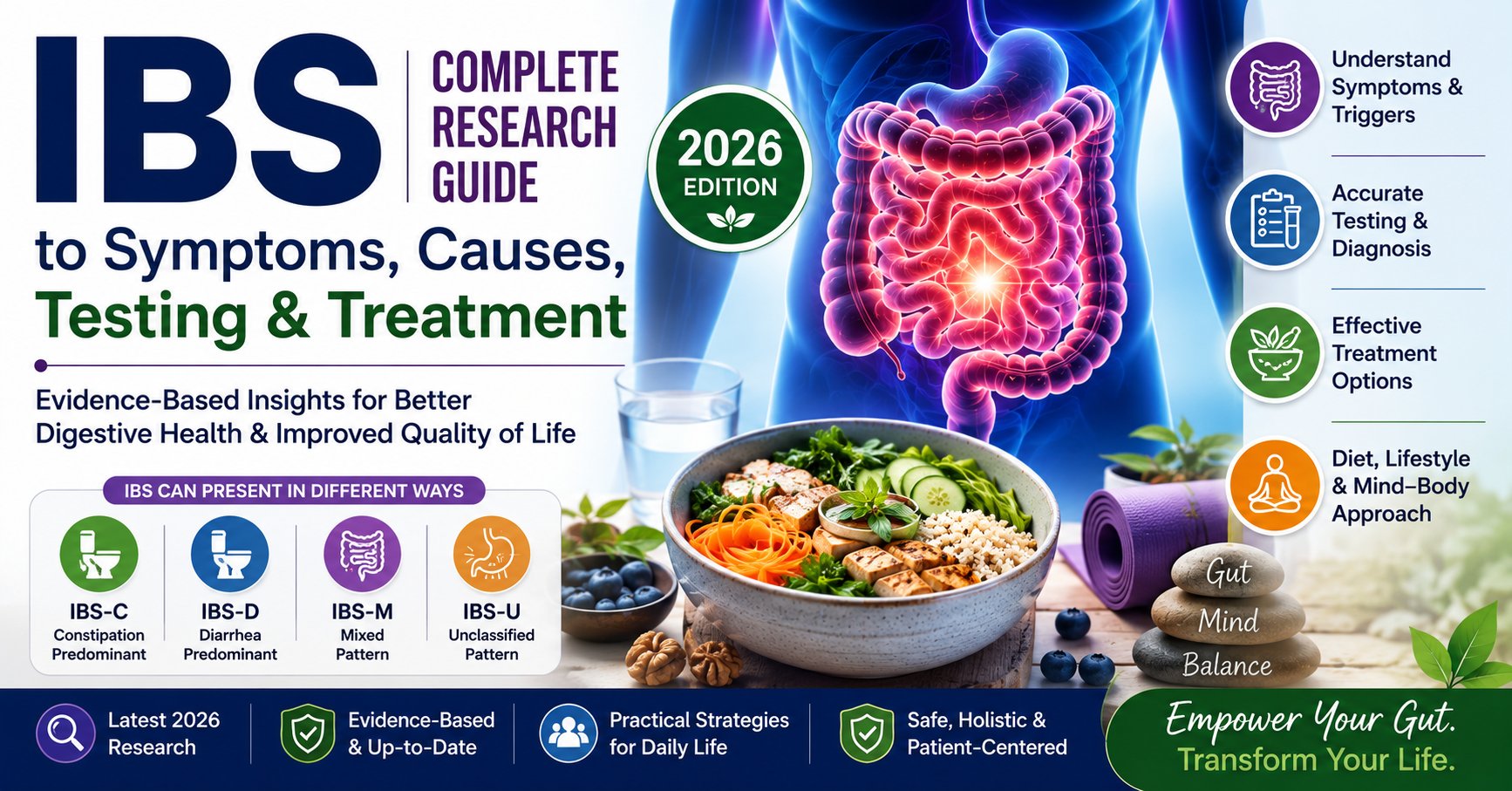
IBS Subtypes: IBS-C, IBS-D, IBS-M and IBS-U
Subtype matters because the treatment target differs. Classification is usually based on stool form using the Bristol Stool Form Scale during abnormal bowel movements.
| Subtype | Typical pattern | Main clinical challenge |
|---|---|---|
| IBS-C | Constipation-predominant IBS | Hard/lumpy stools, straining, incomplete evacuation, bloating and pain |
| IBS-D | Diarrhea-predominant IBS | Loose/watery stools, urgency, frequent bowel movements and pain |
| IBS-M | Mixed IBS | Both constipation and diarrhea at different times |
| IBS-U | Unclassified | Symptoms fit IBS but stool pattern does not consistently meet the other subtype definitions |
A 2026 review emphasizes that IBS-C should not be reduced to bowel-movement frequency alone: bloating, straining, abdominal discomfort and incomplete evacuation can be among the most burdensome symptoms and should be included in treatment goals.
Common Symptoms of IBS
The core symptoms are:
- Recurrent abdominal pain or cramping
- Abdominal bloating and visible distension
- Constipation, diarrhea or alternation between them
- Urgency or difficulty delaying a bowel movement
- Straining and incomplete evacuation
- Changes in stool form and frequency
- Mucus in the stool in some people
- Symptoms that worsen around meals or fluctuate with stress, sleep, hormonal changes or life events
Symptoms beyond the bowel
People with IBS may also report fatigue, sleep disturbance, urinary symptoms, pelvic discomfort, headaches or mood symptoms. These associations do not mean that IBS causes all of them; overlapping gut-brain, autonomic and pain-processing mechanisms can coexist.
Causes and Biological Mechanisms of IBS
There is no single cause of IBS. Current research supports a multifactorial model in which several systems can interact in the same person.
1. Gut-brain interaction and visceral hypersensitivity
Some people with IBS have increased sensitivity to normal intestinal distension. Signals from the intestine can therefore be perceived as painful or uncomfortable even when no structural injury exists. Central pain processing and the autonomic nervous system can amplify these sensations.
2. Abnormal motility
Transit can be faster, slower or more variable than normal. In IBS-C, delayed transit and impaired evacuation may dominate; in IBS-D, rapid transit and exaggerated gastrocolic responses can contribute.
3. Microbiome and fermentation
The intestinal microbiome is involved in bile-acid metabolism, fermentation and immune signaling. Evidence for a single “IBS microbiome” is not yet strong enough to justify universal microbiome-directed treatment. Current research is better understood as identifying microbial patterns and mechanisms in subgroups.
4. Immune and barrier signaling
A proportion of patients have subtle immune activation, altered intestinal permeability or post-infectious changes. These findings are biological clues, not diagnostic tests for everyday clinical practice.
5. Post-infectious IBS
IBS can begin after acute gastroenteritis. The initial infection may alter motility, immune signaling, microbial composition and visceral sensitivity, creating persistent symptoms after the infection itself has resolved.
6. Psychological and life-event factors
Stress does not mean that IBS is “all in the mind.” Instead, psychological state can interact with pain perception, autonomic function, sleep and intestinal motility. A 2026 prospective cohort of 126,735 participants found higher incident IBS risk associated with patterns of adverse childhood and adulthood experiences; this is an observational association and does not prove that trauma alone causes IBS.
Risk Factors and Associated Conditions
- Previous acute gastroenteritis or food-borne infection
- Female sex, although IBS occurs in all sexes and men may be underdiagnosed
- Family history and genetic susceptibility
- Chronic stress, sleep disturbance or psychological comorbidity
- Food-related symptom triggers and restrictive eating patterns
- Other disorders of gut-brain interaction
- Some chronic inflammatory or immune-associated conditions
- Repeated antibiotic exposure and other microbiome-disrupting factors may be associated with later IBS, although causality is complex
A 2026 multicenter cohort found that adults with hidradenitis suppurativa had higher long-term incident IBS risk than matched controls (HR 1.422, 95% CI 1.308–1.547). This is an association and should not be interpreted as proof that skin inflammation directly causes IBS.
How IBS Is Diagnosed and Tested
IBS is usually a positive clinical diagnosis based on a characteristic pattern of symptoms, not a diagnosis of exclusion that requires every possible test to be normal. NIDDK states that clinicians review symptom history, family history, medicines, recent infections, diet and other conditions, then use selective tests when appropriate to look for alternative diagnoses.
Rome IV diagnostic framework
A practical summary is recurrent abdominal pain at least one day per week in the last three months, associated with at least two of: related to defecation, change in stool frequency, or change in stool form; with symptom onset at least six months earlier.
Common targeted tests
- Celiac disease testing: particularly relevant in people with IBS-D or mixed symptoms when clinically appropriate.
- Inflammatory markers / fecal calprotectin: may help evaluate inflammatory bowel disease in selected patients with diarrhea.
- Complete blood count and selected blood tests: when anemia, inflammation or another systemic condition is suspected.
- Stool testing: when infection, bleeding or another gastrointestinal disorder is suspected.
NICE also emphasizes assessing for red flags and using a symptom-based diagnostic approach.
Tests that are not automatically required
Routine colonoscopy, repeated imaging, broad food sensitivity panels and large laboratory panels are not automatically required in every person who meets a convincing IBS pattern. Testing should be guided by age, symptoms, family history and alarm features.
Conditions That Can Mimic IBS
A good IBS evaluation asks not only “Does this look like IBS?” but also “Could something more important be causing these symptoms?” Potential alternatives include:
IBS and Conventional / Allopathic Medicine
“Allopathy” is commonly used in India to describe modern conventional medicine. Current IBS care is best understood as symptom-targeted, subtype-aware and patient-centered. There is no single drug that cures every form of IBS.
IBS-D: common treatment strategies
- Dietary modification and, in selected patients, a structured low-FODMAP trial
- Loperamide for diarrhea frequency and urgency; it helps stool control but does not treat the entire IBS syndrome
- Antispasmodics in selected patients for pain/cramping
- Bile-acid-directed treatment in carefully selected patients when bile-acid diarrhea is suspected
- Rifaximin for appropriately selected adults with IBS-D under clinician guidance; approval status and prescribing rules vary by country
- Tricyclic antidepressants and other neuromodulators in selected patients for pain and global symptoms
IBS-C: common treatment strategies
- Soluble fiber and adequate fluids where appropriate
- Osmotic laxatives when constipation is the main problem
- Prescription agents such as linaclotide, plecanatide, lubiprostone and tenapanor depending on country and patient factors
- Neuromodulators and brain-gut behavioral therapy when pain and visceral hypersensitivity remain prominent
A 2026 review specifically stresses multisymptom management in IBS-C, including bloating, straining and incomplete evacuation rather than measuring success only by bowel frequency.
Antidepressants do not mean the symptoms are “psychological”
Low-dose tricyclic antidepressants and some other neuromodulators are used in IBS because they can alter pain processing and gut-brain signaling. This is a physiological treatment strategy, not a statement that IBS is imaginary.
Antibiotics: an important distinction
Antibiotics are not a routine treatment for all IBS. Some patients with IBS-D may be prescribed rifaximin, while antibiotics may also enter management when a separate condition such as intestinal methanogen overgrowth is suspected. Unnecessary antibiotic exposure can carry microbiome and adverse-effect consequences.
IBS Diet and Nutrition: What Does the Evidence Say?
Diet is one of the most important symptom-management tools in IBS, but there is no universal “IBS diet.” The best diet is usually one that reduces symptoms while remaining nutritionally adequate, socially realistic and sustainable.
1. Traditional dietary advice
Regular meals, slower eating, adequate fluids, appropriate fiber, reduced intake of individually identified triggers and limiting very large fatty meals can be a sensible foundation before moving to highly restrictive diets.
2. Low-FODMAP diet
The low-FODMAP diet has one of the strongest evidence bases among dietary interventions for IBS symptom relief. Its practical limitation is that the strict elimination phase is restrictive and should ideally be followed by structured reintroduction and personalization. Prolonged unnecessary restriction can reduce dietary variety and may create nutritional or psychological problems.
3. Mediterranean-style eating
A Mediterranean-style pattern emphasizes vegetables, fruits, whole grains, legumes as tolerated, nuts, seeds, olive oil, fish and minimally processed foods. It is attractive for long-term sustainability, although symptom responses remain individual.
4. Starch- and sucrose-reduced diets
A 2026 nutritional review discusses starch- and sucrose-reduced approaches and emerging research into sucrase-isomaltase function in IBS. This is an emerging personalized-diet area rather than a replacement for established first-line dietary care.
5. Gluten-free and low-lactose diets
Some patients improve with reduced gluten or lactose, but improvement does not automatically prove celiac disease or non-celiac gluten sensitivity. People who may have celiac disease should be tested appropriately before starting a gluten-free diet because dietary restriction can affect diagnostic accuracy.
Probiotics and the IBS Microbiome
Probiotics are widely marketed for IBS, but effects are strain-specific and not all products behave the same way. Your supplied 2026 reference list includes a new systematic review and meta-analysis with trial sequential analysis; the study included 40 randomized trials and found a statistically significant reduction in IBS symptom severity scores, while the overall improvement in IBS quality of life was not statistically significant.
The practical conclusion is not “everyone with IBS should take probiotics.” Patients who choose probiotics should evaluate one well-characterized product at a time, monitor benefit over a reasonable trial, and stop if symptoms worsen.
Brain-Gut and Psychological Therapies
Brain-gut behavioral therapy is not a dismissal of physical symptoms. It targets real physiological processes involving attention to visceral signals, pain amplification, autonomic regulation, stress responses and learned symptom behaviors.
Evidence-supported approaches
- Cognitive behavioral therapy (CBT)
- Gut-directed hypnotherapy
- Mindfulness-based and relaxation-based approaches
- Other structured brain-gut behavioral therapies
A comprehensive systematic review and meta-analysis including 118 studies and 6,496 participants reported that psychological treatments can reduce IBS symptom severity compared with attention controls, supporting their role as part of comprehensive care.
The 2026 longitudinal study in Rome IV IBS also found that psychological symptoms were common and associated with greater gastrointestinal symptom severity. This supports integrated care rather than a false division between “physical” and “psychological” IBS.
IBS and Ayurvedic Medicine
Ayurveda uses a different conceptual framework for digestive disorders and may incorporate diet, daily routines, herbal medicines, yoga and individualized whole-system care. For IBS, the evidence is more promising than for many other gastrointestinal conditions, but more scientific research is necessary in Ayurveda in finding the best formulations that can cure IBS.
A randomized controlled trial of a whole-system Ayurveda protocol enrolled 48 patients with Rome IV IBS and reported improvement in IBS outcomes over 60 days [21].
Potential complementary roles
- Personalized meal timing and dietary routines
- Yoga and movement practices as adjunctive symptom support
- Stress-regulation practices
- Selected herbal formulations used by qualified practitioners with medication review
Safety
Ayurvedic medicines are not automatically risk-free. Herbal products can interact with medicines, and some traditionally prepared products may contain heavy metals. Product quality, provenance and standardized manufacturing matter.
IBS and Homeopathy
Homeopathy is commonly used by some patients with IBS, but its evidence base is substantially weaker and older than the modern evidence supporting diet, conventional symptom-directed medicines and brain-gut behavioral therapies.
The 2019 Cochrane review identified four randomized trials with 307 participants. Although one pooled analysis suggested short-term benefit for the homeopathic preparation asafoetida in constipation-predominant IBS, the evidence was rated very low certainty because of small samples, risk of bias, short follow-up and sparse data.
NCCIH states that there is little evidence supporting homeopathy as an effective treatment for any specific health condition and notes that some products labeled homeopathic may contain active ingredients capable of side effects or interactions.
Long-Term Management: Living Well With IBS
IBS often follows a relapsing-remitting course. The aim is not necessarily to eliminate every symptom forever, but to reduce severity, improve function, restore confidence around food and bowel habits, and minimize unnecessary testing and treatment.
- Confirm that the diagnosis fits the clinical pattern.
- Define the dominant symptom and IBS subtype.
- Choose the least restrictive effective diet strategy.
- Use medication according to the symptom target rather than as a universal IBS drug.
- Consider brain-gut behavioral therapy when pain, stress sensitivity or symptom hypervigilance is prominent.
- Review sleep, physical activity, bowel habits and medication effects.
- Reassess the diagnosis if symptoms change substantially or new alarm features develop.
Symptom tracking that is actually useful
A brief diary can record stool form, bowel frequency, urgency, pain severity, bloating, meals and major stress/sleep events. The goal is to identify patterns—not to monitor every bodily sensation continuously.
When IBS Symptoms Need Further Medical Evaluation
IBS is common, but persistent gastrointestinal symptoms should not automatically be labeled IBS when warning signs are present. Seek medical evaluation for:
- Unintentional or progressive weight loss
- Rectal bleeding, blood in stool or black/tarry stool
- Anemia or unexplained iron deficiency
- Persistent fever or systemic illness
- Persistent vomiting or dehydration
- Severe, progressively worsening or nocturnal abdominal pain
- New symptoms in an age or family-history setting that warrants further investigation
- A first-degree family history of colorectal cancer, inflammatory bowel disease or celiac disease when clinically relevant
- Symptoms that represent a major change from a person’s established pattern
NIDDK specifically lists anemia, gastrointestinal bleeding, bloody or black stools and weight loss among symptoms that may indicate another disorder rather than uncomplicated IBS.
IBS Treatment Evidence Snapshot
| Approach | Evidence position | Best use | Main caution |
|---|---|---|---|
| Conventional medicines | Strong, but drug- and subtype-specific | Targeting constipation, diarrhea, pain and global symptoms | Requires individualized selection and review of adverse effects/interactions |
| Low-FODMAP diet | Good evidence for symptom reduction | Short structured trial followed by reintroduction | Over-restriction can impair nutrition and quality of life |
| Soluble fiber | Useful for many patients | Especially constipation and general stool regulation | May worsen bloating if increased too quickly |
| Probiotics | Mixed; 2026 meta-analysis shows overall symptom benefit but not universal benefit | Selected patients willing to trial a defined strain/product | Effects are product-specific |
| Brain-gut therapies | Moderate-to-strong evidence | Pain, global symptoms, stress-sensitive IBS | Needs structured treatment rather than generic reassurance |
| Ayurveda | Promising but limited and heterogeneous IBS-specific evidence | Complementary diet, lifestyle and whole-system care | Product quality and interactions matter |
| Homeopathy | Very low-certainty evidence; no robust proof of disease modification | Not established as a proven IBS treatment | Must not delay appropriate diagnosis or evidence-based care |
Key evidence sources:
NIDDK: Eating, Diet & Nutrition for IBS; NICE: IBS in Adults—Diagnosis and Management; NCCIH: IBS and Complementary Health Approaches; NCCIH: Ayurvedic Medicine—In Depth.
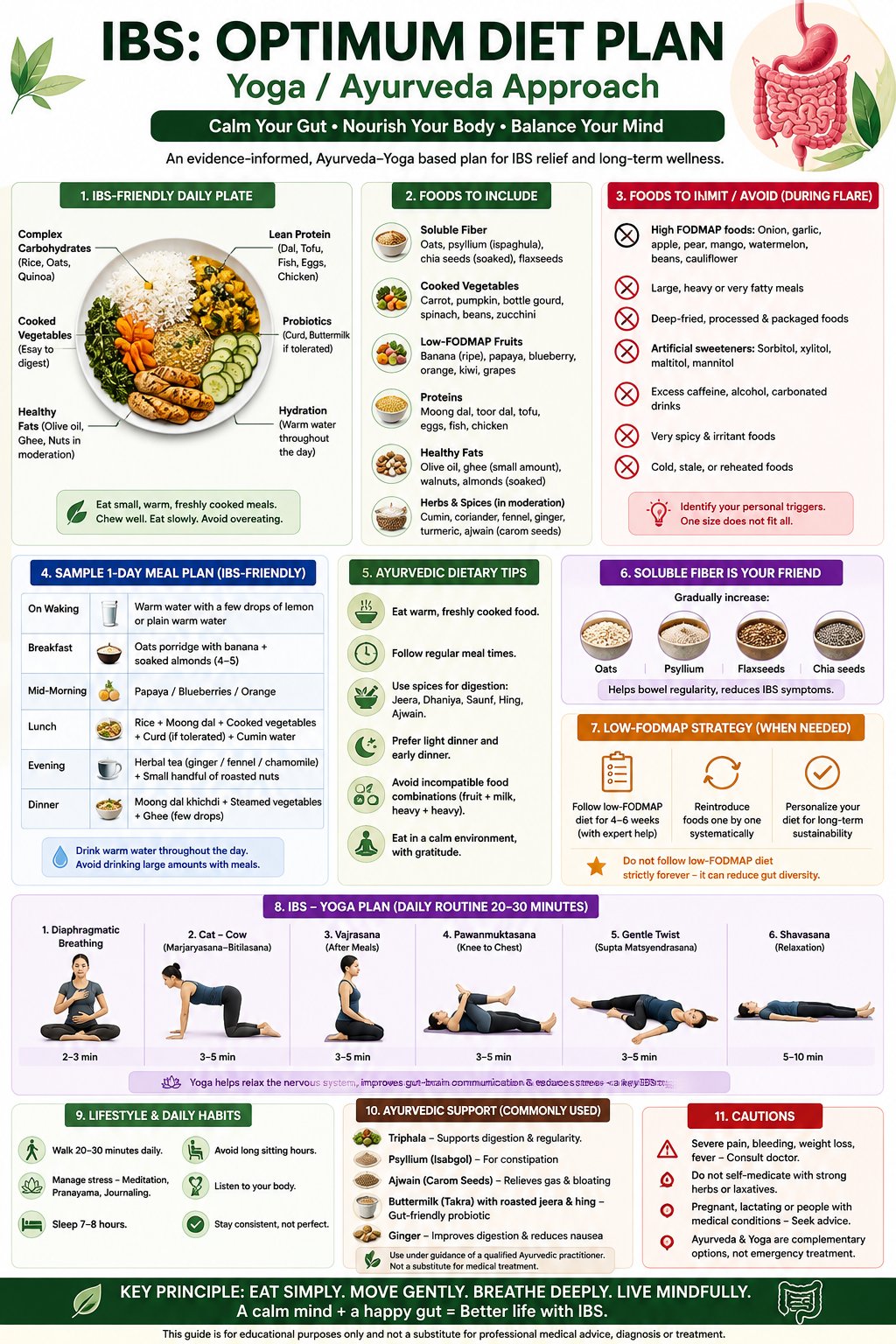
IBS: Optimum Diet Plan (Yoga/Ayurveda)
For IBS, an “optimum diet” should not mean a rigid universal food list. The most practical approach is a gentle, predominantly fresh, minimally processed, individually tolerated diet combined with appropriate yoga, regular movement, adequate sleep, mindful eating, and—when desired—carefully selected Ayurvedic practices. Current clinical guidance supports individualized dietary management, with soluble fiber and structured low-FODMAP strategies having important roles. A restrictive diet should be used selectively and ideally with qualified dietary guidance.
1. The Basic IBS-Friendly Daily Food Pattern
| Time | Optimum Pattern | Examples |
|---|---|---|
| On waking | Hydration + gentle breathing | Warm or room-temperature water; avoid forcing large quantities of fluid at once. |
| Breakfast | Warm, relatively simple meal | Oat porridge; rice-based breakfast; tolerated eggs; lactose-free curd/yogurt if tolerated; selected low-FODMAP fruit. |
| Mid-morning | Only if genuinely hungry | Small portion of tolerated fruit, nuts/seeds in suitable portions, or a simple snack. |
| Lunch | Balanced main meal | Rice or another tolerated grain + cooked vegetables + suitable protein such as dal, tofu, eggs, fish or chicken according to individual tolerance. |
| Evening | Light snack if needed | Herbal tea or a small tolerated snack; avoid continuous grazing. |
| Dinner | Earlier and lighter than lunch where practical | Khichdi-style meal, rice with cooked vegetables and protein, soup with suitable ingredients, or another easily tolerated meal. |
The exact foods should be personalized. NIDDK notes that different dietary changes help different people and that soluble fiber tends to be more helpful for IBS than insoluble fiber. Fiber should be increased gradually because a sudden increase can worsen gas and bloating.
2. Foods to Emphasize
- Soluble-fiber foods: oats, psyllium/ispaghula when appropriate, and other tolerated soluble-fiber sources.
- Cooked vegetables: especially when raw vegetables increase bloating.
- Well-tolerated fruits: selected according to individual FODMAP tolerance and portion size.
- Appropriate protein: eggs, fish, chicken, tofu or tolerated legumes.
- Simple carbohydrates: rice, oats, potatoes and other individually tolerated grains or starches.
- Healthy fats in moderate amounts: such as olive oil, nuts or seeds in portions that do not trigger symptoms.
- Adequate fluids: especially important when constipation is present.
3. Foods to Reduce During an IBS Flare
During an active flare, some people benefit from temporarily reducing foods that are highly fermentable, very fatty, extremely spicy, heavily processed, or difficult for them personally to digest.
- Very large meals
- Excessively fatty or fried foods
- Large quantities of onion and garlic if these trigger symptoms
- Beans and certain legumes when poorly tolerated
- Large amounts of wheat-based foods when personally associated with symptoms
- High-FODMAP fruits or sweeteners when they clearly trigger symptoms
- Sorbitol and other polyols in sugar-free products when diarrhea is a problem
- Excess alcohol or highly caffeinated drinks when these worsen symptoms
NICE specifically recommends reviewing fiber intake, generally avoiding excess insoluble fiber such as bran when it worsens symptoms, and using soluble fiber such as ispaghula or oats when an increase in fiber is appropriate. It also advises people with diarrhea to avoid sorbitol and recommends specialist dietary advice when a low-FODMAP or other exclusion diet is undertaken.
4. A Gentle Ayurvedic-Inspired Food Philosophy
An Ayurvedic interpretation can be incorporated as a complementary dietary philosophy rather than as a replacement for evidence-based IBS management. For many people, this means favoring warm, freshly prepared, moderate-sized meals and observing which foods increase heaviness, gas, urgency or constipation.
- Prefer freshly prepared meals over highly processed foods.
- Eat slowly and chew thoroughly.
- Favor cooked foods during periods of marked bloating or digestive sensitivity.
- Use spices primarily for flavor and culinary tolerance rather than assuming that a spice is a proven IBS treatment.
- Avoid repeatedly changing many foods at the same time; otherwise it becomes difficult to identify true triggers.
5. Low-FODMAP: Use It Strategically, Not Forever
A low-FODMAP diet can be valuable when standard dietary adjustments do not adequately control symptoms. The optimal approach is usually a structured trial followed by reintroduction and personalization, rather than indefinite restriction.
NIDDK explains that low-FODMAP eating reduces specific poorly absorbed carbohydrates and that foods should be gradually reintroduced when symptoms improve. NICE recommends that exclusion diets such as low-FODMAP be undertaken with professional dietary expertise.
For an Ayurveda/Yoga-oriented IBS program, the best integration is therefore: first simplify the diet → identify personal triggers → improve nutritional adequacy → gradually restore food diversity.
6. Yoga for IBS: A Gentle Daily Protocol
Yoga may be used as a complementary mind-body practice. Current NCCIH evidence describes the research as limited and low quality, although some studies suggest improvement in overall IBS symptoms. Yoga should therefore be presented as supportive care, not as a proven standalone cure.
| Practice | Suggested role | How to approach it |
|---|---|---|
| Diaphragmatic breathing | Relaxation and autonomic regulation | 5–10 minutes of slow, comfortable breathing without force. |
| Vajrasana | Quiet post-meal sitting practice | Use only if comfortable and knees permit; stop if pain occurs. |
| Cat–Cow | Gentle spinal and abdominal movement | Slow repetitions coordinated with breathing. |
| Child’s Pose | Relaxation | Gentle, comfortable position; avoid forcing abdominal compression. |
| Supine knee-to-chest | Gentle abdominal movement | Use comfortably and avoid if it aggravates pain or reflux. |
| Gentle twisting | Mobility and relaxation | Keep the movement mild; avoid aggressive abdominal compression. |
| Shavasana | Nervous-system relaxation | 5–10 minutes at the end of the practice. |
NCCIH notes that yoga is generally considered safe for healthy people when practiced appropriately and under qualified instruction, although strains and sprains can occur. People with medical conditions, recent surgery, pregnancy, significant pain or mobility limitations should obtain individualized advice.
7. A Simple 20–30 Minute Daily IBS Yoga Routine
- 2–3 minutes: quiet sitting and slow diaphragmatic breathing.
- 3–5 minutes: gentle Cat–Cow and spinal mobility.
- 3–5 minutes: gentle standing movement or walking.
- 5 minutes: selected comfortable postures such as Child’s Pose and mild twisting.
- 5–10 minutes: relaxation, Shavasana and slow breathing.
The purpose of this routine is not to mechanically “massage the intestine” or “flush toxins.” Its more defensible goals are relaxation, regular physical activity, body awareness and support for the gut-brain connection. The current evidence for yoga in IBS remains modest, so expectations should remain realistic.
8. IBS-C and IBS-D Need Different Diet Emphasis
| IBS-C | IBS-D |
|---|---|
| Gradually increase soluble fiber if tolerated. | Avoid personal diarrhea triggers and large high-fat meals. |
| Maintain adequate fluid intake. | Reduce sorbitol and other diarrhea-triggering polyols if sensitive. |
| Regular meals and physical activity can support bowel regularity. | Moderate caffeine and alcohol when they worsen urgency. |
| Consider psyllium/ispaghula with professional guidance. | Use low-FODMAP strategies selectively when appropriate. |
| Avoid suddenly adding very large amounts of bran or insoluble fiber. | Protect hydration and electrolyte intake when diarrhea is substantial. |
9. A Weekly IBS Yoga/Ayurveda Lifestyle Rhythm
Consistency is more valuable than an intense “detox” routine. Yoga and Ayurveda lifestyle includes physical activity, stress reduction and adequate sleep among lifestyle measures that may help IBS symptoms.
10. What to Avoid in an “IBS Detox” Program
- Long fasting periods used as a supposed cure without medical supervision
- Very restrictive diets eliminating numerous food groups indefinitely
- Unregulated herbal mixtures marketed as intestinal cleanses
- Repeated laxative use without identifying the reason for constipation
- Large doses of oils, herbs or supplements simply because they are described as “natural”
- Aggressive yoga postures during abdominal pain or illness
NCCIH emphasizes that complementary products vary considerably in safety and that supplements can have drug interactions or contamination risks. “Natural” does not automatically mean safe.
Eat simply → personalize gradually → move daily → breathe slowly → sleep adequately → reduce unnecessary restriction → monitor symptoms without becoming fearful of food.
11. The 7-Day Practical Foundation Plan
| Day | Food Focus | Yoga / Lifestyle Focus |
|---|---|---|
| Day 1 | Simple cooked meals; reduce obvious personal triggers. | 10–15 minutes gentle yoga + breathing. |
| Day 2 | Introduce or maintain tolerated soluble-fiber foods. | 20-minute gentle movement/walk. |
| Day 3 | Observe fruit and vegetable portions rather than eliminating them unnecessarily. | Breathing + Cat–Cow + relaxation. |
| Day 4 | Balanced lunch with suitable protein and carbohydrate. | 20–30 minutes gentle yoga. |
| Day 5 | Review possible food triggers from the previous four days. | Walking + relaxation practice. |
| Day 6 | Test one tolerated food rather than changing many foods at once. | Gentle full-body yoga. |
| Day 7 | Keep the foods that were well tolerated; avoid unnecessary restrictions. | Restorative yoga + longer relaxation. |
This is a general educational framework, not a personalized prescription. People with significant weight loss, nutritional deficiency, severe diarrhea, inflammatory disease, pregnancy, eating-disorder history, diabetes or other important medical conditions may require individualized dietary planning.
Frequently Asked Questions
Is IBS a real disease if scans and tests are normal?
Yes. IBS is a recognized disorder of gut-brain interaction diagnosed primarily from the symptom pattern. Normal routine testing does not mean the symptoms are imaginary.
Can IBS be cured permanently?
Some people have long periods with few or no symptoms. Because IBS is often chronic and fluctuating, the more useful goal is durable control and good quality of life rather than a promise of permanent eradication.
What is the best diet for IBS?
There is no single best diet for everyone. Traditional dietary advice and a structured low-FODMAP approach have strong practical roles, while Mediterranean-style eating and other individualized approaches may be useful for longer-term patterns.
Should everyone with IBS take probiotics?
No. The 2026 meta-analysis suggests probiotics can improve symptom severity overall, but effects vary among products and quality of life did not show a statistically significant overall benefit.
Does stress cause IBS?
Stress can contribute to symptom severity and may interact with biological vulnerability, but IBS is not simply caused by stress. It involves gut motility, sensory processing, microbiome and other biological mechanisms as well.
Is IBS the same as SIBO?
No. IBS is a disorder of gut-brain interaction, whereas SIBO refers to abnormal microbial overgrowth or dysbiosis in the small intestine. Some people may have both, but a positive SIBO test does not explain every IBS symptom.
Can Ayurveda help IBS?
Some randomized clinical research suggests that whole-system Ayurveda may improve IBS symptoms, but evidence is not sufficient to claim that any one Ayurvedic medicine cures IBS.
Can homeopathy cure IBS?
Reliable evidence is insufficient. The Cochrane review rated the overall evidence very low certainty, and NCCIH states that there is little evidence that homeopathy is effective for a specific health condition.
When should I see a gastroenterologist?
Seek specialist evaluation when symptoms are severe, persistent, diagnostically unclear, associated with alarm features, or not improving with appropriate first-line care.
Can IBS cause cancer?
IBS itself does not appear to cause colorectal cancer. The important point is that new alarm features should not automatically be attributed to IBS and may require separate investigation.
References and Evidence Links
1. Choi Y, et al. (2025). 2025 Seoul Consensus on Clinical Practice Guidelines for Irritable Bowel Syndrome. Journal of Neurogastroenterology and Motility, 31(2), 133–169. PubMed · DOI
2. Lacy BE, Pimentel M, Brenner DM, et al. (2021). ACG Clinical Guideline: Management of Irritable Bowel Syndrome. American Journal of Gastroenterology, 116(1), 17–44. PubMed · DOI
3. NIDDK. Diagnosis of Irritable Bowel Syndrome. NIDDK
4. NIDDK. Symptoms & Causes of Irritable Bowel Syndrome. NIDDK
5. NIDDK. Treatment for Irritable Bowel Syndrome. NIDDK
6. NICE CG61. Irritable bowel syndrome in adults: diagnosis and management. NICE guideline
7. Tang ASP, et al. (2026). Probiotics for Irritable Bowel Syndrome: An Updated Systematic Review and Meta-Analysis With Trial Sequential Analysis. Journal of Gastroenterology and Hepatology, 41(4), 1131–1146. PubMed · DOI
8. Zhou Y, et al. (2026). Long-term risk of irritable bowel syndrome associated with adverse childhood and adulthood experiences: a large-scale prospective cohort study. Translational Psychiatry, 16, 70. PubMed · PMC · DOI
9. Shah ED, et al. (2026). Irritable Bowel Syndrome with Constipation: Diagnosis and Multisymptom Management Beyond Abdominal Pain and Bowel Movement Frequency: A Review. Advances in Therapy. PubMed · DOI
10. Khasawneh M, et al. (2026). Natural History of Psychological Symptoms in Individuals With Rome IV Irritable Bowel Syndrome and Association With Gastrointestinal Symptom Severity. Neurogastroenterology & Motility, 38(4), e70301. PubMed · PMC
11. Chang HC, et al. (2026). Risk of irritable bowel syndrome in patients with hidradenitis suppurativa: a global-federated, multicenter cohort study. Scientific Reports, 16, 7157. PubMed · PMC
12. Almario CV, et al. (2026). Disparities in Health Care Seeking and Physician Diagnosis of Irritable Bowel Syndrome: Results From a United States Survey. Clinical Gastroenterology and Hepatology. DOI · Full text
13. Colecchia L, et al. (2026). Nutritional Management of Irritable Bowel Syndrome. Nutrients, 18(4), 699. Open access · PMC · DOI
14. Meyer A, et al. (2026). Systematic Review and Meta-Analysis: Plant-Based Therapy for Irritable Bowel Syndrome. Phytotherapy Research. Reference supplied in the Main-References file; the supplied file should remain the provenance for this citation until a final publisher/PubMed record is selected.
15. Chey WD, Kurlander J, Eswaran S. (2015). Irritable bowel syndrome: a clinical review. JAMA, 313(9), 949–958. PubMed
16. Saha L. (2014). Irritable bowel syndrome: pathogenesis, diagnosis, treatment, and evidence-based medicine. World Journal of Gastroenterology, 20(22), 6759. PubMed
17. El-Salhy M, Gundersen D. (2015). Diet in irritable bowel syndrome. Nutrition Journal, 14, 36. DOI
18. Naik TD, Tubaki BR, Patankar D. (2023). Efficacy of whole system Ayurveda protocol in irritable bowel syndrome: A randomized controlled clinical trial. Journal of Ayurveda and Integrative Medicine, 14(1), 100592. PubMed · PMC
19. Peckham EJ, et al. (2019). Homeopathy for treatment of irritable bowel syndrome. Cochrane Database of Systematic Reviews, CD009710. PubMed · PMC
20. NCCIH. Homeopathy: What You Need To Know. NCCIH
21. Psychological treatments for IBS. Comprehensive systematic review and meta-analysis. PubMed
21. Naik, Teja D et al. “Efficacy of whole system ayurveda protocol in irritable bowel syndrome – A Randomized controlled clinical trial.” Journal of Ayurveda and integrative medicine vol. 14,1 (2023): 100592. doi:10.1016/j.jaim.2022.100592. PubMed
22. Vaishali, N., Suvendu Rout, and P. Vijayarajaa. “Restoring gut harmony-Role of Grahani Chikitsa in the management of irritable bowel syndrome-a case report.” Journal of Ayurveda and Integrative Medicine 17.4 (2026): 101386.PubMed
Medical Disclaimer
This article is an educational research guide, not a diagnosis or individualized treatment plan. IBS symptoms overlap with celiac disease, inflammatory bowel disease, infection, endometriosis, medication effects, malabsorption and other conditions. Do not start, stop or repeatedly change prescription medicines, supplements, probiotics, Ayurvedic products or homeopathic products based solely on this page.