
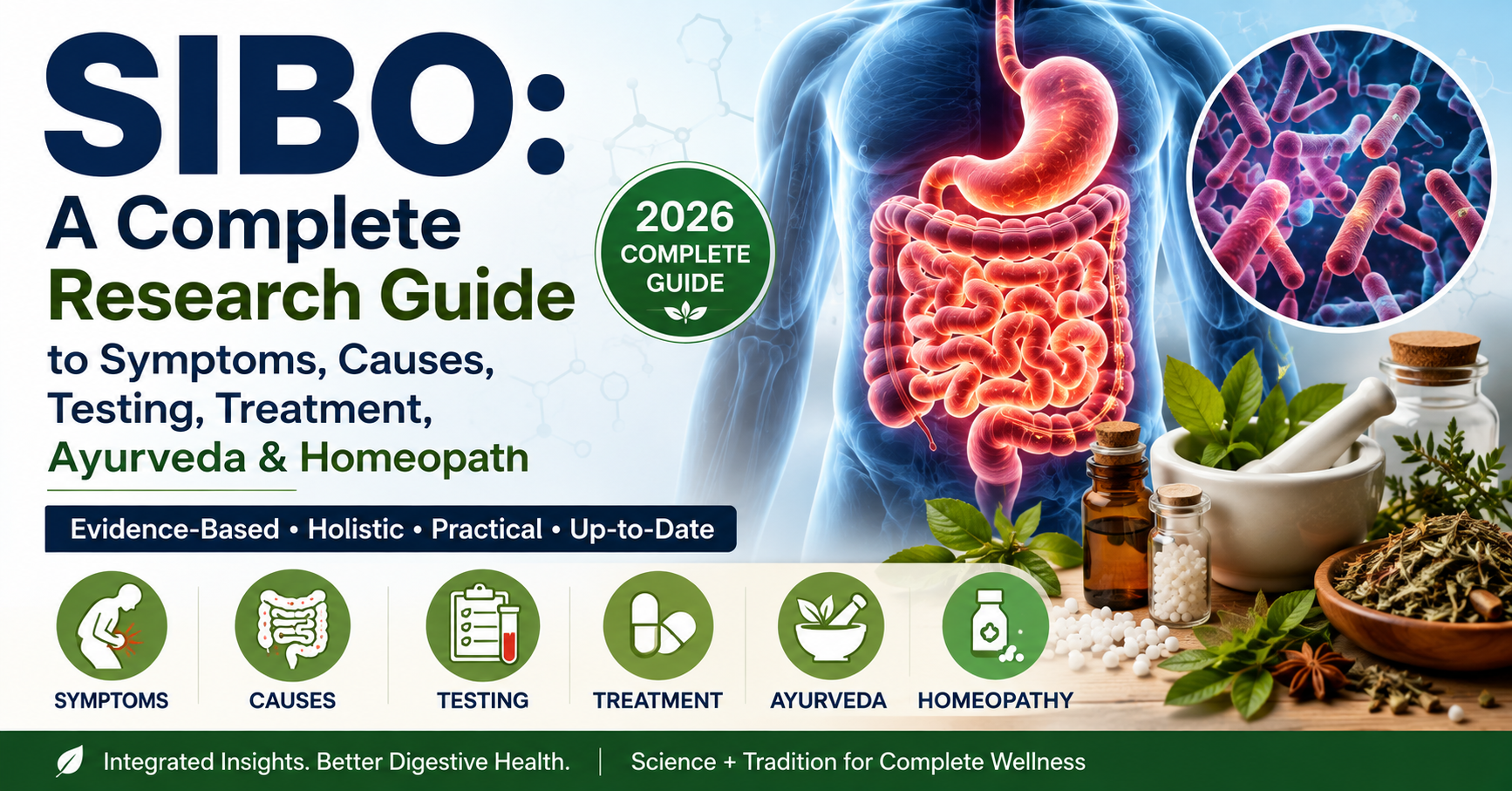
Small intestinal bacterial overgrowth (SIBO) occurs when excess bacteria colonize the small intestine, producing gas, bloating, pain and bowel changes that frequently overlap with IBS. Recent 2026 reviews show SIBO is better viewed as a spectrum of small-intestinal dysbiosis; diagnostic limits of breath tests remain a major clinical challenge. This people-first research guide covers symptoms, causes, testing accuracy, conventional treatment, diet, relapse prevention, and the current evidence for Ayurveda and homeopathy. This article is for research purpose not for treatment or diagnosis.
What Is SIBO?
Small Intestinal Bacterial Overgrowth (SIBO) is a clinical gastrointestinal disorder defined by an abnormal surge in the total bacterial population within the small intestine—specifically exceeding 103 to 105 colony-forming units per milliliter (CFU/mL) of jejunal aspirate.
While the large intestine (colon) naturally harbors trillions of microorganisms, the small intestine is meant to have a sparse bacterial load to facilitate nutrient absorption without microbial competition. In SIBO, bacteria typically found in the colon colonize the small intestine, triggering premature fermentation of ingested carbohydrates.
Pathophysiology & Mechanisms
When excess bacteria inhabit the small bowel, they consume dietary carbohydrates before the human body can absorb them. This process drives several pathophysiological effects:
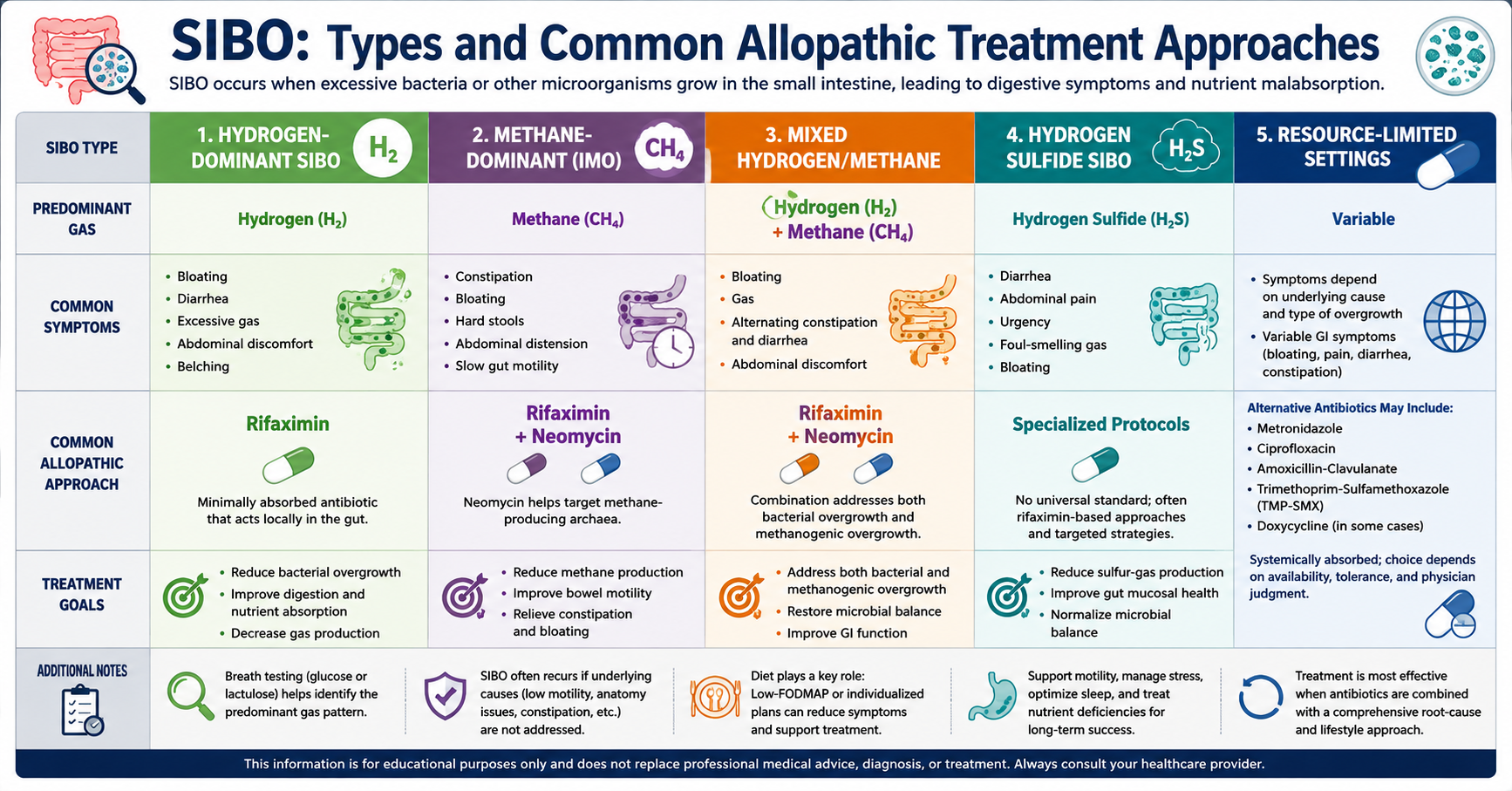
- Gas Production: Bacteria ferment carbohydrates into gas side-products, primarily Hydrogen (H2), Methane (CH4) (produced by archaea, often categorized as Intestinal Methanogen Overgrowth or IMO), and Hydrogen Sulfide (H2S).
- Bile Acid Deconjugation: Bacteria break down bile salts prematurely, impairing fat digestion and leading to lipid malabsorption, fat-soluble vitamin deficiencies (A, D, E, K), and steatorrhea.
- Mucosal Damage: Bacterial metabolites can damage the enterocyte lining, flattening intestinal villi and triggering systemic inflammation or nutrient deficiencies (notably Vitamin B12 and iron).
Protective Barriers That Normally Prevent SIBO
Under healthy physiological conditions, the gut relies on distinct defense mechanisms to keep small bowel bacterial counts low:
- Gastric Acid Secretion: Low stomach pH kills ingested pathogens and bacteria before they enter the duodenum.
- Migrating Motor Complex (MMC): Electromechanical waves clear residual food debris and microbes through the digestive tract during fasting states.
- Ileocecal Valve: An anatomical physical barrier preventing backflow of dense colonic bacteria into the ileum.
- Immunological Defense: Secretory IgA (sIgA) in intestinal mucus limits microbial adherence to mucosal surfaces.
Diagnostic Criteria
| Method | Mechanism | Clinical Standard |
|---|---|---|
| Breath Testing | Measures exhaled H2 and CH4 after ingesting a substrate (lactulose or glucose). | Rise of H2 ≥ 20 ppm or CH4 ≥ 10 ppm within 90 minutes indicates overgrowth. |
| Jejunal Aspirate & Culture | Endoscopic sampling of small intestine fluid followed by laboratory culturing. | Gold standard diagnostic threshold is ≥ 103 CFU/mL. |
SIBO versus IMO
Hydrogen-producing bacteria are often discussed in SIBO. Methane, however, is produced by archaea rather than bacteria. When methane production is prominent, the term intestinal methanogen overgrowth (IMO) is generally preferred. IMO is strongly associated with constipation and may require a different therapeutic strategy.
Common Symptoms of SIBO
Symptoms are non-specific and overlap with IBS and other gastrointestinal disorders. Common complaints include:
- Abdominal bloating or visible distension, particularly after meals
- Excess gas, flatulence or frequent belching
- Abdominal pain, pressure or cramping
- Diarrhea, constipation or alternating bowel habits
- Early fullness or uncomfortable post-meal fullness
- Nausea or altered appetite
- In more severe disease: weight loss, steatorrhea or nutritional deficiencies
Severe or prolonged overgrowth can be associated with malabsorption and deficiencies, including vitamin B12 deficiency. However, fatigue, skin symptoms and broad systemic complaints should not automatically be attributed to SIBO; other causes may need evaluation.
Causes and Risk Factors
SIBO is more usefully approached as a possible consequence of disrupted intestinal defenses than as an isolated infection. Important risk factors include:
- Motility disorders: reduced migrating motor complex activity, slow intestinal transit and chronic constipation.
- Anatomical abnormalities: strictures, diverticula, blind loops, altered bowel anatomy or certain consequences of abdominal surgery.
- Diseases affecting motility or the intestine: diabetes with autonomic neuropathy, systemic sclerosis, Crohn’s disease and other disorders of the small bowel.
- Altered digestive secretions: impaired gastric acid production or pancreatic/biliary dysfunction in appropriate clinical settings.
- Medications and other factors: some medications can alter motility or the intestinal environment; the significance should be assessed individually rather than assumed.
The underlying cause matters because simply reducing microbial load without correcting a persistent motility or anatomical problem can lead to recurrence.
How SIBO Is Diagnosed
Diagnosis is challenging because no routine test perfectly measures the living microbiome throughout the small intestine. Small-bowel aspirate culture is invasive and has sampling and contamination limitations. Breath testing is more practical but also has important limitations.
Glucose and lactulose breath tests
Hydrogen and methane breath testing measures gases produced by intestinal microorganisms after ingestion of a test carbohydrate. In the 2026 systematic review and meta-analysis by Choudhary and colleagues, glucose breath testing had pooled sensitivity of about 54.5% and specificity of 83.2% versus culture. Lactulose testing performed less well in the pooled analysis, with sensitivity of 42.0% and specificity of 70.6%.
Interpretation depends on the protocol and clinical context. The commonly used North American consensus framework considers a rise in hydrogen of approximately 20 ppm or more from baseline within 90 minutes supportive of SIBO, while methane of 10 ppm or more is commonly used to identify methane-positive overgrowth/IMO. Laboratories and guidelines may differ in implementation.
What a doctor may also evaluate
- Complete medication and supplement history
- Bowel pattern and constipation/diarrhea predominance
- History of abdominal surgery or structural intestinal disease
- Potential causes of malabsorption or nutrient deficiency
- Conditions that mimic SIBO, including celiac disease, inflammatory bowel disease and disorders of gut-brain interaction
SIBO and Allopathy / Conventional Medicine
“Allopathy” is commonly used in everyday language in India to mean modern conventional medicine. In evidence-based clinical practice, SIBO management is centered on appropriate diagnosis, treatment of important underlying causes, correction of nutritional deficiencies, and—when indicated—antimicrobial therapy.
1. Antibiotics: where they fit
Rifaximin is one of the best-studied antibiotics in the SIBO literature, and the 2026 systematic review reported pooled eradication rates of approximately 70.8% by intention-to-treat and 72.9% per-protocol, with adverse events reported in roughly 4–5% of the included treatment data. Antibiotics also improved global symptoms versus placebo in the randomized trials included in that review.
However, rifaximin is not FDA-approved specifically for “SIBO.” The U.S. prescribing information lists indications including travelers’ diarrhea caused by noninvasive E. coli, reduction of recurrent overt hepatic encephalopathy, and IBS with diarrhea (IBS-D). Use for SIBO is therefore commonly described as off-label in the United States.
2. Methane-positive disease / IMO
When methane production is prominent and constipation is a major feature, clinicians may consider an IMO-oriented treatment strategy. Rifaximin combined with another antibiotic such as neomycin has been studied in methane-positive patients, but antibiotic choice must take into account contraindications, adverse effects, drug interactions and antimicrobial-stewardship considerations.
3. Treat the driver, not only the gas
The AGA emphasizes identifying and correcting underlying causes and nutritional deficiencies. Depending on the patient, this can involve managing constipation or dysmotility, addressing an anatomical problem, reviewing medications, evaluating malabsorption, and treating relevant underlying disease.
4. What conventional medicine does not promise
A course of antibiotics does not guarantee permanent cure. Recurrence can occur, particularly when an underlying motility or structural factor remains. Repeated empirical antibiotic courses without reassessment may expose patients to unnecessary adverse effects and antimicrobial resistance.
Key clinical and research sources:
- AGA Clinical Practice Update on SIBO — expert review on diagnosis, underlying causes and management.
- ACG Clinical Guideline: Small Intestinal Bacterial Overgrowth — evidence-based clinical guideline.
- North American Consensus on Hydrogen and Methane Breath Testing — standardized breath-testing methodology and interpretation.
- Rifaximin Systematic Review and Meta-analysis — evidence on rifaximin efficacy and safety in SIBO.
- Performance and Interpretation of Hydrogen and Methane Breath Testing — assessment of contemporary breath-test recommendations.
- Breath Testing Consensus Guidelines for SIBO — expert discussion of testing standards and limitations.
- 2026 SIBO/IMO Systematic Review and Meta-analysis — recent evidence on breath-test performance, treatment response and relapse.
- FDA XIFAXAN (Rifaximin) Prescribing Information — official prescribing and safety information.
- Herbal Therapy Is Equivalent to Rifaximin for the Treatment of SIBO — 2014 comparative clinical study of herbal therapy and rifaximin in lactulose-breath-test-positive SIBO.
SIBO and Ayurvedic Medicine
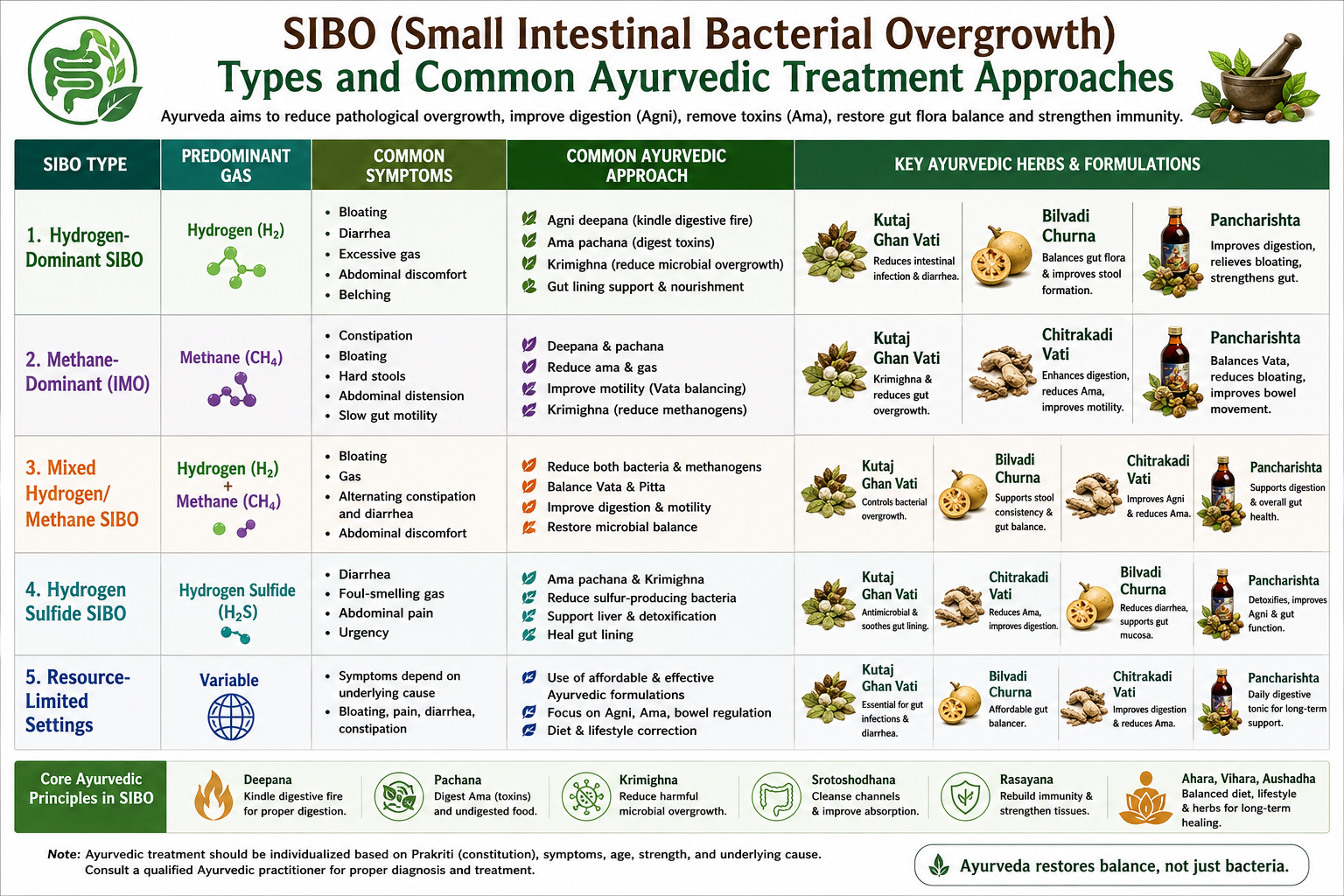
Ayurveda approaches digestive symptoms through its own diagnostic framework and may use individualized diet, lifestyle practices, herbal formulations and other traditional interventions. It is important, however, to distinguish evidence for improving gastrointestinal symptoms from evidence proving eradication of SIBO. At present, there is limited high-quality direct clinical research that Ayurvedic treatment can totally eradicate objectively diagnosed SIBO.
What the evidence does show
Clinical research has explored Ayurvedic approaches in irritable bowel syndrome (IBS), a condition that often overlaps symptomatically with SIBO. A randomized controlled trial of a whole-system Ayurveda protocol in 48 patients with IBS reported improvements in several IBS measures over 60 days. Another randomized trial comparing Ayurvedic and conventional nutritional therapy in 69 people with IBS reported symptom improvement in both groups, with a greater reduction in IBS symptom severity in the Ayurvedic group at three months. These findings are relevant to symptom management in IBS, but they do not establish that Ayurveda eradicates SIBO or IMO.
Possible supportive roles
- Individualized dietary routines and meal regularity
- Lifestyle approaches that may support sleep, stress regulation and digestive habits
- Yoga or movement practices as supportive care for gastrointestinal symptoms
- Selected herbal formulations used under qualified supervision when their ingredients and interactions are known
Safety matters
“Ayurvedic” does not automatically mean “risk-free.” NCCIH notes that some Ayurvedic preparations may contain potentially toxic metals such as lead, mercury or arsenic, and herbal products can interact with medications. India’s Ministry of Ayush also maintains a pharmacovigilance program because adverse effects and safety concerns involving traditional products need systematic monitoring.
Key sources: 2023 randomized controlled Ayurveda trial in IBS; 2021 randomized Ayurvedic vs conventional nutritional therapy trial in IBS; NCCIH: Ayurvedic Medicine—In Depth; Ayush Suraksha pharmacovigilance.
SIBO and Homeopathy Medicines
Homeopathy is a distinct medical system based on principles such as “like cures like” and highly diluted preparations. For SIBO specifically, there is no reliable clinical evidence showing that homeopathic medicines eradicate SIBO or IMO.
What current evidence supports
The U.S. National Center for Complementary and Integrative Health (NCCIH) states that there is little evidence supporting homeopathy as an effective treatment for any specific health condition. This is a much broader conclusion than SIBO alone, but it is directly relevant when a person is considering homeopathy as a replacement for proven evaluation or treatment.
Some people report improvement in bloating, bowel habits or general wellbeing while using homeopathy. Such experiences do not establish that bacterial or methanogen overgrowth has been eradicated, because gastrointestinal symptoms fluctuate and are affected by diet, stress, bowel motility and many other variables.
Safety and treatment decisions
Highly diluted homeopathic products may contain little or none of the original substance, but some products labeled homeopathic can contain measurable active ingredients and may cause side effects or interactions. The main clinical concern is also delayed diagnosis or replacement of effective care when symptoms could reflect malabsorption, inflammatory disease, obstruction, anemia or another medical condition.
Primary safety/evidence source: NCCIH: Homeopathy—What You Need To Know.
Diet, Motility and Lifestyle Support
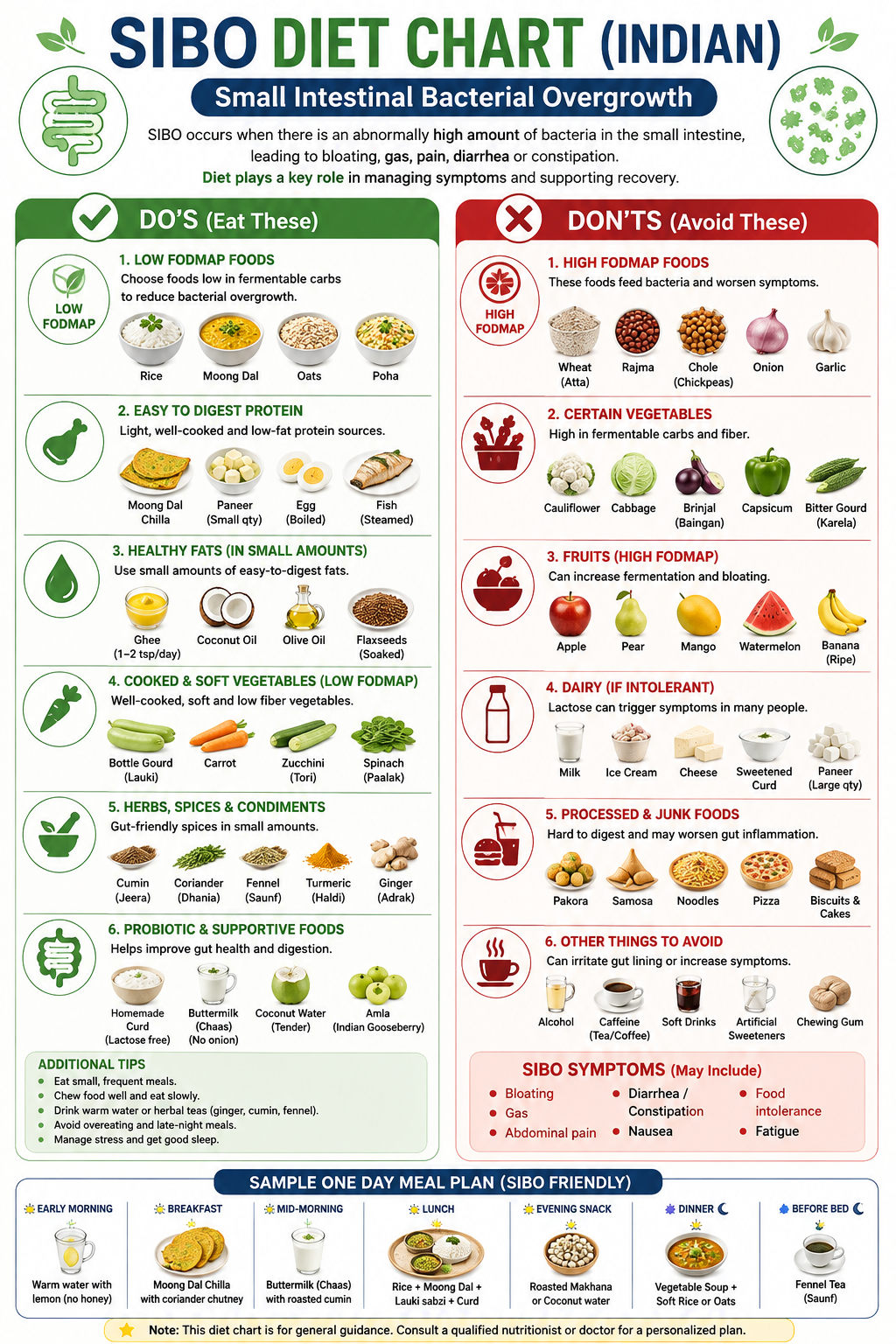
Diet can reduce fermentation and improve symptoms, but a restrictive diet is not the same thing as curing the underlying condition. A practical strategy is to use dietary restriction selectively and temporarily while simultaneously addressing the cause.
Low-FODMAP and similar approaches
A low-FODMAP diet and other short-term carbohydrate-reduction strategies can reduce gas and bloating in some people. Long-term overly restrictive eating can reduce dietary variety and nutritional adequacy, so food reintroduction and personalization are important.
Meal spacing and motility
The migrating motor complex is active during fasting periods and helps clear residual intestinal contents between meals. Some clinicians therefore advise avoiding constant grazing and allowing meaningful intervals between meals when this is comfortable and medically appropriate. The exact optimal interval varies and should be individualized.
Probiotics and supplements
Evidence for probiotics in SIBO is mixed and strain-specific. “More probiotics” should not be treated as an automatic solution. Herbal antimicrobials and supplements can also have pharmacological effects and drug interactions.
Relapse and Long-Term Management
SIBO/IMO can recur. A 2026 systematic review identified recurrence as a significant unresolved clinical issue, reinforcing the importance of understanding why a patient developed overgrowth in the first place.
Long-term management is therefore more than “kill the bacteria.” A durable plan may include:
- Confirm that the diagnosis fits the symptom pattern and risk profile.
- Identify constipation, slow transit, altered anatomy or another underlying driver.
- Correct documented nutrient deficiencies.
- Use antimicrobial therapy when clinically appropriate rather than repeatedly treating symptoms empirically.
- Use dietary restriction strategically, then restore dietary variety as tolerated.
- Follow up when symptoms return instead of automatically repeating the previous treatment.
When to Seek Medical Care
Persistent digestive symptoms deserve medical evaluation, especially when any of the following are present:
- Unintentional or progressive weight loss
- Blood in stool or black/tarry stool
- Persistent vomiting or inability to maintain hydration
- Fever or significant systemic illness
- Severe or worsening abdominal pain
- Signs of intestinal obstruction, marked distension or inability to pass stool/gas
- Anemia or suspected nutrient deficiencies
- Persistent diarrhea or constipation that materially affects daily life
- New symptoms in a person with significant gastrointestinal, neurological or systemic disease
Conventional Medicine vs Ayurveda vs Homeopathy for SIBO: Evidence Snapshot
| Approach | Direct SIBO evidence | Potential role | Important limitation |
|---|---|---|---|
| Conventional medicine | Strongest of the three; breath testing and antimicrobial treatment are studied directly | Diagnosis, treatment, correction of deficiencies and underlying causes | Testing is imperfect; antibiotics may be off-label for SIBO in some countries and recurrence can occur |
| Ayurveda | Limited direct SIBO-specific evidence; more evidence relates to IBS and symptom management | Potential complementary support for diet, lifestyle and gastrointestinal symptoms | Individual products vary; contamination, toxicity and drug interactions are possible |
| Homeopathy | No reliable evidence demonstrating eradication or treatment of SIBO | Some people use it for subjective symptom care | Should not replace diagnostic evaluation or evidence-based treatment |
Frequently Asked Questions
Is SIBO the same as IBS?
No. IBS is a disorder of gut-brain interaction; SIBO is a term used for abnormal small-intestinal microbial overgrowth or dysbiosis. Symptoms overlap, and some patients may have both.
Is a positive breath test proof that I have SIBO?
No. Breath testing has imperfect sensitivity and specificity. Results must be interpreted with the clinical picture and the test protocol.
Does rifaximin cure SIBO permanently?
It can lead to clinical improvement and negative testing in some patients, but recurrence can occur. The underlying cause matters, and rifaximin is not specifically FDA-approved for SIBO in the United States.
Is methane SIBO really SIBO?
Methane is produced by archaea rather than bacteria. The preferred term is often intestinal methanogen overgrowth (IMO), which can involve both the small and large intestine and is commonly associated with constipation.
Can Ayurveda cure SIBO?
There is currently insufficient high-quality SIBO-specific evidence to say that Ayurveda reliably eradicates SIBO. Ayurveda may have a complementary role in digestive symptom management, but claims of a proven cure should be treated cautiously.
Can homeopathy cure SIBO?
There is no reliable clinical evidence demonstrating that homeopathy eradicates SIBO or IMO. It should not replace clinically indicated diagnosis or treatment.
Should I stay on a low-FODMAP diet forever?
Usually the aim is not permanent extreme restriction. A clinician or dietitian can help reduce triggers during an active symptom phase and then gradually broaden the diet while maintaining adequate nutrition.
Should I keep taking probiotics for SIBO?
There is no universal answer. Evidence is mixed and strain-specific. Some patients tolerate probiotics well; others report increased gas or bloating. Discuss the product, dose and timing with a clinician, especially if symptoms are severe.
What is the most important step for preventing recurrence?
Address the factor that allowed overgrowth to develop—such as altered motility, constipation, anatomical changes or another underlying disorder—rather than relying only on repeated antimicrobial courses.
References and Evidence Links
1. Choudhary AK, et al. (2026). SIBO and intestinal methanogen overgrowth: breath test performance, treatment response, and relapse – a systematic review and meta-analysis. The Egyptian Journal of Internal Medicine, 38, 61. https://doi.org/10.1186/s43162-026-00646-7
2. Capuano E, et al. (2026). Unraveling the Complexities of Small Intestinal Bacterial Overgrowth. Medicina, 62(3), 485. https://doi.org/10.3390/medicina62030485
3. Shah A, Holtmann G, Gibson PR. (2026). Critical Review: The Past, Present, and Future of Small Intestinal Bacterial Overgrowth (SIBO). JGH Open, 10(5), e70419. https://doi.org/10.1002/jgh3.70419
4. Quigley EMM, Murray JA, Pimentel M. (2020). AGA Clinical Practice Update on Small Intestinal Bacterial Overgrowth: Expert Review. Gastroenterology, 159(4), 1526–1532. PubMed · DOI
5. U.S. FDA / XIFAXAN prescribing information. Rifaximin labeling and FDA-approved indications. FDA label PDF
6. Naik TD, Tubaki BR, Patankar D. (2023). Efficacy of whole system Ayurveda protocol in irritable bowel syndrome: a randomized controlled clinical trial. Journal of Ayurveda and Integrative Medicine, 14(1), 100592. PubMed · DOI
7. Koebnick C, et al. (2021). Ayurvedic vs. conventional nutritional therapy including low-FODMAP diet for patients with irritable bowel syndrome: a randomized controlled trial. Frontiers in Medicine. PubMed · DOI
8. National Center for Complementary and Integrative Health (NCCIH). Ayurvedic Medicine: In Depth. Safety, evidence limitations and potential heavy-metal exposure. NCCIH
9. Ministry of AYUSH, Government of India. Ayush Suraksha: Pharmacovigilance for Ayurveda, Siddha, Unani and Homoeopathy drugs. Ayush Suraksha
10. National Center for Complementary and Integrative Health (NCCIH). Homeopathy: What You Need To Know. Evidence and safety information. NCCIH
11. NCCIH. Herb–Drug Interactions. Safety information relevant to herbal and botanical products. NCCIH
12. Knez E, Kadac-Czapska K, Grembecka M. (2024). The Importance of Food Quality, Gut Motility, and Microbiome in SIBO Development and Treatment. Nutrition, 124, 112464. DOI
Medical Disclaimer
This article is an educational research guide, not a diagnosis or individualized treatment plan. SIBO symptoms overlap with many other gastrointestinal disorders. Prescription medicines, antibiotics, herbal products, Ayurvedic formulations and homeopathic products can have contraindications, side effects or interactions. Do not start, stop or repeat medication based solely on this page. People with alarm symptoms, significant weight loss, bleeding, persistent vomiting, severe pain, suspected malabsorption or other concerning features should obtain medical assessment.
The sections on Ayurveda and homeopathy intentionally distinguish traditional use and symptom-oriented research from proof of SIBO eradication. The strongest current SIBO-specific evidence remains in conventional gastroenterology, while the evidence for complementary approaches is more limited and heterogeneous.