
Night leg cramps are common, especially with aging—but does taking magnesium actually stop them? The answer is more complicated than supplement advertising suggests. Here’s what clinical research tells us.
Clinical observations indicate that up to 60% of adults experience nocturnal leg cramps [2], a agonizing phenomenon tied to sudden, involuntary contractions of the calf or foot muscles during rest. Identifying the right quality of magnesium to stop leg cramps at night is critical because poorly absorbed magnesium salts often fail to reach intracellular muscle tissue, leading to persistent discomfort. By understanding bioactive chelation forms and their synergistic relationship with Vitamin K2 and B6, you can effectively target neuromuscular hyperexcitability and restore peaceful sleep.
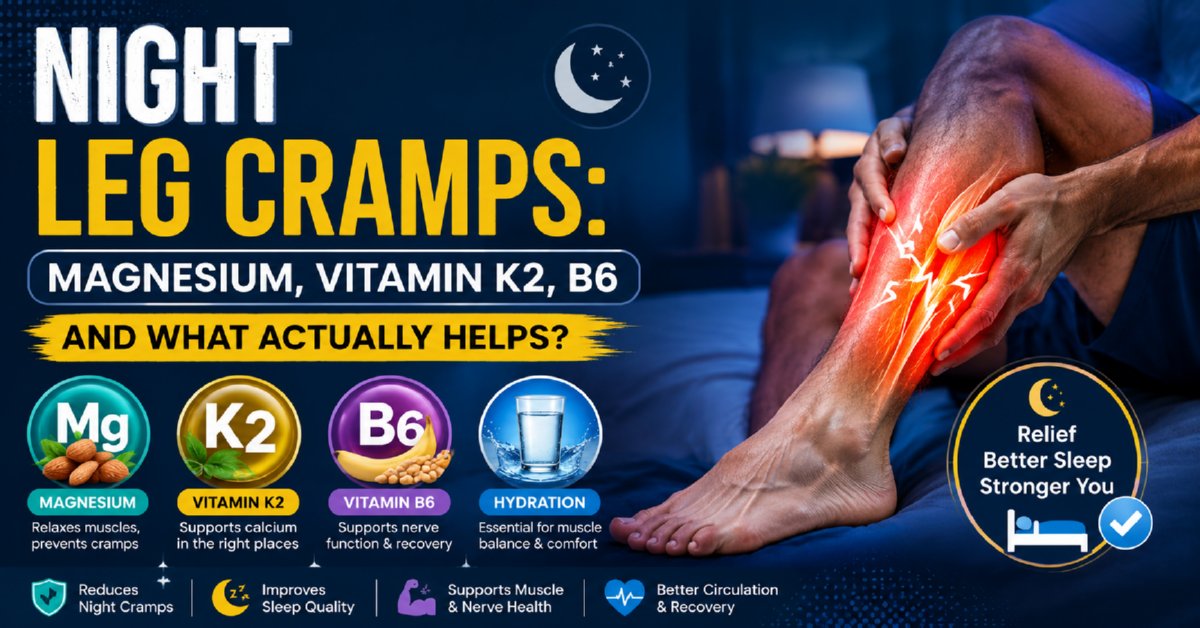
Why Night Cramps Happen: Neuromuscular Mechanics
Nocturnal leg cramps (NLCs) occur primarily due to involuntary motor neuron firing, resulting in sustained, painful contractions of lower limb skeletal muscle groups. During sleep, reduced peripheral circulation, minor changes in core body temperature, and postural plantarflexion lower the threshold for spontaneous nerve depolarization. At the cellular level, muscle relaxation depends on the active transport of calcium ions out of the sarcoplasm and back into the sarcoplasmic reticulum via the ATP-dependent calcium pump.
Magnesium functions as a natural physiological calcium channel blocker [6]. When cellular concentrations of magnesium drop, calcium remains bound to troponin C, keeping actin and myosin filaments locked in a contracted state. Consequently, addressing low intracellular levels through high-absorption supplements—rather than low-grade inorganic salts—is essential. You can explore how specific chelated compounds bypass digestive barriers in our breakdown of magnesium quality and bioavailable forms.
Night Leg Cramps: Start With the Evidence
Night leg cramps, also called nocturnal leg cramps, are sudden, painful involuntary contractions—most often affecting the calf or foot during sleep or rest. They are common, particularly with increasing age, but the cause is not always a simple vitamin or mineral deficiency.
That distinction matters. Magnesium is often promoted as the answer, yet clinical evidence for routine magnesium supplementation in otherwise healthy adults with ordinary nocturnal leg cramps is mixed. A major Cochrane review found little or no meaningful benefit over placebo for idiopathic cramps, particularly in older adults.
At the same time, newer research has produced an interesting signal for vitamin K2, while a 2026 randomized trial found benefit from knee-high medical compression stockings but not from the magnesium preparation tested.
Does Magnesium Actually Help Night Leg Cramps?
Magnesium is essential for normal nerve transmission, muscle contraction and energy metabolism. Severe magnesium deficiency can cause neuromuscular symptoms, including weakness, tremor and muscle spasms. That does not mean that taking extra magnesium will reliably prevent ordinary nocturnal leg cramps in people who are not deficient.
The best-established evidence is cautious. A Cochrane review of magnesium for muscle cramps found that, for idiopathic cramps—largely in older adults—magnesium produced only small, statistically non-significant differences compared with placebo. Pregnancy-associated cramps are a separate situation in which the evidence has been more variable.
Magnesium can therefore be reasonable when dietary intake is inadequate or deficiency is suspected, but it should not be presented as a proven universal treatment for nocturnal leg cramps.
Which Form of Magnesium?
| Form | Practical considerations | What the evidence means for cramps |
|---|---|---|
| Magnesium glycinate | Often well tolerated; commonly used when gastrointestinal effects are a concern. | No good evidence establishes it as superior to other magnesium forms specifically for nocturnal leg cramps. |
| Magnesium citrate | Generally well absorbed; higher amounts can loosen stools. | Useful as a magnesium source, but not proven to reliably stop ordinary night cramps. |
| Magnesium oxide | Provides a large amount of elemental magnesium by weight but is less well absorbed and can cause diarrhea. | Not a preferred choice if gastrointestinal tolerance is poor; form alone does not establish cramp efficacy. |
| Other forms | Malate, chloride, taurate and L-threonate have different properties and costs. | There is insufficient clinical evidence to rank them as superior treatments for nocturnal leg cramps. |
Vitamin K2: The Most Interesting New Evidence
Vitamin K2 deserves attention because it has been tested directly in a randomized clinical trial for nocturnal leg cramps. In a multicenter, double-blind, placebo-controlled trial, adults aged 65 years and older with recurrent nocturnal leg cramps received either 180 micrograms of menaquinone-7 (MK-7) daily or placebo for eight weeks. The investigators reported reductions in cramp frequency, duration and intensity with K2.
However, this should be interpreted carefully. The study was conducted in an older Chinese population, lasted only eight weeks, and the publication subsequently underwent corrections to its protocol and analysis. The result is promising, but it is not enough to establish vitamin K2 as a standard treatment for everyone with night cramps. Independent replication in larger and more diverse populations is needed.
Vitamin K can interact importantly with some anticoagulant medicines, particularly warfarin. Anyone taking an anticoagulant should speak with a clinician before changing vitamin K intake or starting a K2 supplement.
What the 2026 Magnesium Trial Found
A 2026 randomized clinical trial in adults aged 50 to 85 compared daily knee-high medical compression stockings, magnesium hydrochloride and placebo for recurrent leg cramps. The trial found that the compression-stocking group had a meaningful reduction in cramp frequency, whereas the magnesium intervention did not show a significant benefit over placebo.
This does not prove that every magnesium supplement is ineffective. The trial tested a specific magnesium preparation and population. It does, however, reinforce the broader message that magnesium should not be marketed as a guaranteed treatment for ordinary nocturnal leg cramps.
What Else May Help?
1. Calf Stretching
Regular calf and hamstring stretching is a low-risk measure that may help some people. A simple routine can include a gentle standing calf stretch before bed and whenever a cramp begins. Avoid bouncing or forcing a painful stretch.
2. Massage and Gentle Movement
When a cramp occurs, gently stretching the affected muscle and massaging it can help it release. For a calf cramp, slowly straighten the knee and pull the toes toward the face if comfortable.
3. Compression Stockings
The 2026 randomized trial provides useful evidence for knee-high medical compression stockings in adults with recurrent cramps. They may be particularly relevant when leg symptoms coexist with venous problems, prolonged standing or swelling, although medical advice is appropriate before using compression if arterial circulation is impaired.
4. Hydration
Dehydration and substantial fluid or electrolyte losses can contribute to muscle symptoms. Maintain normal hydration, especially during hot weather or strenuous exercise. There is no universal requirement to drink a fixed number of glasses every day; fluid needs vary with body size, diet, climate, activity and health.
5. Review Medicines and Medical Conditions
Night cramps can be associated with certain medicines and conditions. A clinician may consider medication effects, circulation problems, nerve disorders, metabolic abnormalities and musculoskeletal causes when cramps are persistent or unusual.
Magnesium-Rich Foods: A Strong Foundation
For most people, food is the safest foundation for meeting magnesium needs. Magnesium is naturally present in legumes, nuts, seeds, whole grains and green leafy vegetables.
| Food | Why it is useful |
|---|---|
| Pumpkin seeds | Very magnesium-rich and also provides protein and unsaturated fats. |
| Almonds and cashews | Convenient sources of magnesium, healthy fats and other micronutrients. |
| Beans and lentils | Provide magnesium along with protein and fiber. |
| Cooked spinach and other leafy greens | Provide magnesium plus folate, potassium and other nutrients. |
| Whole grains | Useful for magnesium and fiber; less refined grains generally retain more minerals. |
| Dark chocolate | Contains magnesium, but portions matter because it is also energy-dense. |
A balanced diet also supplies potassium and calcium. However, potassium or calcium supplements should not be started simply because someone has leg cramps. Deficiencies and excesses can both be medically important.
What About Vitamin B6?
Vitamin B6 is important for normal metabolism and nervous-system function, but there is not strong evidence that adding high-dose B6 to magnesium makes magnesium a proven treatment for nocturnal leg cramps.
Food sources include poultry, fish, chickpeas, potatoes and bananas. Routine high-dose B6 supplementation is unnecessary for most people and can cause nerve damage when taken in excessive amounts over time.
Popular Remedies That Need a Reality Check
Epsom Salt Baths
A warm bath may feel relaxing and may help some people unwind before sleep, but that is different from proving that magnesium sulfate is absorbed through the skin in an amount sufficient to correct magnesium deficiency or prevent cramps. Epsom salt baths should therefore be described as a comfort measure, not a proven magnesium-delivery treatment.
Magnesium Oil
Topical magnesium products are widely marketed for cramps. Evidence that they reliably deliver enough magnesium through intact skin to treat systemic deficiency or nocturnal leg cramps remains insufficient.
Pickle Juice
Pickle juice is interesting because any rapid effect is unlikely to be explained simply by replacing electrolytes. Research suggests that strong oral sensory stimulation may influence neural reflexes involved in cramp termination. It is not established as a treatment for preventing recurrent night cramps, and its high sodium content may be inappropriate for some people.
Quinine
Quinine can reduce cramps in some studies, but serious adverse effects and drug interactions mean it is not routinely recommended for ordinary nocturnal leg cramps. It should not be self-prescribed.
When Night Leg Cramps Need Medical Attention
See a healthcare professional when cramps are frequent, severe, newly developing or interfering substantially with sleep, particularly if they occur with:
- Persistent muscle weakness or difficulty walking.
- One-sided leg swelling, redness, warmth or significant tenderness.
- Numbness, progressive tingling or other neurological symptoms.
- Changes that began after starting or changing a medicine.
- Severe or persistent pain that does not behave like a typical brief cramp.
- Other systemic symptoms or cramps involving unusual muscle groups.
Sudden one-sided leg swelling, warmth and pain can have causes that require urgent assessment, including a blood clot. Do not assume such symptoms are simply a mineral deficiency.
A Sensible Night-Cramp Action Plan
- Start with the basics: Eat a varied diet containing magnesium-rich foods, maintain normal hydration and avoid excessive alcohol.
- Stretch gently: Add a short calf-stretch routine before bed and use gentle stretching when a cramp starts.
- Review your medicines: If cramps began after a medication change, discuss it with your clinician rather than stopping the medicine yourself.
- Consider magnesium selectively: If dietary intake is low or deficiency is suspected, discuss an appropriate supplement and dose with a healthcare professional.
- Keep K2 in perspective: The MK-7 trial is promising but preliminary. It should not be treated as established standard therapy.
- Consider compression: For recurrent cramps, especially in older adults or people with relevant leg symptoms, medical compression stockings may be worth discussing with a clinician.
- Investigate persistent cramps: Recurrent symptoms deserve evaluation rather than an endless cycle of changing supplements.
Natural Food Sources Rich in Bioavailable Magnesium and Vitamin B6
Constructing an anti-cramp diet requires consuming foods packed with elemental magnesium alongside naturally occurring Pyridoxine (B6). Whole food sources provide crucial trace cofactors like potassium, calcium, and antioxidants that work in harmony with oral supplements.
Top Magnesium-Dense Whole Foods (per 100g serving):
- Pumpkin Seeds (Pepitas): ~535 mg — Exceptional source of elemental magnesium, zinc, and healthy fatty acids.
- Spinach (Cooked): ~87 mg — Highly bioavailable when lightly steamed to reduce oxalates.
- Dark Chocolate (85%+ cacao): ~228 mg — Packed with minerals and polyphenols that encourage peripheral blood flow.
- Almonds & Cashews: ~270 mg — Nutrient-dense nuts offering healthy fats alongside magnesium.
- Black Beans: ~160 mg — Superior legume source of magnesium, fiber, and slow-burning carbohydrates.
- Avocados: ~29 mg — Provides magnesium alongside high levels of cramp-preventing potassium.
Top Vitamin B6 Dietary Sources:
- Wild Salmon & Tuna: Excellent source of bioactive B6 (P-5-P precursor) and anti-inflammatory omega-3 fatty acids.
- Chickpeas (Garbanzo Beans): One cup yields over 50% of the recommended daily allowance for Vitamin B6.
- Pasture-Raised Poultry (Chicken & Turkey Breast): Rich in Pyridoxine and essential tissue-repairing amino acids.
- Sweet Potatoes & Bananas: Easily digestible carbohydrates rich in Vitamin B6 and electrolyte cofactors.
Combining these nutrient-dense foods with structured timing ensures optimal absorption. Learn more about effective schedules in our dosage, timing, and safety section.
Optimal Dosage, Timing, and Safety Guidelines
To safely eliminate nighttime leg cramps, you must optimize elemental magnesium intake, dose timing, and cofactor ratios.
Target Dosage Protocols:
- Elemental Magnesium: Aim for 200 mg to 400 mg of high-quality natural chelated magnesium (e.g., Magnesium Bisglycinate) daily.
- Vitamin B6 (P-5-P): Pair with 10 mg to 25 mg of Pyridoxal-5-Phosphate daily. Avoid excessive doses of synthetic Pyridoxine HCl (>100 mg/day long-term) to prevent peripheral neuropathy.
Optimal Timing Strategy:
Take your magnesium and B6 combination approximately 30 to 60 minutes before bedtime. Taking it shortly before sleep maximizes its central nervous system calming effects, lowers resting heart rate variability, and guarantees high plasma concentrations during the hours when nocturnal leg cramps most frequently occur.
Safety and Precautions:
Magnesium supplementation is exceptionally safe for healthy adults, as surplus amounts are excreted by the kidneys. However, individuals with severe renal impairment, kidney disease, or slow heart rates (bradycardia) must consult a physician prior to starting supplementation. Furthermore, take magnesium at least 2 hours apart from antibiotics (such as fluoroquinolones or tetracyclines) or bisphosphonates to prevent binding interference.
Frequently Asked Questions
What is the best magnesium for night leg cramps?
No magnesium form has been convincingly established as the best treatment for ordinary nocturnal leg cramps. Glycinate and citrate are commonly used because of tolerability and absorption characteristics, but that should not be confused with proof of superior cramp prevention.
Does magnesium actually stop leg cramps?
Not reliably in everyone. Evidence from systematic reviews suggests little or no meaningful benefit for idiopathic nocturnal cramps in many older adults. Magnesium is more clearly appropriate when inadequate intake or deficiency is present.
Is vitamin K2 proven to prevent leg cramps?
Not yet. One randomized controlled trial in adults aged 65 and older found encouraging results with 180 micrograms of MK-7 daily for eight weeks. The finding needs independent confirmation before K2 can be considered an established treatment.
Can I take magnesium every night?
Healthy adults can generally tolerate appropriate magnesium supplementation, but the U.S. NIH upper limit for magnesium from supplements and medications is 350 mg/day unless a healthcare professional recommends otherwise. Kidney disease increases the risk of magnesium accumulation and requires medical advice.
Should I take magnesium with vitamin B6?
There is no strong evidence that adding B6 turns magnesium into a proven treatment for nocturnal leg cramps. B6 is an essential nutrient, but unnecessary high-dose supplementation can damage nerves.
Do bananas prevent night cramps?
Bananas provide potassium and some magnesium, but eating a banana is not a proven treatment for nocturnal leg cramps. A balanced diet is more useful than focusing on one food.
Do Epsom salt baths provide magnesium through the skin?
A warm bath may be relaxing, but there is insufficient evidence that an Epsom salt bath supplies enough magnesium through intact skin to correct deficiency or reliably prevent night cramps.
What should I do when a leg cramp starts?
Gently stretch the affected muscle, massage it and gradually move the joint through a comfortable range. For a calf cramp, gently straighten the knee and draw the toes upward if tolerated.
Selected References
- Garrison SR, et al. Magnesium for skeletal muscle cramps. Cochrane Database of Systematic Reviews. Evidence review of magnesium for muscle cramps.
- Tan J, Zhu R, Li Y, et al. Vitamin K2 in Managing Nocturnal Leg Cramps: A Randomized Clinical Trial. JAMA Internal Medicine. 2024;184(12):1443–1448. DOI: 10.1001/jamainternmed.2024.5726.
- Kuusipalo A, Laitila J, Lehtonen E, et al. Secondary prevention of leg cramps using compression stockings or magnesium supplements: a three-arm randomized clinical trial. Trials. 2026;27:216. DOI: 10.1186/s13063-025-09370-z.
- U.S. National Institutes of Health, Office of Dietary Supplements. Magnesium — Health Professional Fact Sheet.
- U.S. National Institutes of Health, Office of Dietary Supplements. Vitamin B6 — Consumer Fact Sheet.
- Souza, Ana Carolina Remondi et al. “The Integral Role of Magnesium in Muscle Integrity and Aging: A Comprehensive Review.” Nutrients vol. 15,24 5127. 16 Dec. 2023, doi:10.3390/nu15245127