
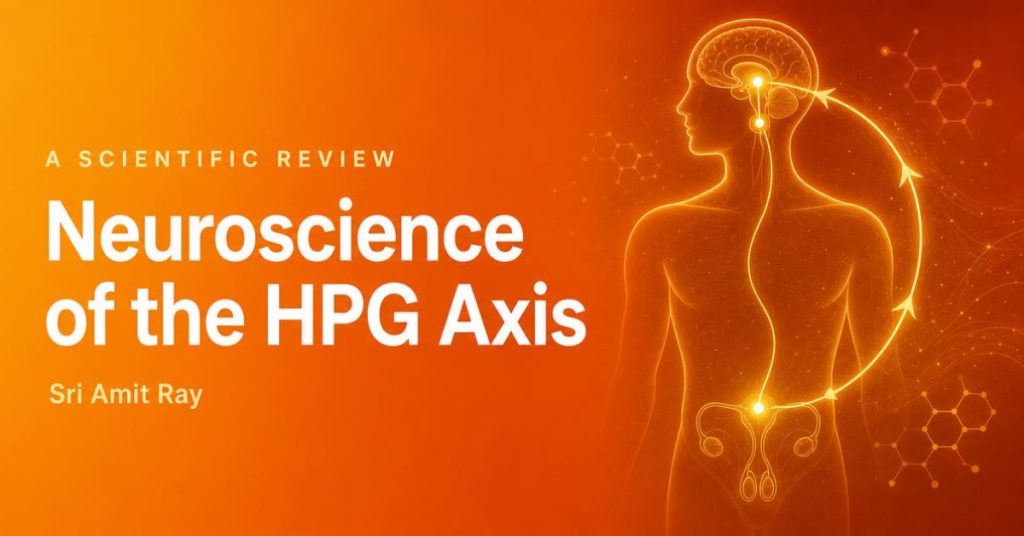
The Hypothalamic-Pituitary-Gonadal (HPG) axis is a vital neuroendocrine system that governs reproduction, sexual development, and systemic homeostasis. Far from being an isolated reproductive loop, the HPG axis is deeply integrated into the central nervous system (CNS), influencing neuroplasticity, behavior, and metabolic health. This review explores the anatomical framework, the precise neurochemical mechanisms of regulation, and the primary physiological functions of the HPG axis.
Introduction
The survival of any mammalian species relies on the precise orchestration of reproductive function. At the heart of this process lies the Hypothalamic-Pituitary-Gonadal (HPG) axis, a complex, tightly regulated feedback loop connecting the brain to the reproductive organs. While historically viewed purely through the lens of reproduction, modern neuroscience recognizes the HPG axis as a master regulator of overall health. The hormones produced by this axis cross the blood-brain barrier to shape brain architecture, regulate mood, protect against neurodegeneration, and maintain metabolic and skeletal integrity.
The Hypothalamic–Pituitary–Gonadal (HPG) Axis is a foundational neuroendocrine circuit that integrates central nervous system signaling with reproductive physiology. It coordinates hormone release from the hypothalamus, pituitary gland, and gonads, directly shaping sexual development, fertility, reproductive cycles, and multiple aspects of brain function. In neuroscience and physiology, the HPG axis exemplifies how neuroendocrine networks regulate peripheral organ systems while simultaneously feeding back to influence brain activity and behavior.
The following sections describe the primary functional domains of the HPG axis from a modern scientific standpoint, drawing on established neuroendocrine research and peer-reviewed literature.
HPG Axis Overview
At its core, the HPG axis involves the pulsatile release of gonadotropin-releasing hormone (GnRH) from specialized neurons in the hypothalamus. GnRH stimulates the anterior pituitary gland to secrete two gonadotropins: luteinizing hormone (LH) and follicle-stimulating hormone (FSH). These gonadotropins act on the gonads—the testes in males and the ovaries in females—to promote sex steroid production (testosterone, estradiol, and progesterone) and gametogenesis (the production of sperm and ova).
The sex steroids produced by the gonads, in turn, exert feedback effects on the hypothalamus and pituitary, forming a closed-loop regulatory system. This feedback can be negative (suppressing further hormone release) or, during specific phases of the female reproductive cycle, positive (amplifying hormone release to trigger events such as ovulation).
HPG Axis and the Immune System
Bidirectional communication between the HPG axis and the immune system is increasingly recognized:
- Sex steroids are potent immunomodulators:
- Estrogens generally enhance humoral immunity and suppress cell-mediated immunity (contributing to the female predominance of autoimmune diseases)
- Androgens generally suppress immune function (contributing to greater infection susceptibility in males)
- Progesterone has immunosuppressive properties (important for maternal tolerance of the semi-allogenic fetus)
- Inflammatory cytokines (IL-1β, IL-6, TNF-α) can suppress GnRH secretion and gonadal function
- Immune cells within the gonads (testicular macrophages, ovarian immune cells) play important roles in tissue remodeling, steroidogenesis, and gametogenesis
1. Regulation of Reproductive Hormones
The HPG axis’s primary function is to regulate the synthesis and pulsatile release of sex hormones. GnRH neurons in the hypothalamus generate oscillatory secretory patterns that drive LH and FSH release from gonadotroph cells in the anterior pituitary. The frequency and amplitude of GnRH pulses shape circulating levels of testosterone, estradiol, and progesterone, which collectively govern reproductive physiology in both sexes (Herbison 2018; Plant 2015).
The pulsatile nature of GnRH secretion is essential: continuous (non-pulsatile) GnRH administration paradoxically suppresses gonadotropin release, a principle exploited in clinical treatments for conditions such as precocious puberty and hormone-sensitive cancers (Kaprara and Huhtaniemi 2018).
2. Control of Gametogenesis
FSH and LH act on gonadal tissues to regulate gamete production—a process fundamental to reproductive capacity. In males, LH stimulates Leydig cells in the testes to produce testosterone, while FSH supports Sertoli cell-mediated spermatogenesis, facilitating sperm maturation. In females, FSH promotes follicle development and oocyte maturation within the ovaries, and the mid-cycle LH surge triggers ovulation and subsequent corpus luteum formation (Clarke and Caraty 2015).
The coordinated action of these gonadotropins ensures that gamete production is tightly coupled with hormonal milieu, optimizing conditions for successful reproduction.
3. Development of Secondary Sexual Characteristics
Sex steroids produced under HPG axis control are critical for the development and maintenance of secondary sexual characteristics during puberty and throughout adulthood. Testosterone drives male-typical patterns of increased muscle mass, voice deepening, and characteristic hair distribution. Estradiol and progesterone shape female reproductive tract maturation, breast development, and body composition changes (Dwyer and Quinton 2019).
These changes are not merely cosmetic; they reflect deep physiological remodeling driven by hormone-receptor interactions in target tissues throughout the body, including bone, adipose tissue, and skin.
4. Puberty and Developmental Timing
The HPG axis undergoes a quiescent period following a brief activation in infancy (the so-called “mini-puberty”) and remains largely dormant during childhood. Reactivation at puberty marks the onset of reproductive capacity, characterized by increased pulsatile GnRH secretion, rising gonadotropin levels, and accelerated sex hormone production (Plant 2015).
The mechanisms governing the timing of pubertal reactivation involve complex interactions among genetic factors, nutritional status, body composition, and environmental cues. Kisspeptin signaling has been identified as a critical gatekeeper of puberty onset, with loss-of-function mutations in the kisspeptin receptor (KISS1R) resulting in absent or delayed puberty (Herbison 2018).
5. Feedback Regulation and Homeostasis
Sex steroids exert negative feedback on the hypothalamus and pituitary to regulate GnRH, LH, and FSH secretion, maintaining hormonal homeostasis. In males, testosterone and its metabolites tonically suppress GnRH pulse frequency. In females, estradiol exerts negative feedback during most of the menstrual cycle but switches to positive feedback at mid-cycle, generating the preovulatory LH surge that triggers ovulation (Acevedo-Rodriguez et al. 2018).
Additional feedback signals include inhibin (produced by gonadal cells), which selectively suppresses FSH secretion, and activin, which promotes it. These peptide hormones add further precision to the feedback control architecture of the HPG axis.
6. Brain–Gonadal Communication
The HPG axis exemplifies bidirectional communication between the brain and peripheral reproductive organs. Neuropeptides such as kisspeptin, neurokinin B, and dynorphin—produced by hypothalamic KNDy neurons—are integral to HPG axis regulation. Kisspeptin neurons provide potent excitatory input to GnRH neurons, and sex steroid receptors expressed throughout hypothalamic circuits mediate feedback effects (Herbison 2018).
Beyond reproductive regulation, gonadal hormones influence cognition, mood, motivation, and neural plasticity through widespread receptor expression in brain regions including the hippocampus, prefrontal cortex, and amygdala (Vadakkadath Meethal and Atwood 2005). This bidirectional communication integrates reproductive state with broader aspects of brain function and behavior.
7. Reproductive Cycle Modulation
In females, the HPG axis drives the cyclical hormonal changes that constitute the menstrual cycle (in humans) or estrous cycle (in other mammals). This cyclic regulation controls follicular development, ovulation, and luteal function across successive phases. Fluctuations in estradiol and progesterone orchestrate endometrial preparation for potential embryo implantation, and in the absence of pregnancy, declining progesterone triggers menstruation (Clarke and Caraty 2015).
The precise coordination of these hormonal events requires intact feedback loops and appropriately timed GnRH pulsatility, disruption of which can lead to anovulation, irregular cycles, and impaired fertility.
8. Interaction with Stress and Other Neuroendocrine Axes
The HPG axis interacts closely with stress-response pathways, particularly the hypothalamic–pituitary–adrenal (HPA) axis. Stress hormones such as cortisol and corticotropin-releasing hormone (CRH) can inhibit GnRH release at the hypothalamic level and alter LH and FSH secretion from the pituitary, thereby suppressing reproductive function under conditions of prolonged physiological or psychological stress (Acevedo-Rodriguez et al. 2018).
This cross-talk between the HPG and HPA axes represents an adaptive mechanism that prioritizes survival over reproduction during periods of acute or chronic stress. It also has clinical relevance, as stress-related reproductive dysfunction—including hypothalamic amenorrhea—is well documented in human populations.
9. Aging, Fertility Decline, and Reproductive Senescence
HPG axis activity changes significantly with advancing age. In females, reproductive senescence culminates in menopause, characterized by depletion of ovarian follicles, declining estradiol and progesterone production, and loss of negative feedback leading to elevated gonadotropin levels. In males, aging is associated with a more gradual decline in testosterone production and spermatogenic capacity—sometimes termed “andropause”—with broader systemic effects on bone density, muscle mass, and metabolic function (Kaprara and Huhtaniemi 2018).
Understanding age-related changes in HPG axis function is critical for managing reproductive health across the lifespan and for addressing associated conditions such as osteoporosis, cardiovascular risk, and cognitive changes in aging populations.
Frequently Asked Questions
What is the HPG axis in neuroscience?
The hypothalamic–pituitary–gonadal (HPG) axis is a neuroendocrine system that regulates reproductive function through coordinated signaling between the brain and gonads, integrating hormonal, developmental, and behavioral processes essential for reproduction and aspects of cognition.
Which hormones are involved in the HPG axis?
The primary hormones include gonadotropin-releasing hormone (GnRH) from the hypothalamus, luteinizing hormone (LH) and follicle-stimulating hormone (FSH) from the anterior pituitary, and the gonadal sex steroids testosterone, estradiol, and progesterone. Additional regulatory peptides include inhibin, activin, and kisspeptin.
How does the HPG axis regulate puberty?
Puberty begins when hypothalamic GnRH secretion increases in a pulsatile manner after a period of childhood quiescence, activating pituitary LH and FSH release and stimulating gonadal hormone production that drives sexual maturation and the development of reproductive capacity.
How does stress affect the HPG axis?
Chronic stress suppresses HPG axis activity through inhibitory effects of glucocorticoids and CRH on GnRH and gonadotropin secretion, often leading to reduced fertility, anovulation, and altered reproductive cycles. This represents an adaptive prioritization of survival over reproduction.
What role does the HPG axis play in fertility?
The HPG axis governs gametogenesis, ovulation, spermatogenesis, and reproductive cycling, making it essential for fertility in both males and females. Disruption at any level of the axis can impair reproductive capacity.
How does aging influence the HPG axis?
Aging alters HPG axis feedback sensitivity and hormone production, contributing to menopause in females (with elevated gonadotropins and declining estradiol) and gradual declines in testosterone and reproductive capacity in males, with associated systemic health effects.
Is the HPG axis connected to brain function beyond reproduction?
Yes. Reproductive hormones regulated by the HPG axis influence cognition, mood, motivation, and neural plasticity through widespread sex steroid receptor expression in brain regions such as the hippocampus, amygdala, and prefrontal cortex.
Conclusion
The HPG axis is a critical neuroendocrine hub that integrates hypothalamic neuronal signaling with pituitary and gonadal function. Its roles span hormone regulation, gamete production, reproductive system development, feedback homeostasis, brain–gonadal communication, and lifespan physiology. Understanding this axis is essential for explaining reproductive health, neuroendocrine integration, and the impact of stress and aging on reproductive outcomes.
Continued research into the molecular and neural mechanisms underlying HPG axis regulation—including the roles of kisspeptin signaling, epigenetic modulation, and cross-talk with metabolic and stress pathways—promises to deepen our understanding of reproductive neurobiology and inform clinical approaches to fertility disorders, endocrine pathologies, and healthy aging.
References
- Acevedo-Rodriguez, Alexandra, et al. “Emerging Insights into Hypothalamic-Pituitary-Gonadal Axis Regulation and Interaction with Stress Signalling.” Journal of Neuroendocrinology, vol. 30, no. 10, 2018, article e12590. https://doi.org/10.1111/jne.12590.
- Clarke, Iain J., and Alain Caraty. “Kisspeptin and Seasonality of Reproduction.” Advances in Experimental Medicine and Biology, vol. 784, 2013, pp. 411–30. https://doi.org/10.1007/978-1-4614-6199-9_19.
- Dwyer, Andrew A., and Richard Quinton. “Anatomy and Physiology of the Hypothalamic-Pituitary-Gonadal (HPG) Axis.” Advanced Practice in Endocrinology Nursing, edited by Sofia Llahana et al., Springer, 2019, pp. 839–52. https://doi.org/10.1007/978-3-319-99817-6_43.
- Herbison, Allan E. “The Gonadotropin-Releasing Hormone Pulse Generator.” Endocrinology, vol. 159, no. 11, 2018, pp. 3723–36. https://doi.org/10.1210/en.2018-00653.
- Kaprara, Athina, and Ilpo T. Huhtaniemi. “The Hypothalamus-Pituitary-Gonad Axis: Tales of Mice and Men.” Metabolism, vol. 86, 2018, pp. 3–17. https://doi.org/10.1016/j.metabol.2017.11.018.
- Plant, Tony M. “The Hypothalamo-Pituitary-Gonadal Axis.” Journal of Endocrinology, vol. 226, no. 2, 2015, pp. T41–54. https://doi.org/10.1530/JOE-15-0113.
- Vadakkadath Meethal, Sivan, and Craig S. Atwood. “The Role of Hypothalamic-Pituitary-Gonadal Hormones in the Normal Structure and Functioning of the Brain.” Cellular and Molecular Life Sciences, vol. 62, no. 3, 2005, pp. 257–70. https://doi.org/10.1007/s00018-004-4381-3.
- Ray, Amit. "Interactions of Vitamin D, Magnesium, Zinc, K2, Boron, and Vitamin C in Human Health: A Comprehensive Review." Compassionate AI, 4.10 (2025): 48-50. https://sriamitray.com/teachings/vitamin-d-magnesium-zinc-k2-boron-c/.
- Ray, Amit. "Polyvagal Theory: A Comprehensive Scientific Review (2025 Update)." Compassionate AI, 4.11 (2025): 66-68. https://sriamitray.com/teachings/polyvagal-theory-scientific/.
- Ray, Amit. "The Caves of the Human Brain: Anatomical Variants and Functional Neurocognitive Domains." Compassionate AI, 4.11 (2025): 66-68. https://sriamitray.com/research/caves-human-brain-anatomical-variants-neurocognitive-domains/.
- Ray, Amit. "Gayatri Mantra Research: A Comprehensive Scientific Review (2025)." Yoga and Ayurveda Research, 4.12 (2025): 12-14. https://sriamitray.com/research/gayatri-mantra-research/.
- Ray, Amit. "Neuroscience of the Gut–Brain Axis: 8 Primary Functions – A Scientific Review." Compassionate AI, 4.12 (2025): 69-71. https://sriamitray.com/research/neuroscience-gut-brain-axis/.
- Ray, Amit. "Neuroscience of the HPA Axis: 9 Primary Functions – A Scientific Review." Compassionate AI, 4.12 (2025): 69-71. https://sriamitray.com/research/neuroscience-hpa-axis/.
- Ray, Amit. "Neuroscience of the HPG Axis: Primary Functions – A Scientific Review." Compassionate AI, 4.12 (2025): 69-71. https://sriamitray.com/research/neuroscience-hpg-axis/.
- Ray, Amit. "Sri Amit Ray’s HPA Axis Chakras (Stress–Adaptation Axis) | Ray 114 Chakra System." Compassionate AI, 4.12 (2025): 69-71. https://sriamitray.com/teachings/sri-amit-ray-hpa-axis-chakras-stress/.